

Imagine unpacking boxes from an estate sale and finding folded cash tucked inside the items you bought. Now imagine it keeps happening. That is the premise of a multi-part series from creator @moneymaker6885, who bought a haul at an estate sale and keeps turning up bundles of money. This is the second installment, and the caption ends with a question that invites guesses: “How much cash do you think I found in this haul altogether?”
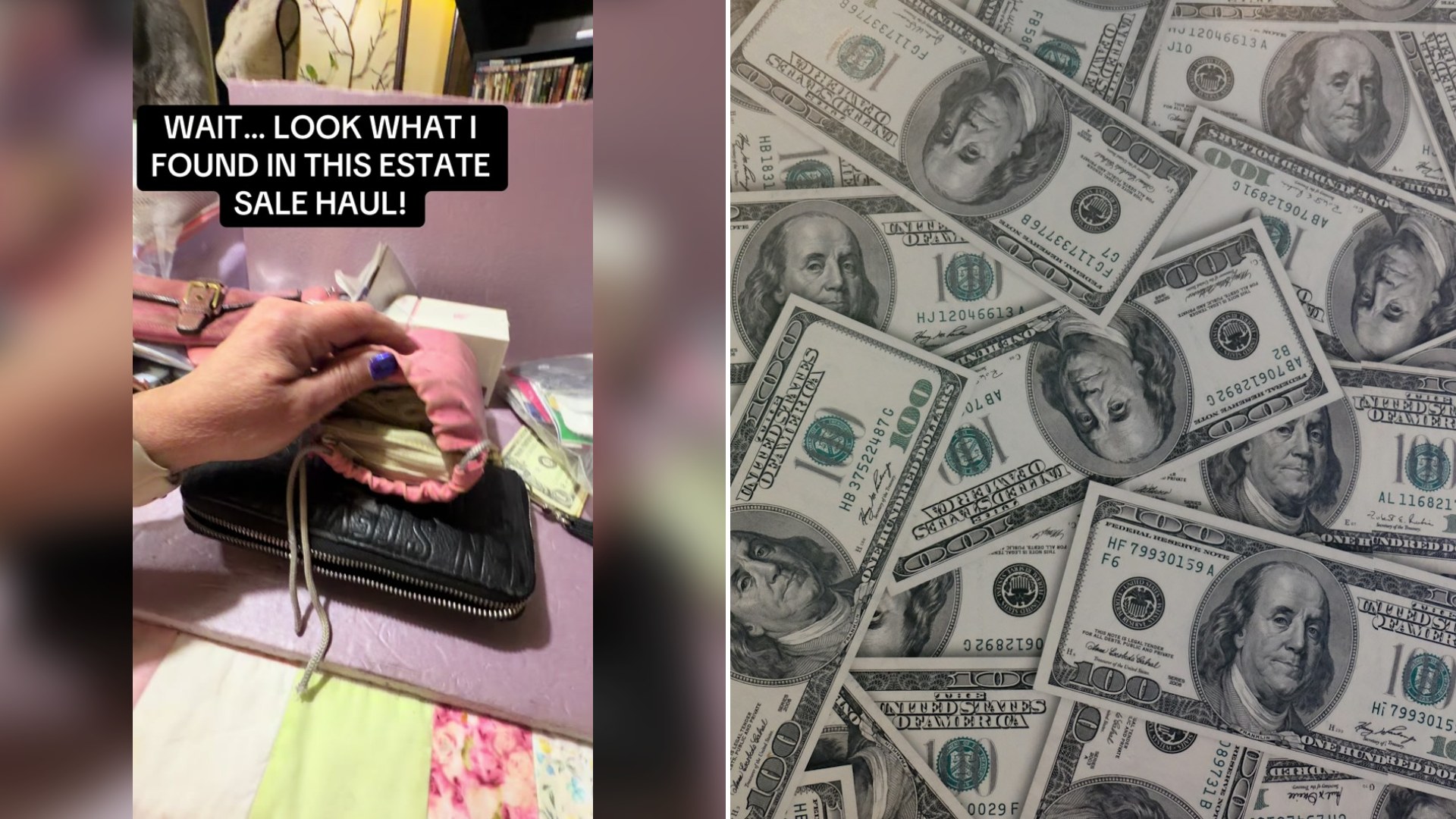
In the clip, the creator opens one of the bundles for the first time on camera. “It’s all ones,” the creator reports, and then counts through pile after pile. “Another pile of ones.” “More ones.” “Still ones. That’s cool. I’m okay.” Then the mood changes. The creator wonders aloud if the next stack might be tens, saying maybe it will go “10, 20, 30,” and then the voice rises in astonishment as the creator spots more down in there and asks the audience, “Can you see it?” The clip ends there, cut off mid-sentence, and the caption explains that the creator “had to cut this one short” and promises a Part 3.
That means we do not know the final total, and we will not guess. The post does not say what the sale was, where it took place or what items the cash was hidden in. What it does show is a very human mix of patience, humor and growing disbelief.
Here is the original post.
@moneymaker6885
Is hidden cash really common at estate sales?
It may surprise you, but people who run estate sales say it happens more often than you would think. A piece in the Town Crier about hidden money in estate sales lists many of the places cash has turned up: under mattresses, in sock drawers, in pill bottles, in pillows on a closet shelf and under the lid of a stationery box. The author also mentions rare coins stored in used prescription bottles, and says money can be found in “nooks and crannies all over the house.” The article describes a report of about $40,000 found inside marble statues by an auction crew loading vans, though the author relays that story secondhand.
Why do people hide money at home? Many older folks grew up with a deep distrust of banks or lived through hard times, and kept some savings close at hand. Others simply tucked away cash for emergencies and forgot where it went.
What professionals do when they find money
The same article offers advice for those who run sales or help families prepare a home. It suggests putting any cash you find in a zippered bag and returning it to the owner before the sale. It also recommends checking every clothing pocket before discarding garments, and it notes that a family may feel uneasy being watched while a house is searched.
That raises an interesting question about what happens when the money turns up after a sale, as in this series. The post does not say how the creator came by the items or what, if anything, the sale’s terms said. Rules and customs vary, and the situation can get complicated, especially if the money turns out to belong to the family. If you ever find a large amount of cash in something you bought, a good first step is to stop, take photographs and contact the sale organizer to ask how they would like to handle it. For anything involving a large sum, it is wise to talk to a local attorney. This is general information, not legal advice.
Smart ways to search what you buy
You do not have to wait for a lucky surprise to benefit from this habit. Shoppers and resellers who buy secondhand items often develop a routine to check everything they bring home.
- Check every pocket. Coats, jackets and pants can hold forgotten bills, receipts and notes.
- Open every book and flip the pages. Paper money and old photographs sometimes sit between the pages.
- Look inside containers. Tins, jars, boxes and bags may hold more than they appear to.
- Check linings and compartments. Purses and wallets often have hidden zippered sections.
- Peek under drawers and inside furniture. Some pieces have hidden compartments.
- Do the search in good light. A flashlight helps you see into dark corners.
What to do with old paper money
If you do come across older bills, do not rush to spend or clean them. Old paper money can be worth more than face value, depending on its age, series and condition. Folded, worn bills are common, and rubbing or washing them can lower their value. Store them flat in a clean, dry place until you know more. Bills with unusual serial numbers, older designs or red or blue seals may be of interest to collectors, so consider having a trusted coin and currency dealer take a look.
Most ordinary bills are only worth what they say, and a stack of ones is simply a stack of ones. But as our creator suggests with a touch of humor, you never know when a pile of ones will lead to something bigger.
The fun of the guessing game
One reason this series is so popular is the guessing game at the end. People enjoy putting a number to a mystery, and the caption invites everyone to take part. With a big stack of ones, a hint of larger bills and “more down in there,” the total could be modest or surprisingly large. We will have to wait for Part 3 to find out.
In the meantime, the story is a good reminder that the people who lived in a home often leave behind small surprises. Whether it is cash, a handwritten note or a photograph, taking the time to look carefully can turn an ordinary haul into a story worth telling.

Leave a Reply