

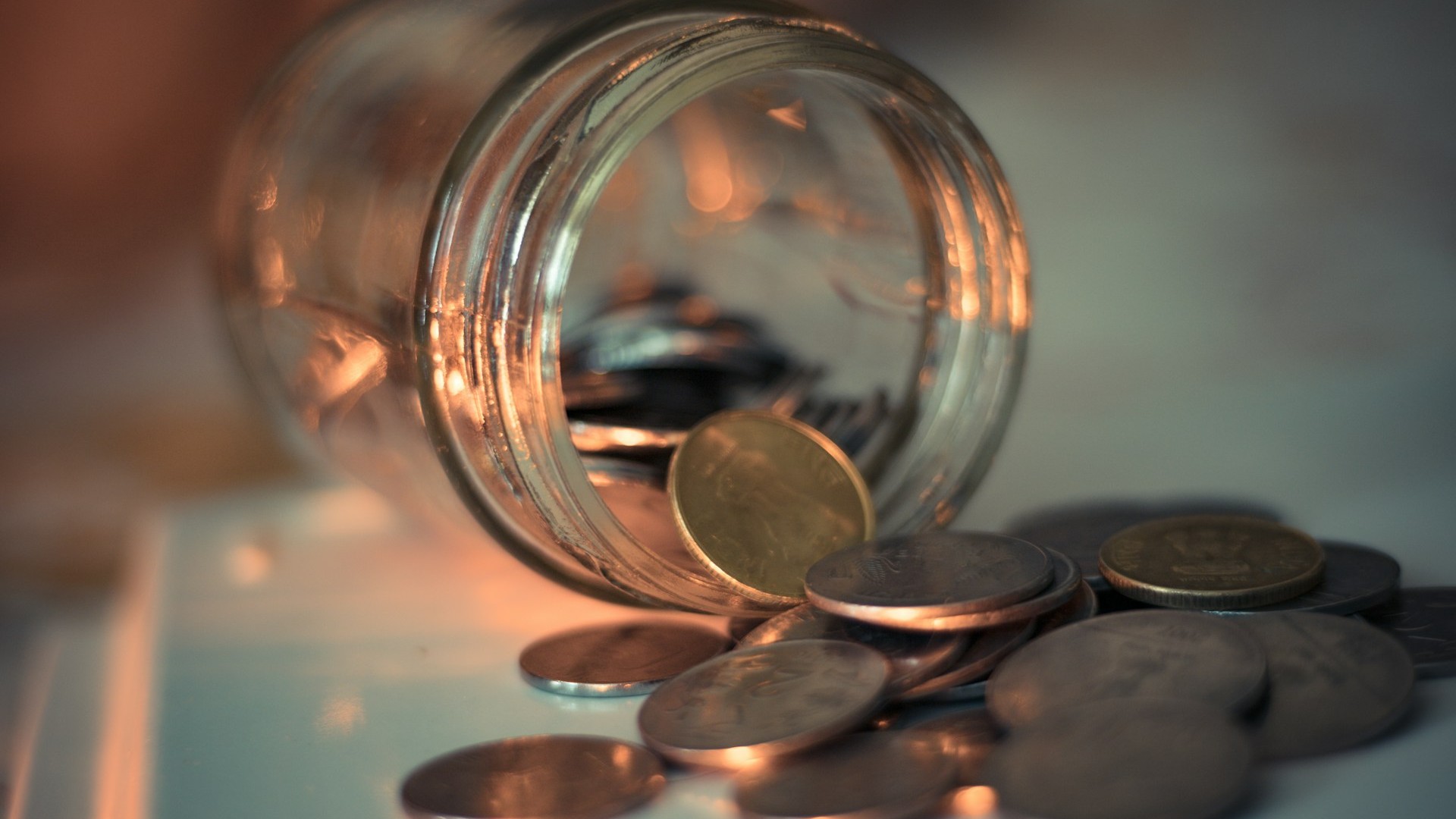
Before you roll up that jar of loose change and haul it to the bank, give it a second look. Most pennies, nickels and quarters are exactly what they appear to be, but every so often one turns up with a doubled date, a stray leaf or a bit of hidden silver, and collectors take notice. Some of these coins have been spotted in everyday pocket change, and plenty more have probably been sitting in dresser drawers for decades. Here are ten to hunt for, along with the values that published sources report. Prices swing with the date, mint mark and condition, and nothing here is a promise of a payout. A coin dealer or grading service can tell you what yours is really worth.
1. The 1955 Doubled Die Lincoln Cent
If you only check one coin, make it this one. On the 1955 doubled die cent, the date and lettering on the front look as if they were stamped twice, and the doubling is bold enough that dealer APMEX calls it very noticeable on the date. There is no mint mark, since it was struck in Philadelphia. CoinSite listed a range of roughly $500 to $1,500 for the variety back in 2013, describing strong doubling on all the lettering. Dealer listings at APMEX have shown an AU55 example certified by NGC at $3,609 and a PCGS MS64 at $6,529, though asking prices are not what a seller is paid. Values vary a great deal with condition, and fakes exist, so have a promising coin authenticated by a grading service before you get excited.
2. The 1972 Doubled Die Lincoln Cent
Here is another doubled die worth a magnifying glass. On a genuine 1972 piece, CoinSite notes doubling on the word LIBERTY, what looks like two letter I’s in the word IN, and two distinct impressions in the date. The same article said average genuine pieces are worth at least $175, and that an occasional uncirculated specimen, sometimes found in bank rolls, can bring hundreds of dollars. That article dates to 2013, so today’s numbers may differ, and it recommends having a suspected coin authenticated by a service such as NGC or PCGS. Not every penny that looks a little blurry is a true doubled die, so compare yours with photos from a trusted guide before you pay for grading. If your coin passes the eye test, photograph both sides in good light and note the mint mark. Dealers and grading services can compare it with known examples, and many will give you an opinion before you commit to any fees.
3. The 1984 Doubled Ear Cent
This one is named for the spot where the doubling shows up. According to PCGS CoinFacts, the doubling on the 1984 variety appears mostly on Lincoln’s ear, with the beard and bow tie also strongly doubled, and it can be seen with the naked eye. PCGS estimates that possibly several thousand examples exist across all grades, which gives you a fair chance of spotting one. Values are modest next to the 1955 and 1972 coins. CoinSite listed a range of about $25 to $100 for the doubled ear, and the PCGS page lists an auction record of $904 for a near perfect MS68 brown example sold through Heritage Auctions in 2020. Think of it as a fun find rather than a retirement plan, because most 1984 pennies are plain ones worth a cent.
4. The 1983 Doubled Die Reverse Cent
Flip this penny over and look at the back. Greysheet says the 1983 variety shows some of the strongest reverse doubling on any Lincoln cent, visible in the words E PLURIBUS UNUM, ONE CENT and UNITED. Worn coins are the likeliest to be in a jar, and CoinSite put them at around $25 to $150 in 2013. Pristine examples are another story. Greysheet reports that a PCGS MS65 Red example sold for $552 at Heritage Auctions in November 2023. Red means the coin still has most of its original copper color, which is unusual for a coin that has bounced around in pockets. Keep suspect pennies away from polish and cleaners, since cleaning can lower the value of a collector coin. A quick tip is to hold the coin under a bright lamp and tilt it slowly, since doubling is easier to see as the light changes.
5. The 1992 Close AM Cent
This is the sleeper of the bunch because it looks so ordinary. Turn the penny over and find the word AMERICA near the one to two o’clock position. On the common version there is a visible gap between the bases of the A and the M. On the scarce Close AM, PCGS explains, the bases touch. PCGS lists the Philadelphia version at $2,500 in AU55 brown and $7,000 in MS63 red, and the 1992 D version at $2,100 and $3,750 in the same grades, adding that even worn examples can bring four figures. A PCGS MS67 red coin sold for $25,850 at Heritage in 2017. PCGS says fewer than 20 of the Philadelphia coins have been graded in all, so most pennies you check will be the common kind, but a few minutes with a magnifier costs nothing.
6. The 2004 D Wisconsin Extra Leaf Quarter
Not every valuable coin is old. In 2004 the Mint struck a Wisconsin state quarter, and some Denver coins came out with an extra leaf on the ear of corn. USA Coin Book describes the error as a leaf added to the bottom left side of the cob, and it comes in two forms, one with the leaf sitting high and one with it low. The coins collectors seek carry the D mint mark of Denver. CoinSite listed them at about $50 to $100 in 2013. Check the quarters in your jar and any state quarter collection you filled as the program rolled out. Most Wisconsin quarters have no extra leaf and are worth 25 cents, so compare the corn carefully. If you are lucky enough to find one, keep it in a soft holder, since scratches can cut into collector value.
7. The 1943 Copper Cent
During World War II copper was needed for the war effort, so the Mint specified zinc coated steel for 1943 cents. Those silvery pennies are everywhere. But CoinWeek reports that a few copper blanks, probably left over from 1942, ended up in the presses and were struck with 1943 dies. Writer Greg Reynolds estimated that each one is worth more than $30,000, and a Philadelphia example graded AU55 and approved by CAC sold for $329,000 in May 2014. Damaged or corroded pieces are worth far less. A magnet makes a handy first test, since a steel cent sticks to it and a copper one does not. Fakes and altered coins exist, so never clean a suspect penny, and take any that passes the magnet test to a grading service.
8. The 1944 Steel Cent
Here is the mirror image of the 1943 story. By 1944 the Mint had gone back to copper, yet CoinWeek says a few 1944 cents were struck on leftover steel blanks from 1943, almost certainly by accident, since steel was not planned for 1944 cents. Reynolds reports that a 1944 S steel cent graded PCGS MS66 sold for $373,750 at the 2008 ANA convention, and a PCGS MS64 brought $158,625 at Stack’s Bowers in August 2013. The same article estimates that every 1943 copper or 1944 steel cent is worth more than $30,000. Ordinary 1944 pennies are bronze and will not stick to a magnet, so the quick test is simple. If a 1944 penny does stick, put it somewhere safe and contact a reputable dealer or grading service.
9. Silver War Nickels
From mid 1942 through 1945 the nickel was made with silver. CoinWeek explains that the wartime alloy is 56 percent copper, 35 percent silver and 9 percent manganese, and each coin holds about 0.05626 ounces of silver. The giveaway is a large mint mark above the dome of Monticello on the back. With silver at $56.97 an ounce on October 17, 2026, FindBullionPrices shows a melt value of $3.21 per coin. CoinWeek adds that collectors pay more for nice uncirculated ones, with common date MS60 coins near $6 and MS65 near $25 in its 2020 figures, and a handful of rare varieties bring much more. A coffee can of old nickels can add up, so sort them by the mint mark. Sorting takes only minutes. Pull out any nickel with a big mint mark over the dome, set the others aside, and tell a dealer exactly how many you have.
10. The 1964 Kennedy Half Dollar
Everyone remembers the Kennedy half dollar, but fewer people know that the first year coin is 90 percent silver. According to the FindBullionPrices melt chart, a 1964 half holds about 0.3575 troy ounces of pure silver, which works out to a melt value of $20.37 at the same $56.97 silver price on October 17, 2026. Kennedy halves dated 1965 through 1970 are 40 percent silver, with 0.147893 ounces and a melt value of $8.43. The date on the front tells you which kind you have. Silver prices move daily, so check the current price before you decide anything, and let a dealer look at coins in nice condition before you cash them in, since collector coins can sell above melt. Kennedy halves are easy to forget in a drawer, so it is worth emptying the whole thing onto the table.

Leave a Reply