

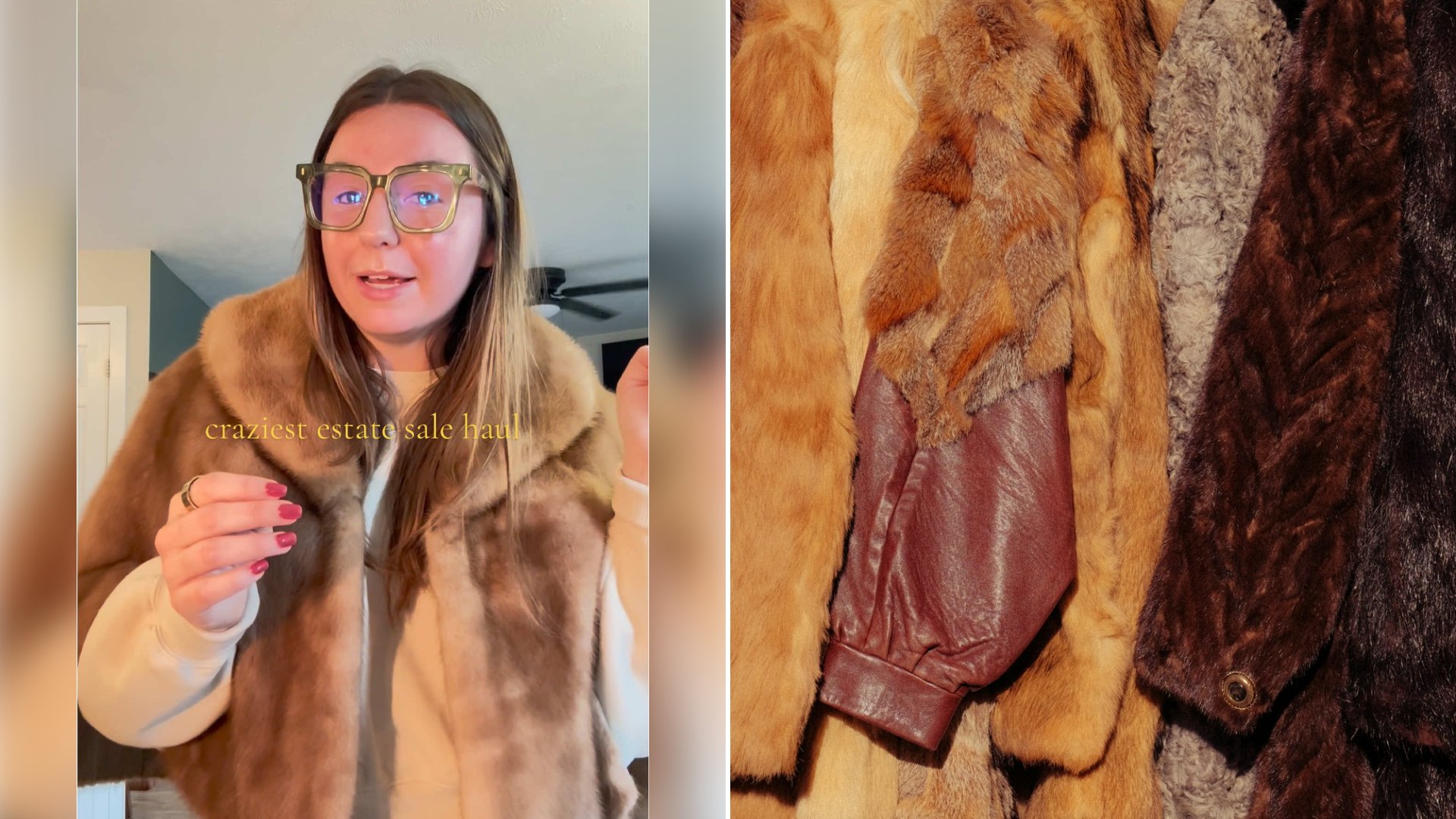
Every estate sale regular has a white whale, the one item they scan every room for and never quite land. For the shopper behind @colleenbyrnevohs, that item was a vintage mink. She had been searching for a long time, and on one lucky day at an estate sale she finally got it, along with a handful of other treasures she says made the day a very close second to the day she married her husband.
@colleenbyrnevohs
A Dream Item With a Family Backstory
In the caption she shared online, she explains why the hunt mattered so much. Her great grandmother owned mink coats, but she was teeny tiny, and none of the women in the family could fit into them. That left her wanting a mink of her own, one that would actually work with her frame and her wardrobe. So she kept checking estate sale listings, waiting for the right piece to surface.
Her patience paid off after she spotted a sale on estatesales.net. She tried to arrive right when the doors opened, and she says she honestly expected some of the things she wanted to be gone by the time she got there. Instead, everything she had hoped for was still sitting where the listing promised. For anyone who has ever shown up to a sale only to find the best pieces already claimed, that is a small miracle.
The Home Finds Came First
Before she got to the clothing, she picked up a number of smaller treasures. She came away with a string of pearls plant, a bag of vintage Christmas ornaments for four dollars, including silk ornaments with velvet ribbons and a cross stitch one, and a set of wooden blocks that spell Thanksgiving for five dollars. She also grabbed Christmas albums at a dollar each, planning to display them in a record room that has six record slots on the wall. A kind older gentleman checking out even told her to take a wooden spoon for free.
She says she found a vintage Ireland rugby polo with shoulder pads, which suits her family well, since they are Irish and march in the Saint Patrick’s Day parade in Kansas City every year. For her husband, JT, she picked up a Ralph Lauren plaid shirt, a Ralph Lauren corduroy sport coat for twenty dollars and a woven Burberry sport coat, also twenty dollars, that she says will pair nicely with the Burberry newsboy cap from an earlier estate sale haul. She also spotted a gold and jade vintage timepiece sitting on a table in the restroom of the sale, which is the kind of place only a thorough shopper would think to look.
The Closet and the Pocket
The last two items were the ones she had been looking forward to for ages, and she headed straight to the closet. Inside she found a gorgeous fur coat with cuffs, a lapel and a stitched scroll lining, plus a mink shrug with pockets. Then came the moment that turned a great find into a story. She reached into the pocket of the shrug and pulled out a receipt from Kilpatrick’s for $568.22, dated October 21st, 1972.
She bought the shrug that day for ninety dollars. The owner’s initials are stitched inside, and she says the woman’s name was Helen. The creator called it her best find ever and says she plans to wear it for everything, in the summer and even to the beach. Her closing line says the estate sale gods were on her side, and after a haul like that, it is hard to argue.
Why a Receipt in a Pocket Matters
Finding the original receipt does more than make a charming story. It gives the piece a date, a price and a place of purchase, which is exactly the kind of provenance that collectors and resellers love. Based on that receipt, the shrug was bought new more than fifty years ago. A purchase of roughly five hundred and seventy dollars in 1972 would be worth several thousand dollars in today’s money by most common inflation calculators, which puts the ninety dollar price in a very different light. Of course, a receipt shows what someone paid, not what a piece is worth now, and the creator did not claim a resale value.
If you want to try the same kind of hunt, there are a few habits worth borrowing from her approach.
Tips for Estate Sale Shopping
First, check every pocket and lining. People tuck away receipts, notes, tissues and sometimes small treasures, and a pocket can tell you who owned an item and when. Look for stitched initials or labels too, since they can help you trace the maker or the department store.
Second, plan your timing. Many listings post photos several days ahead, so you can decide which rooms to visit first. Arriving when the doors open gives you the best shot at popular categories like clothing, jewelry and records. Some sales also offer reduced prices on later days if you are flexible and can live with leftovers.
Third, go straight to the closets if clothing is your goal. Fur, leather and tailored pieces are often tucked away in the back of a bedroom closet, and the best ones go quickly. Bring a tape measure or know your measurements, because vintage sizing rarely matches modern sizing.
Fourth, inspect for condition. For fur, check the skin side of the lining for dryness or splitting, look at the cuffs and underarms for wear, and smell the garment for strong musty odors. Gently tug at the seams. A furrier can tell you whether a repair is simple or expensive.
Caring for a Vintage Fur
If you do bring home a vintage fur, storage matters. Furs generally like cool, dark, ventilated spaces and a wide, padded hanger so the shoulders keep their shape. Avoid plastic garment bags, which trap moisture, and keep the piece away from direct heat and sunlight. A cloth bag or an old cotton sheet works better. Many people take a fur to a professional cleaner or furrier who specializes in these garments rather than trying to wash it at home. Some shoppers feel strongly about fur for personal reasons, and that is a fair part of the conversation, but many collectors see wearing an existing vintage piece as a way to keep it out of the landfill and honor the person who owned it first.
A Story That Feels Complete
What makes this find so satisfying is that it has a beginning, a middle and a wink at the end. There is a family connection to mink, a long search, a well timed arrival and a small slip of paper that turned a purchase into a conversation with a stranger named Helen from fifty years ago. It is the kind of ending that reminds thrifters why they keep getting up early and driving to unfamiliar neighborhoods. Sometimes the best part of a find is not the item itself but the little proof that someone treasured it before you did.

Leave a Reply