

Garage sale buyers are used to picking up odd objects and wondering what they are. One woman’s boyfriend spent 20 dollars on a small brass cylinder with a notched opening and a tiny hole in the bottom. When she asked what it was, his best guess was a train whistle, the kind a conductor might use. There was just one problem. When she blew into it, nothing happened.
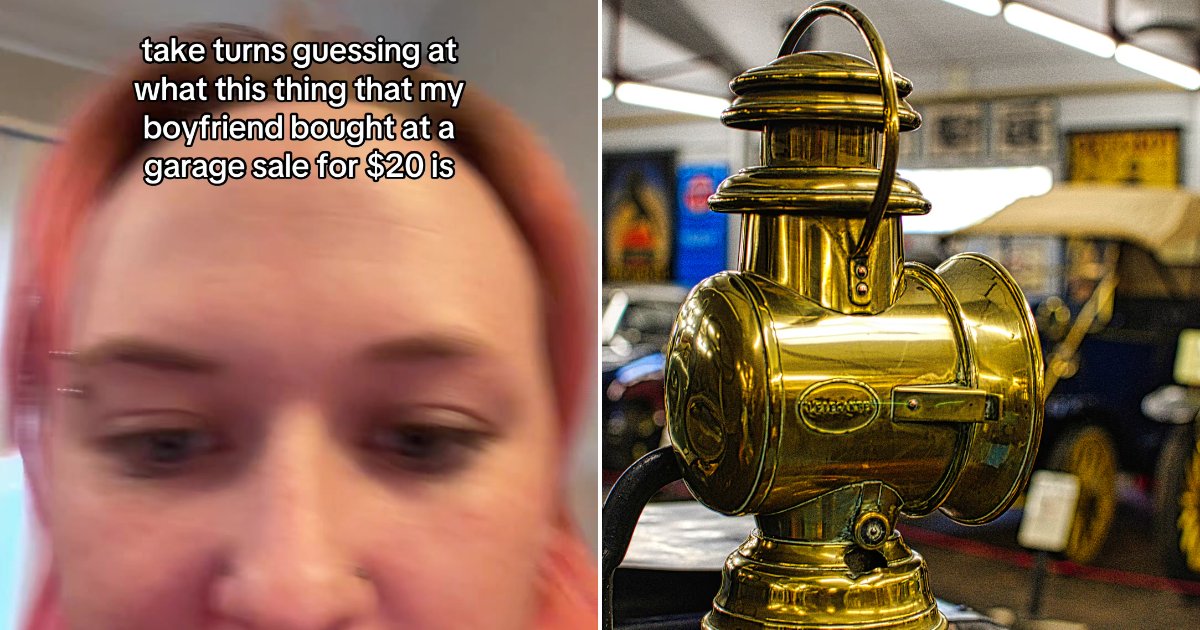
The mystery was laid out by @junk_mom, who turned the little brass piece into a guessing game before revealing the answer and a surprising maker’s mark.
@junk_mom
The Reveal
It is a bottle opener. The notch at the top fits over a bottle cap, and the small hole at the bottom, which the boyfriend thought was a whistle hole, is simply part of the design. She searched for the exact piece online and could not find it anywhere. The reason, she figured out, was on the underside. Stamped into the flat bottom is a maker’s mark for Abercrombie and Fitch.
That surprised her, and she explains why. Before the name became known for clothing, she says, the company started as a single store in Manhattan that sold upscale outdoor and sporting goods, along with luxury items from Europe. Some pieces were one of a kind. Bar accessories were among the goods sold for a while, so she believes this opener was probably handmade in Europe and stamped with the store’s mark. Because she cannot find the same model listed anywhere, she suspects it may be very limited or even one of a kind.
Why a Tiny Stamp Changes Everything
A maker’s mark is often the first clue to an object’s story. On small metal pieces, it may be a name, initials, a symbol, or a retailer’s stamp. Sometimes the stamp belongs to the manufacturer. Other times it belongs to the store that sold the piece, which is a detail worth knowing because a retailer may have ordered goods from outside workshops. Either way, it gives you something specific to search, and it can separate an anonymous brass gadget from a collectible with a documented origin.
It also helps to know a little about the brand. The company described here is widely known for its roots as an outfitter of sporting and outdoor gear, which is why vintage pieces carrying its name can attract people who collect sporting, camping, and barware items. That history is part of why a garage sale find like this one is a fun thing to share.
How to Research an Unknown Object
- Photograph every surface in good light, especially the base, the inside, and any edges where a stamp might hide.
- Describe it by function and material, for example brass bottle opener or lever corkscrew, instead of guessing at the brand.
- Search for the stamped name along with words like vintage, barware, or mark, and read several sources rather than trusting a single listing.
- Look at sold listings and auction results instead of asking prices, since sold prices show what buyers actually paid.
- Ask a local antiques dealer or a collector club, who may recognize a piece at a glance.
Be Careful With Marks
A famous name stamped on an object is exciting, but it is not proof by itself. Reproductions, later reissues, and licensed items can carry the same name, and the quality of the stamp, the weight, and the way the piece is made all matter. When something cannot be found anywhere online, that can mean it is rare, but it can also mean the search terms are not quite right. Treat any claim of rarity as a theory until a knowledgeable person has examined it, and be cautious about assigning a dollar value.
Caring for a Brass Barware Piece
- Wipe it with a soft, slightly damp cloth and dry it right away.
- Avoid harsh abrasives, which can scratch the metal and wear away a stamp.
- Polish only if you like the bright look, because many collectors prefer the soft darkening that comes with age.
- Test any polish on a hidden area first, especially if the piece has plating.
Garage Sale Strategy
Twenty dollars for a curious brass object is a gamble many buyers would take. Items that you cannot identify at the table are often worth a second look, especially if they feel heavy, show clean construction, or have any kind of stamp. Turn things over, check the base, and use your phone to photograph marks before you pay. If a seller does not know what something is, they may price it by guesswork, which can work in your favor. Even when a find turns out to be ordinary, learning its history is part of the fun.
The Takeaway
What looked like a broken train whistle turned out to be a bottle opener with a brand story attached. The lesson is simple: look at the base, search the mark, and give an object a chance to explain itself before you write it off.
Credit for the original post goes to @junk_mom on TikTok.

Leave a Reply