

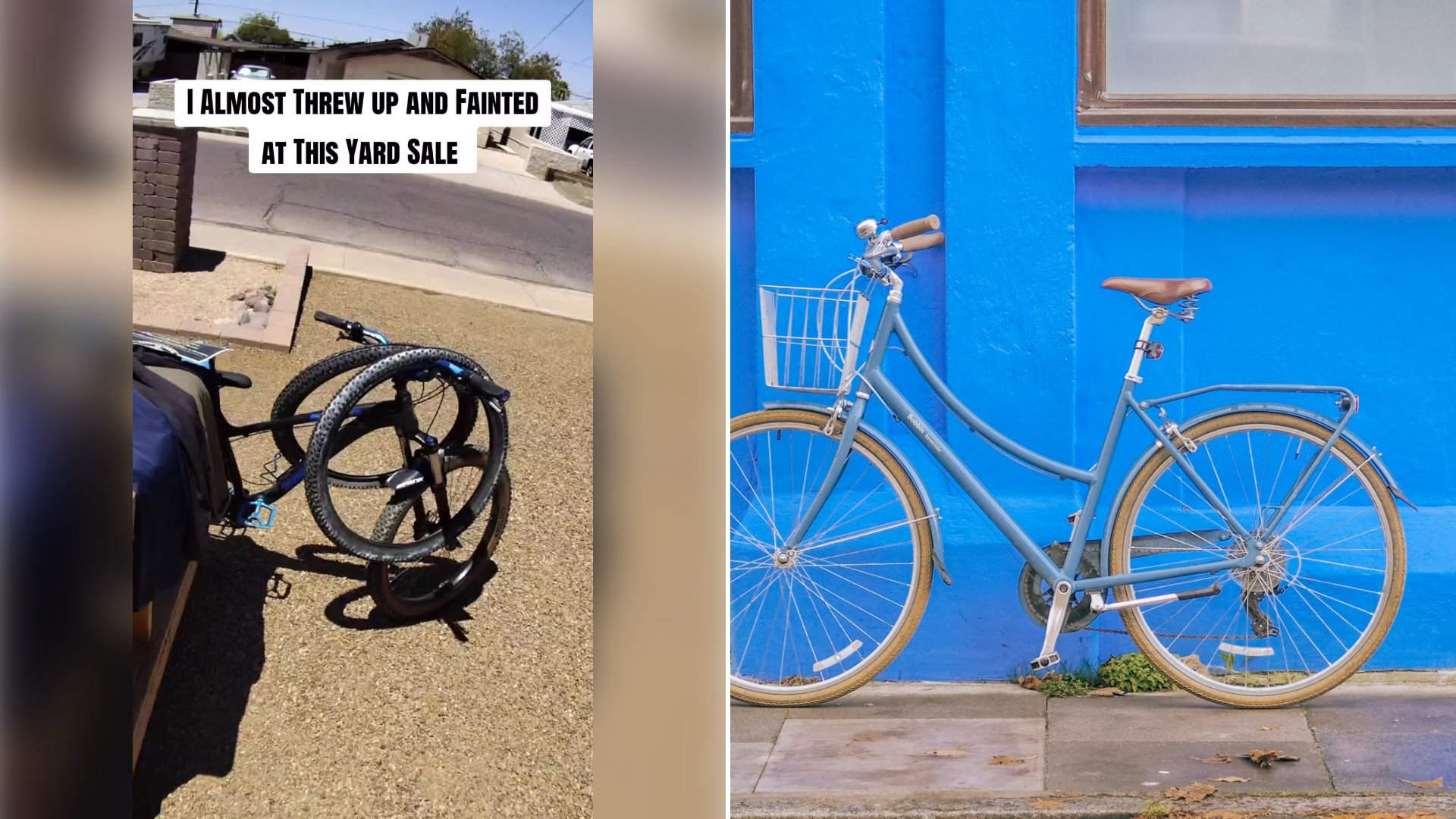
Yard sale shopping usually means haggling someone down from five dollars to three. So when TikTok creator @yardsalehippie2 wandered through a random neighborhood sale and found a handwritten price tag reading two thousand dollars taped to what looked like just another mountain bike, the reaction was pure disbelief. The bike sat among folding tables of mismatched dishware and old VHS tapes, looking no different from the kind of ten-dollar bike most people expect at a driveway sale.
The camera lingers on the tag, then pans up to the bike itself, inviting viewers to guess what could possibly justify that number sitting next to a box of old paperbacks. It is the kind of moment that turns a mundane errand into a small spectacle, and it is exactly why yard sale content keeps finding an audience: the gap between what something looks like and what it is actually worth is where all the drama lives.
@yardsalehippie2
High end mountain bikes are a lot more expensive than casual shoppers realize, and that is really the whole joke of the video. Entry level mountain bikes from major brands typically start between three hundred and six hundred dollars, but full suspension trail and enduro bikes built around carbon fiber frames from brands like Santa Cruz, Yeti, Specialized, and Trek routinely retail new for anywhere between three thousand and ten thousand dollars or more. A used bike from one of those higher end lines, even several years old, can easily hold a resale value in the one to two thousand dollar range if the frame, suspension, and drivetrain components are still in good working order.
That is what makes a two thousand dollar yard sale tag plausible rather than purely comedic. Mountain bikes depreciate the way cars do: steeply in the first few years, then more slowly once they settle into a stable resale range tied to frame material, suspension quality, and component groups like Shimano XT or SRAM GX drivetrains. A seller who bought a premium trail bike years ago and is pricing it based on what similar used models sell for online is not necessarily being unreasonable, even if the price looks absurd next to a folding table of secondhand paperbacks and chipped mugs.
It also highlights a broader truth about yard sale shopping: pricing at these sales is rarely standardized, and sellers price items based on wildly different logic. Some people are simply trying to clear out a garage and will take whatever they can get, while others have done their homework on resale marketplaces and expect buyers to pay closer to fair market value, especially for specialty gear like bikes, tools, or electronics. That inconsistency is part of what makes yard sale content so watchable, because every table is its own small negotiation waiting to happen, and the shopper never quite knows which kind of seller they are dealing with until the price tag is already in view.
For anyone actually in the market for a secondhand mountain bike, the moment is a useful reminder to check the frame material, suspension type, and drivetrain components before dismissing a price as a joke, and to compare it against recent sold listings on resale marketplaces rather than relying on gut instinct alone. A bike that looks ordinary leaning against a folding table can still be carrying a genuinely premium build underneath, and that uncertainty is exactly what kept this video’s comment section busy trying to settle the debate.
More from Vinyl and Velvet
- Reseller Says Thrift Store Employees Do Not Look Up Prices After Finding a Red Nikon Coolpix for $15, Then Shows Sold Listings From About $135 to $166 to Back It Up
- Reseller Shows Up to a Yard Sale Right as the Seller Is About to Haul Everything Left Over to Goodwill and Pays Just $50 for the Entire Remaining Driveway Full of Items
- Creator Who Tags It Dumpster Diving Finds a Dirty Yellow Chair, Searches It and Sees Used Hosu Listings From $2,200 to $4,000, Then Deep Cleans It and Lounges in It

Leave a Reply