

Walk past the right thrift store shelf and you might see a scratched-up dresser with a faded finish that nobody wants. The creator behind @NewLifebyNoah looks at that same dresser and sees a payday. In one project, a $20 thrift store find turned into a $1,000 sale.
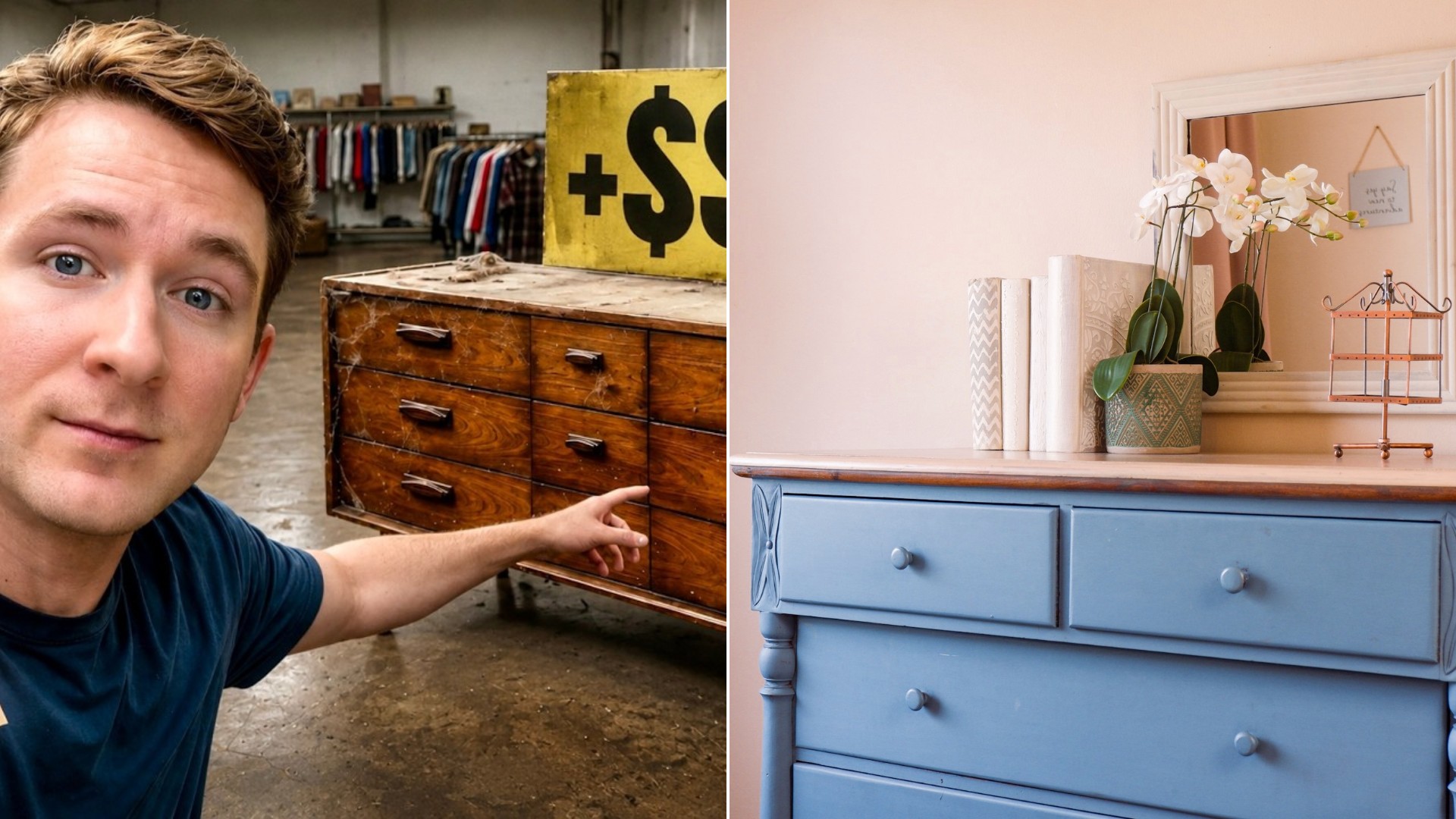
The starting point is a simple idea: thrift stores all over the world are filled with forgotten furniture, including scratched dressers, faded finishes and pieces most people walk past without a second thought. The question is whether that beat-up furniture can be turned into something people actually want in their homes again.
The Shopping Trip That Almost Went Nowhere
The hunt begins at the Habitat for Humanity store in Chicago. Just looking around, the creator finds a dresser, but the $210 price tag is way too high. Then comes a set of nightstands with marble tops. Nice, but $90 is not a great price either.
Here is where the discipline shows. The creator says they would probably buy those nightstands if the set were $40. But $40 each? Not a great price. So the trip ends with nothing in the cart, and the creator heads off to try a different store.
That moment matters more than the flip itself. Plenty of beginners fall in love with a piece, pay too much and then wonder why the numbers never work. Walking out empty-handed is part of the job.
The Spending Rules
The creator shares a personal rule of thumb: unless it is a really special piece, they usually try to spend $50 or less. Brand name pieces, such as Lane, can bring better resale value, but when the price goes over $100, it is not worth it to them.
Those limits keep the risk small. If a piece is bought for $20 and the flip goes badly, the loss is a lunch out. If a piece is bought for $200 and the flip goes badly, it is a real hit to the budget.
The Numbers on the Winning Dresser
The dresser that came home cost $20. The creator spent about $40 on materials. The plan was to list it for $1,000. If a buyer could be found at that price, the profit would be $940, for about seven hours of work.
And it sold. The creator calls $1,000 a fantastic price for a flip and says they were super happy with the profit and super happy with the piece.
Spread across those seven hours, $940 works out to roughly $134 an hour before counting anything else. That is a handy way to think about it, but remember that it counts only the hours spent on the project itself. Hunting for the piece, hauling it, taking photos, writing the listing and meeting the buyer all take time too.
How to Try This Yourself
You do not need a workshop full of tools to start. You need patience, a price ceiling and a good eye. Here is a simple way to approach it.
- Set a ceiling before you walk in. Decide the most you will pay for a piece and stick to it. The creator’s $50 guideline is one example. Choose a number that you could lose without losing sleep.
- Check the bones. Pull every drawer out and push it back in. Look underneath and inside for wobbles, cracks and water stains. A scratched top can be fixed. A twisted frame is a much bigger headache.
- Look for the maker. The creator points out that name brands such as Lane can fetch better resale value. Look inside drawers and on the back for a stamp or label.
- Add up your supplies. The $40 spent on materials here shows that a flip can be done on a small budget. Track every dollar so you know your real profit.
- Price it with proof. Before you settle on a listing price, look at what similar pieces in your area have actually sold for, not just what sellers are asking. Then be ready to wait for the right buyer.
Why Some Pieces Are Worth Walking Away From
Two pieces in this story were passed up, and both had features that look appealing: a dresser and marble-topped nightstands. Both were priced above what the creator felt the resale value could support. That is the heart of furniture flipping. The best-looking piece in the store is not always the best deal in the store.
A few more habits help. Visit the same stores often, because stock changes. Ask whether there are sales days or discount tags. And when a price is a little high, it never hurts to politely ask if there is any flexibility.
The Takeaway
A $20 dresser, about $40 in supplies and about seven hours of work became a $1,000 sale. The lesson is not that every flip pays off that well. It is that the profit starts at the store, with the decision about what to buy and what to leave behind. Know your limits, be willing to walk away, and the forgotten furniture on the thrift store floor may just turn into your next good payday.
More Stories You May Like
- Thrifter Who Almost Skipped A Small Town Thrift Store While Driving Through Finds The Vintage Coach Purse She Had Been Waiting For
- Her Favorite Thrift Store Went 50 Percent Off, So She Waited On Fenton Cranberry Glass She Passed Days Earlier, And It Paid Off
- She Paid $5 For A Thrift Store Painting, Turned It Over, And The Label Led Her To A 1964 Art Contest Open Only To Utility Company Employees

Leave a Reply