

Every thrifter has a story about the one that almost got away. This one is about the one she almost never walked into. The creator behind @mackenziescheid was just passing through a town she does not live anywhere near when she decided, on impulse, to pop into a thrift store. What she found inside is the vintage Coach purse she had been waiting on for a long time.
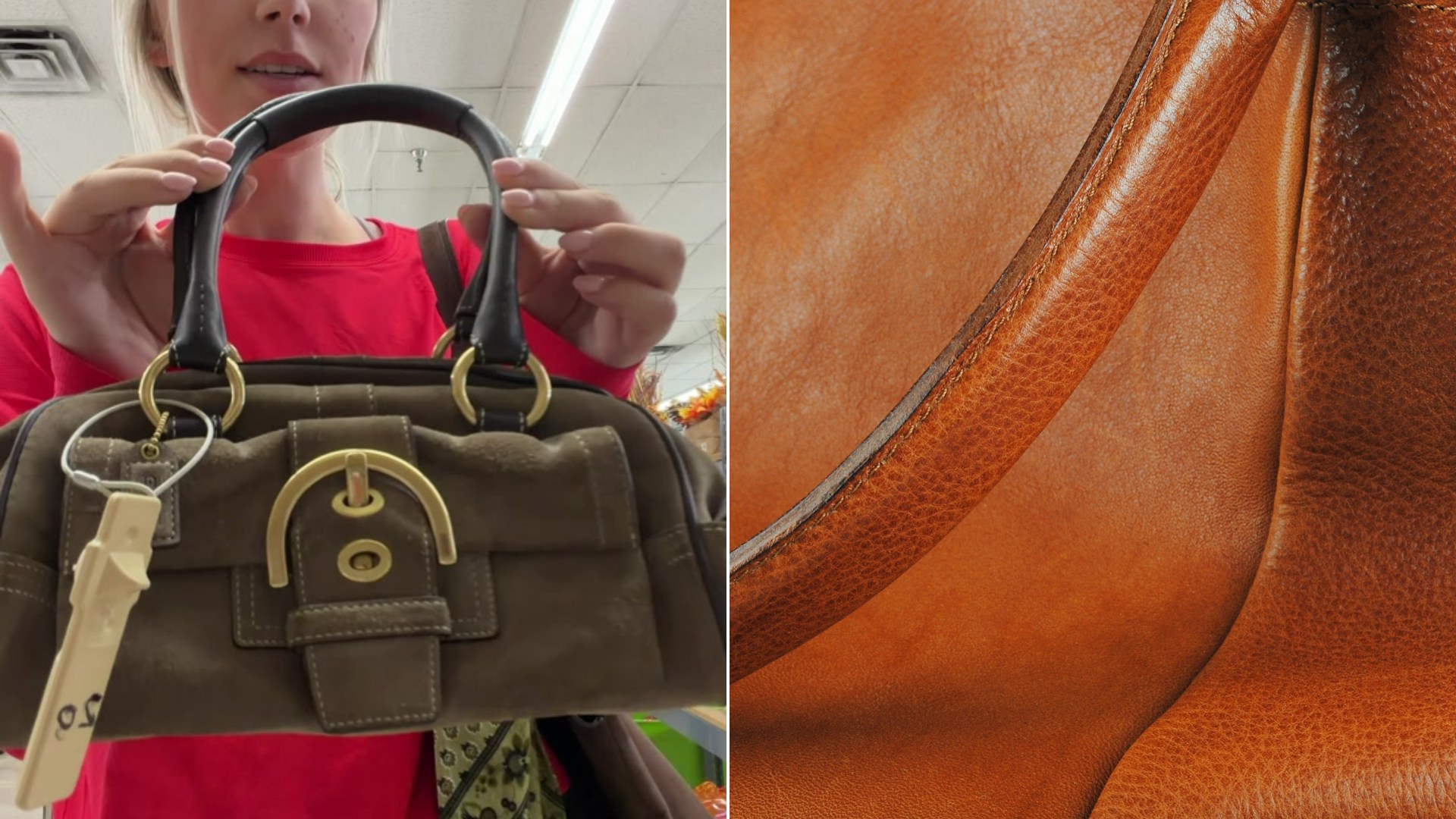
Her caption has all the excitement of the moment: “The thrift store finally decided it was my turn to find a Coach purse!!!” She tagged the post with thrift, thrift haul, thrift purse, Coach purse and vintage Coach purse.
What She Says
The post is about thirty seconds long, and it is more about the lesson than the details. She starts by asking us to look at what she just found at the thrift store, and her reaction is a happy “You’re joking.” Then she confesses that she almost did not come into this store at all. She was only driving through town, she says, and she does not live anywhere near it. She just decided to stop. Her advice: this is your sign. Always stop in.
She does not say what she paid, what style or color the bag is, or the year it was made, so we will leave those details alone. What the post does tell us is the feeling, which anyone who has ever thrifted will recognize. The best finds often come when you were not planning on much.
Why A Vintage Coach Bag Is A Prize
Coach bags have a following among secondhand shoppers, and the brand’s story explains why. According to Wikipedia’s history of Coach, the company began in 1941 as a family run workshop in a Manhattan loft on 34th Street, where six leather workers made wallets and billfolds by hand. Miles Cahn studied how the leather in baseball gloves softens with use and developed a process that made leather stronger, softer and more flexible, with richer color. His wife, Lillian Cahn, suggested adding women’s handbags, and the sturdy cowhide bags were an immediate hit.
In 1961 the Cahns bought the company, and they hired Bonnie Cashin to design handbags. Cashin led the creative side from 1962 to 1974, adding side pockets, coin purses and brighter colors and introducing the silver toggle hardware that became a hallmark of the brand.
That history is the reason collectors are drawn to older bags. The leather was designed to improve with age, so a well cared for bag from decades ago can look better than a newer one that has not had time to develop its character. And because the bags were built to last, a lot of them are still around, waiting in thrift stores for someone with a sharp eye.
How To Look At A Secondhand Handbag
Finding a bag is one thing. Knowing whether it is a good buy is another. These are general guidelines for any secondhand leather bag, and they are not a substitute for professional authentication.
Check the leather. Run your hand over the surface and look for deep cracks, peeling, stiffness or a sticky feel. Surface scuffs can often be improved with conditioning, but dry, flaking leather is much harder to fix.
Look at the corners and the handles. They take the most wear, so check for fraying, splitting or thin spots. A handle that is about to break is a repair job.
Test the hardware. Open and close every zipper, clasp and turn lock. Make sure nothing sticks, and look for corrosion or missing pieces.
Inspect the lining. Open the bag and smell it. A musty or smoky odor is hard to remove, and stains or tears inside can be costly to repair.
Look for markings. Brands often stamp or stitch identifying marks inside the bag. Compare what you see with photos from the brand’s own materials or a trusted resale expert, and be careful about relying on random online checklists.
Compare prices. Before you buy, look up what similar bags have sold for. A thrift store price is often far lower than the resale market, which is the fun of the hunt, but it also helps to know what you have.
Ask for a second opinion. If a bag looks promising and the price is high, a reputable authentication service or a knowledgeable consignment shop can confirm what you have.
Caring For What You Find
Once you bring a treasure home, a little care goes a long way.
Clean gently. Wipe the exterior with a soft, slightly damp cloth, and test any leather cleaner on a hidden spot first.
Condition the leather. Use a product made for the type of leather you have, in a thin layer, and let it absorb.
Let it air out. If there is an odor, leave the bag open in a well ventilated spot out of direct sunlight, and stuff it with clean paper to hold its shape.
Store it properly. Keep it in a dust bag or an old cotton pillowcase, away from heat and humidity, and do not store it in plastic.
The Case For Stopping In
Her last words are the real value of the post. Always stop in. If you are traveling, a thrift store in an unfamiliar town can be a gold mine, because the inventory comes from people you do not know and tastes you would not expect. Stores in smaller towns can be less picked over than those near big cities, and prices are often gentler.
Here are a few tips for thrifting on the road.
Build in time. Give yourself an extra half hour for a stop, and treat it as part of the trip, not a detour.
Know your wish list. She had been waiting for a Coach purse. Having a short list of what you want makes it easier to spot it quickly.
Bring a tote and some cash. Small stores sometimes have limited payment options, and you may need a bag for your haul.
Check the store’s hours and donation days. New items often come out on certain days, and a visit right after can be the best.
Be curious. Her good luck came from stepping through a door she almost passed. The best thrift stories often start that way.

Leave a Reply