

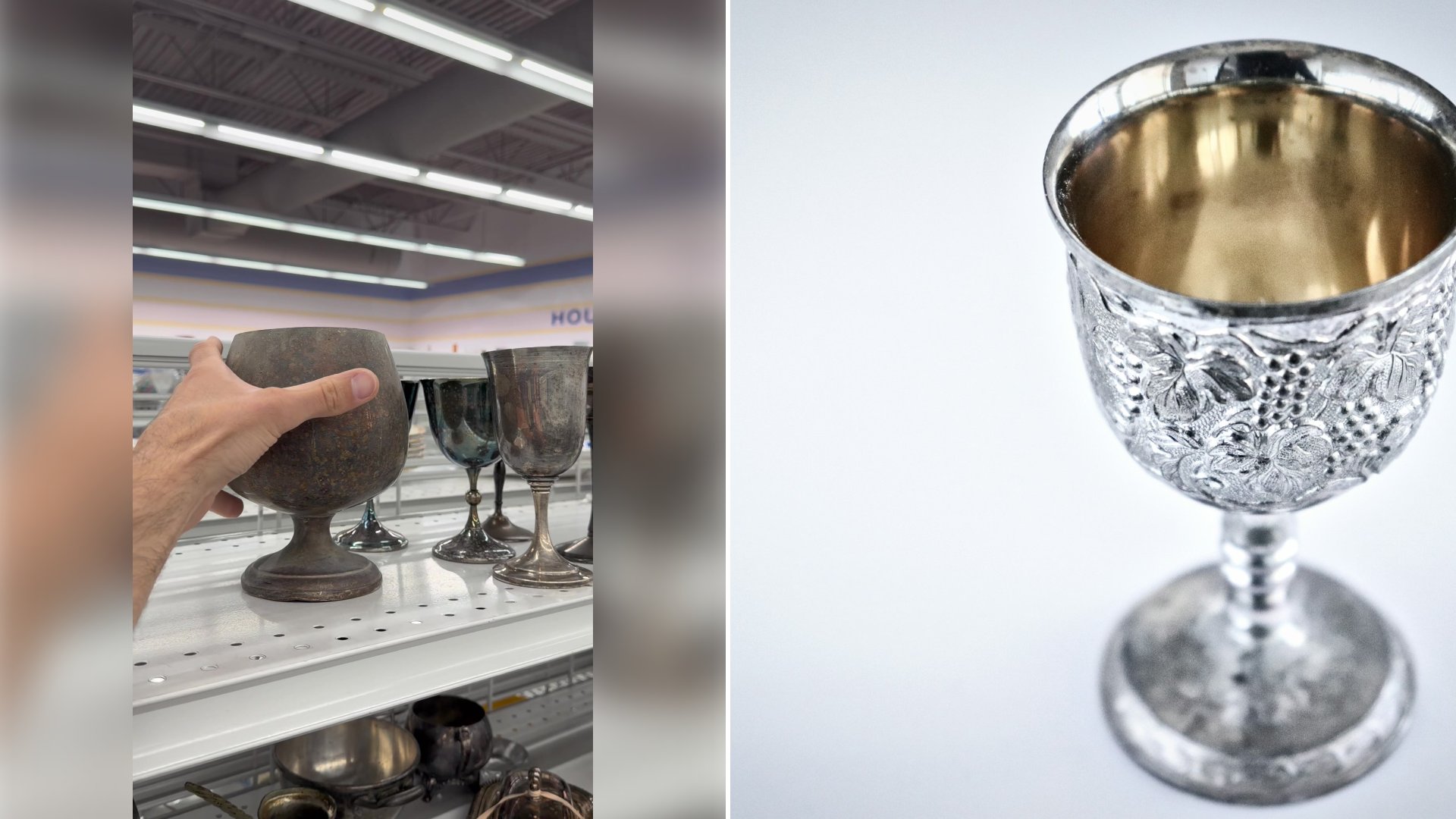
It started out looking like something nobody else on the shelf wanted: a goblet coated in a dull gray-black tarnish so heavy it was hard to tell what metal was even underneath. Picked up at a thrift store for under four dollars, it became the subject of a slow, satisfying, step by step cleaning process caught on camera from start to finish — and the transformation by the end is the kind of payoff that makes restoration videos so addictive to watch.
The creator behind the video, @crazyclean01, has built a following specifically around this format: finding grimy, overlooked secondhand pieces and walking viewers through exactly how they get restored, step by step, with no shortcuts skipped. The goblet is a particularly good example of the format’s appeal, since almost nothing about its starting condition suggested it was worth saving.
@crazyclean01
That heavy black tarnish is actually a useful clue on its own. Silver and silver-plated items darken over time because the metal reacts with sulfur compounds in the air, forming silver sulfide — the same chemical process behind tarnished sterling flatware passed down for generations. Goblets like this one are rarely solid sterling silver, though; most mass-produced metal goblets and chalices from the twentieth century were either silver plate over a base metal, pewter, or brass, and the specific markings stamped into the base or stem are usually what settles the question. A stamp reading “EPNS” stands for electroplated nickel silver, meaning a thin layer of silver was bonded over a nickel alloy base rather than the piece being solid precious metal throughout.
The cleaning methods that work on a piece like this depend heavily on which metal is underneath. Silver plate typically responds well to a gentle polish or a baking soda paste, while more aggressive tarnish sometimes calls for an electrolysis-style method using aluminum foil, baking soda, and hot water to pull the sulfide layer off chemically rather than scrubbing it away by hand. Brass and pewter, by contrast, need their own specific approach, since the wrong cleaner can strip a protective patina that collectors actually want to keep intact. Figuring out the base metal before cleaning is the difference between restoring a piece and accidentally damaging it.
Once any markings are visible after cleaning, they typically point to a rough era of production. Mass-produced silver-plate barware and goblets surged in the mid-twentieth century as plating technology made ornate-looking pieces affordable for middle-class households, often sold as wedding gift sets or hotel and banquet ware. A goblet this tarnished sitting untouched in a cabinet for decades, then donated without anyone bothering to clean it first, is a common path these pieces take from someone’s china cabinet to a thrift store shelf.
That gap between what a piece looks like coated in decades of grime and what it actually is underneath is exactly why restoration content like this performs so well. Viewers get the suspense of not knowing what the reveal will look like, paired with the practical, repeatable satisfaction of watching a method work exactly as promised. It also doubles as a quiet argument for not walking past the ugliest-looking item on the shelf — sometimes the tarnish is doing all the work of scaring everyone else off.
More from Vinyl and Velvet
- Houston Creator Soaks a Customer’s Pope Gosser Plates in Hydrogen Peroxide for 24 Hours, Bakes Them at 200 Degrees and Shows Decades of Brown Stains Gone
- Minnesota Antique Refrigeration Specialist Shows a Teal Fridge Swinging Open Hands Free When a Foot Presses a Chrome Pedal, Revealing Copper Toned Shelves Inside
- A Restorer Strips Decades of Paint Off an Antique Door Latch Using the ‘Crockpot Method,’ and Commenters Joke That It Looks Like Someone Is Slow-Cooking a Victorian Lock for Dinner

Leave a Reply