

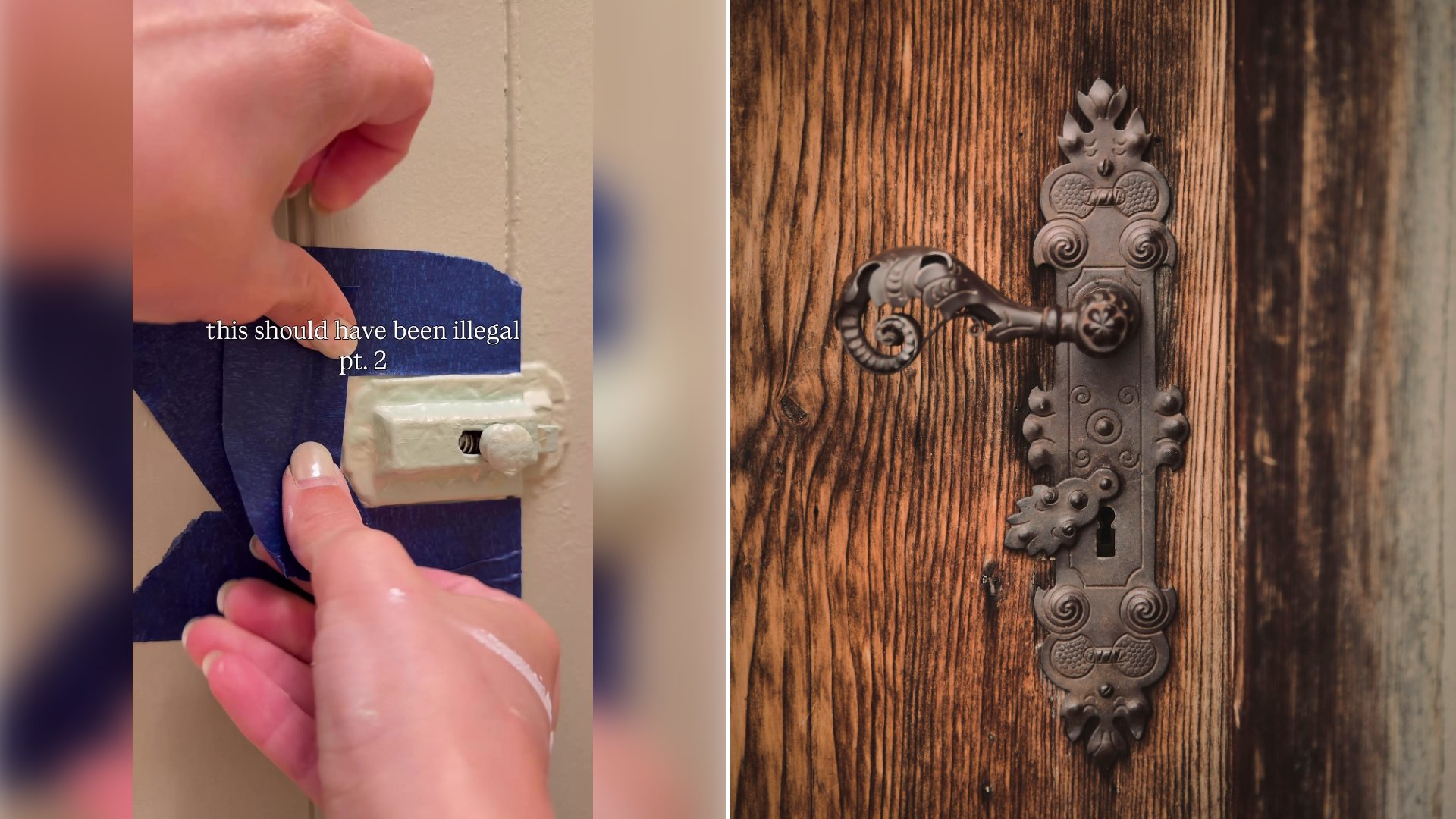
A video from the account Hattie opens mid-project: blue painter’s tape peeled back from a door frame to reveal an old latch buried under thick, decades-old layers of cream-colored paint. The on-screen caption reads “this should have been illegal pt. 2,” and the real caption underneath is more direct about the scale of the job: “Restoring antique hardware continues, only [an exaggerated number] more to go.” The clip has pulled in 180,000 likes, 570 comments, and nearly 3,500 saves, mostly from people who had never heard of the specific method she is using.
@hattiekolp Restoring antique hardware continues, only so many more to go! #crockpotmethod #antiquehardware #restoring
The hashtags give away the technique: the “crockpot method,” a well-documented approach among old-house restorers for stripping paint off metal door hardware without harsh chemical strippers. The process is almost comically low-tech. Old hinges, latches, doorknobs, and locks get submerged in a slow cooker filled with water and a scoop of baking soda, then left to simmer on low for several hours. The gentle, sustained heat softens and lifts layer after layer of old paint without damaging the underlying metal, and once the piece cools, the softened paint typically scrubs off with a toothbrush or wire brush, revealing original brass, bronze, or iron finishes that had been hidden under paint for decades.
It is a popular method specifically because of how many old houses have hardware exactly like this. Builders and homeowners routinely painted straight over doorknobs, hinges, and latches during remodels for most of the 20th century, often multiple times per house as paint colors changed, which means a single piece of hardware in an older home can carry five, six, or more layers of paint stacked on top of whatever metal finish it started with. The crockpot method has become a go-to fix precisely because it is cheap, requires no toxic solvents, and works on the delicate, often fragile original finishes found on genuinely old hardware.
Commenters leaned hard into the joke built into the format. The top comment, pulling more than 8,000 likes, asked “what’s for dinner mum? slow cooked Victorian door locks,” riffing on the visual of genuinely antique hardware sitting in a kitchen appliance like a pot roast. Several other viewers pointed out that the video also revealed wood trim underneath white paint, with one person writing “oh my goodness, the wood underneath too!” and another saying they would “set the wood free of its white paint too” — suggesting the broader project extends well beyond a single latch into trim and woodwork elsewhere in the house. One commenter said they had the “exact same landlord special” hardware in their own home, attaching a photo of a similarly paint-caked fixture, a reminder of just how common this specific kind of over-painted antique hardware still is in older rental housing.
Restoring hardware this way is slow, deliberate work, and Hattie’s own caption makes no effort to hide that — the joke about having an absurd number of pieces left to go is clearly not much of an exaggeration. But the appeal of this kind of content is exactly that patience: watching paint that has sat untouched for generations finally give way to the original metal underneath, one slow-cooked piece at a time.
More from Vinyl and Velvet
- Thrifter Spots a Dried Out Carved Folding Book Stand Someone Donated, Brushes Conditioner Into Every Cutout and Commenters Say It Is a Rehal, a Stand Used for Reading the Quran
- An Antique Victorian High-Wheel Tricycle Takes a Lap Around a Classic Car Festival in Greenfield Village
- Collector Says Her Hair Fell Out, So She Swab Tested Her Favorite Antique Doll for Lead Paint and Watched the Tip Turn Dark Purple on the Body, Leg, Foot and Head

Leave a Reply