

It sits in the corner of a spare room, scuffed and a little dull, with a few water rings on top and a drawer that sticks. It looks tired. So someone gets the idea to rent a sander, pick up a can of stripper and give the old dresser a fresh start. A few weekends later, it is shiny, smooth and bright. And it may have just lost a big chunk of its worth.
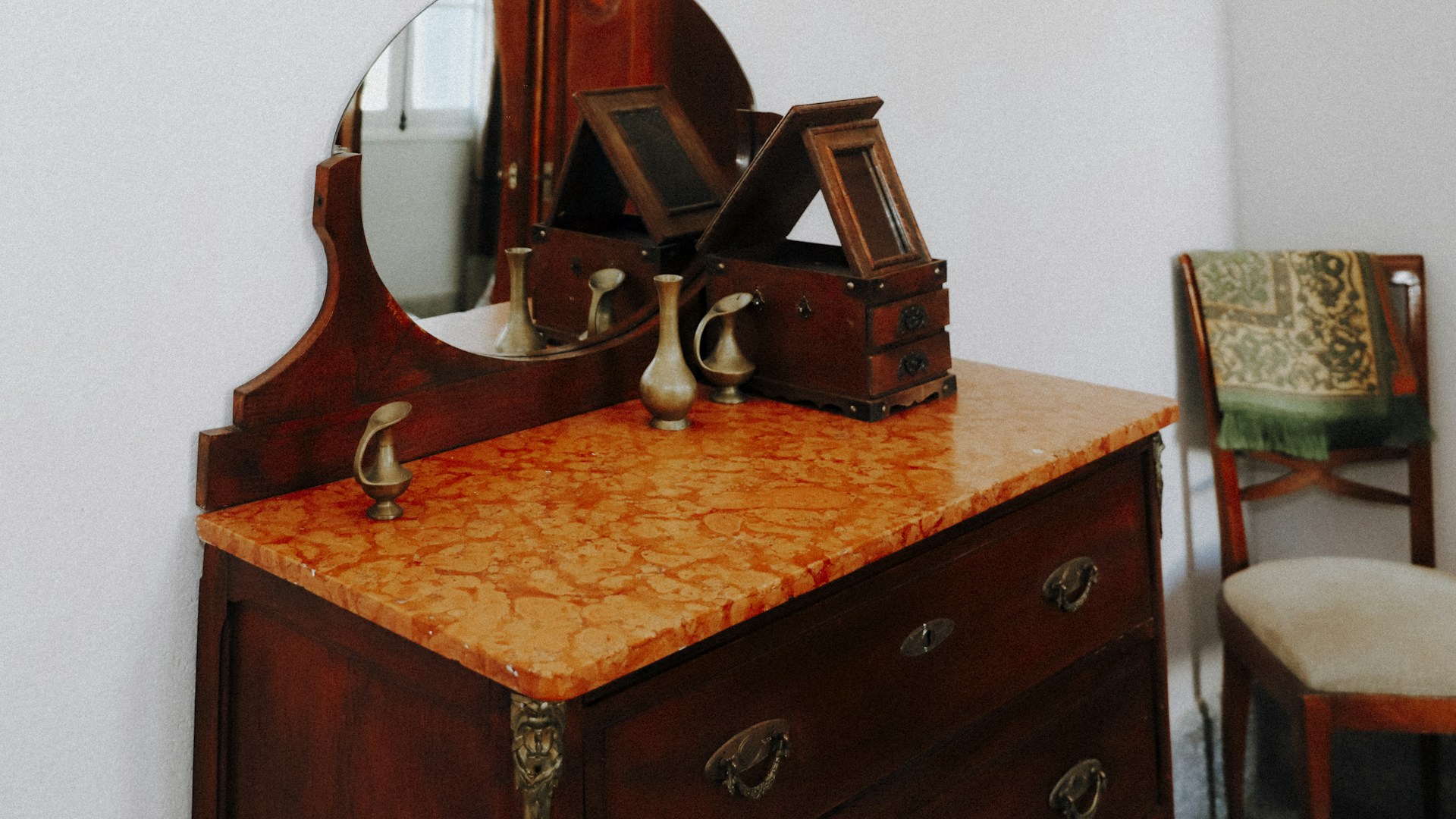
That is the hard lesson many people learn after refinishing an antique. The very thing that looks like damage, the aged surface, is often the thing that collectors and dealers want most. Strip it away and you may not be able to get it back.
Why The Original Finish Matters
On a genuine antique, the original finish is a record of the piece’s life. Over the decades, wood and finish age together. The surface darkens, softens and develops a look that is very hard to imitate. Collectors often call this patina, and they pay attention to it.
An original finish also helps prove that a piece is what it claims to be. When a dresser has been sanded down and coated with new varnish, buyers have a harder time telling how old it is, how it has been treated and whether parts have been replaced. A heavily refinished piece is often seen as having lost some of its history, and that shows up in the price.
How Much Value Can Be Lost
The exact amount depends on the piece. A rare, well-made antique can lose a great deal when its original finish is removed, and some experts warn that refinishing can cut an antique’s value sharply. A common, mass-produced dresser that was never worth much may lose little, or may even look better to a buyer who just wants something to use.
The trouble is that it is difficult to know which kind you have without looking closely. That is the reason to check first and sand later, or never.
Before You Pick Up The Sander
A few simple steps can keep you from making an expensive mistake:
- Look for clues about age. Check the drawer construction, the back of the piece and the underside. Tool marks, wear in places that get handled and hand-cut joints can all hint at an older piece.
- Look for labels, stamps or marks. A maker’s mark or paper label can tell you a lot, and removing the finish near it may harm it.
- Ask a professional. An antiques dealer or an appraiser can look at the piece in person and tell you whether the finish is original and whether it is worth preserving.
- Compare with similar pieces. See what comparable dressers in original condition sell for, and what refinished ones sell for.
Cleaning Is Not The Same As Refinishing
A tired look does not always mean the finish needs to go. Often, careful cleaning and a bit of wax can wake up a surface without erasing it. Start with the gentlest method, such as a soft cloth, and test any product in a hidden spot first. Avoid harsh chemicals and heavy scrubbing, which can damage a delicate finish.
Minor scratches and dull spots are often considered part of a piece’s character. Many collectors would rather see honest wear than a surface that looks brand new but is not.
When Refinishing Makes Sense
None of this means every old dresser should be left alone. If a piece is not truly an antique, if it is in rough shape, or if it has no special value, refinishing can be a fine choice and a rewarding project. If you simply love the look of a freshly painted or stained dresser in your own home, that is a perfectly good reason, as long as you know what you are giving up.
The key is to decide with your eyes open. Make the choice before you start, not after you are covered in sawdust.
If It Is Already Done
If you have already refinished a piece, do not beat yourself up. Plenty of people have done the same. Keep any records or photos you have of the piece before and after, and be honest about the work when you sell. Buyers tend to appreciate openness, and a well-done refinish on a decent piece still has plenty of value as furniture.
Take A Breath First
Old furniture has a way of tempting us to fix it. But the better move, very often, is to slow down. Take pictures. Look for marks. Ask someone who knows. Sometimes the best thing you can do for an inherited or thrifted piece is to clean it gently, put it to use and leave its age alone.
An old finish cannot be put back once it is gone. A little patience before the first pass of the sander could be worth more than the whole weekend of work.
More Stories You May Like
- Antique Dealer Shows How a 200 Year Old Walnut Wardrobe Goes Together Without a Single Screw, and Furniture Lovers Cannot Stop Watching
- Estate Sale Buyer Keeps Finding Bundles of Cash Hidden Throughout the Haul and Asks Everyone to Guess How Much Money Turned Up Altogether
- Couple Buys the Contents of an Antique Store That Has Been Abandoned for Twenty Five Years

Leave a Reply