

Most of us have spent a frustrating evening with an allen key and a bag of mystery screws. A video from @antiqueria_berlin shows the opposite: a wardrobe made around 1825 that assembles completely by hand, with no tools and no screws at all.
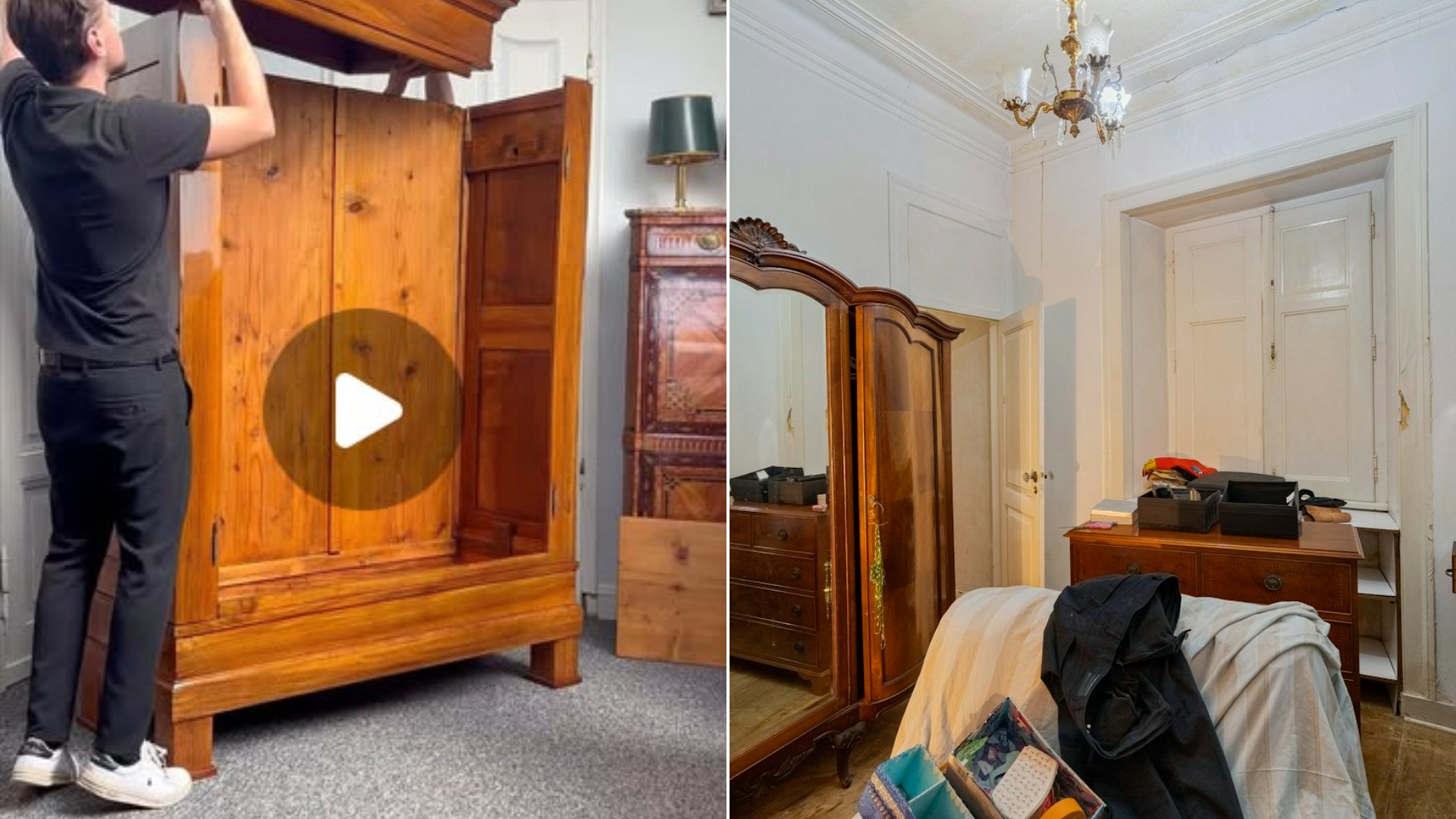
The piece is described as a German Biedermeier wardrobe in beautifully figured walnut, about two meters tall, dating to roughly 1825. Here is how the clip shows it coming together.
How It Goes Together
It starts with the base. The right side panel drops into place and is held by wooden catches that slide forward to lock it. The back panel slides in behind it, and at that point the whole thing begins to feel solid. The left side goes on the same way, and the sides are locked at the top and bottom by hand.
Next, the top drops on and ties everything together, finished with a molded cornice above. Inside, there is a fitted section with shelves on one side, hanging space with a wooden rail on the other, and a full width compartment above. Finally, the doors go on and the wardrobe is complete.
The narration sums it up neatly: furniture built to be taken apart, moved and put back together for generations, and it still comes together exactly the way it was built to.
What Viewers Noticed
Commenters were charmed. One said we only have fast fashion furniture nowadays. Another called it Ikea before there was even Ikea, saying you can move these pieces forever and they stay sturdy.
One viewer shared a story about a friend who paid six men to carry a similar wardrobe up to a second story room. When it was time to take it back down, the friend was shown how the European antique came apart, and it went down the stairs easily. That is one commenter’s account, but it captures the whole point of the design.
A Little Background on the Style
Biedermeier is generally associated with Central Europe in the early to middle part of the 19th century. The style is often described as simple and restrained, with clean lines and a focus on good wood and careful proportions rather than heavy decoration. Walnut with a handsome figure, like the piece in this video, is a classic choice for the look.
Take-apart, or knockdown, construction was a practical answer to a real problem. Large cabinets were hard to get through narrow doors and up winding stairs, and many antique wardrobes were designed so they could travel and be reassembled in a new home.
If You Own or Are Moving an Antique Wardrobe
- Look before you lift. Check for wooden catches, pegs or sliding battens that may mean the piece comes apart.
- Empty it completely and remove doors and shelves first, which cuts the weight dramatically.
- Photograph or label each part as you take it down so it goes back together the same way.
- Wrap panels in moving blankets and avoid tape on old finishes, since it can pull at the surface.
- Keep it away from radiators, direct sun and damp, because large wood panels can react to big swings in heat and humidity.
- Dust gently and go easy on polishes. If the finish needs work, many owners ask a furniture conservator rather than guess.
Even if you never own a piece like this, it is a lovely reminder that a lot of old furniture was designed to be lived with, moved and repaired for a very long time.
More from Vinyl and Velvet
- Her Favorite Thrift Store Went 50 Percent Off, So She Waited On Fenton Cranberry Glass She Passed Days Earlier, And It Paid Off
- She Kept Seeing The Name Dolores On Handmade Pieces All Over A Thrift Store And Pictured The Older Couple Behind Them
- His Great Grandfather’s 1940s Suitcase Record Player Has Built In Speakers, A Radio, And The Cleaner He Used Before Playing His Records

Leave a Reply