

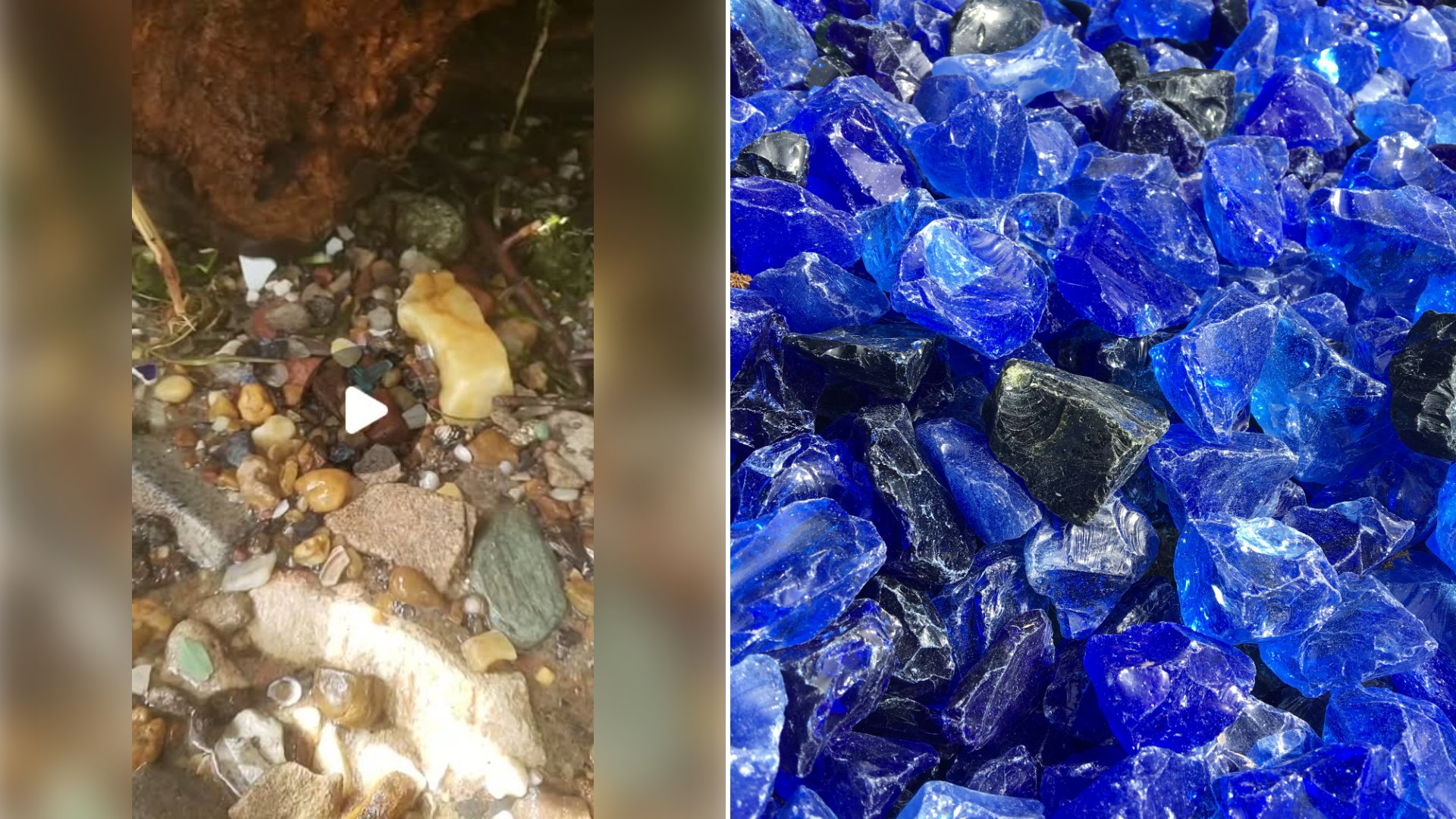
@jennyjenx2 posted a video scanning a rocky riverbed as dark storm clouds roll in overhead, the kind of weather that would send most people straight back to their car. Instead, she keeps working the rocks, eyes down, until something catches the light: a tiny flash of blue glass tucked among the stones. She digs it free, rinses it off, and holds up a genuine vintage glass bottle stopper, embossed and intact, pulled from a spot that had clearly been hiding it for years before anyone thought to look.
@jennyjenx2 is mudlarking, the practice of searching exposed riverbeds, shorelines, and tidal flats for historical objects that have washed up, been dumped, or simply eroded out of the bank over time. The term originated in London along the River Thames, where for centuries people combed the mud at low tide looking for anything of value, and the hobby has since spread well beyond England to riverbanks and coastlines anywhere with a long history of settlement nearby.
Glass items end up buried along riverbeds for a few straightforward reasons. Before organized trash collection and modern landfills became standard, it was common for households, shops, and entire towns to dump refuse directly into the nearest river or along its banks, and glass bottles, being both common and non-biodegradable, are some of the most frequently recovered objects from that era. Floods and shifting currents bury that debris under layers of silt and rock over decades, and then the same natural forces that buried it eventually expose it again, as water levels rise and fall and erode the bank back open. A storm, like the one rolling in during this video, can actually accelerate that process, since heavier water flow and wave action disturb riverbed sediment and can uncover objects that have sat untouched for generations.
Bottle stoppers specifically were a staple of glass packaging before screw caps and crown caps became standard in the early twentieth century. Earlier stoppers were often ground or molded glass, sometimes embossed with a maker’s mark or a bottling company’s name, and because they were smaller and more easily separated from the bottle they sealed, they’re frequently found on their own, without the bottle attached at all. Finding one intact and legible, the way @jennyjenx2 does here, gives collectors something researchable: embossed lettering can often be traced back to a specific bottling company or region, sometimes even to an approximate decade, just from the style of the glass and the mark pressed into it.
Part of what makes mudlarking videos so watchable is how little control the hunter actually has over the process. Unlike a thrift store, where there’s a table of inventory and a lucky grab, a riverbed only gives up what the water decides to uncover, and a serious storm, however uncomfortable it is to stand through, is sometimes exactly what it takes to churn a new layer loose. Braving bad weather for a dig isn’t just atmosphere for the camera, it’s often the actual reason something finally surfaces after sitting buried for who knows how long.
More from Vinyl and Velvet
- Mudlarker Wades Into a Dangerous Rocky Riverbed to Hunt for Relics and Pulls Up an Embossed Antique Glass Bottle Stopper Lying Right Out in the Open Among the Stones
- Digger Unearths a Tangled Pile of Antique Glass Bottles in Cobalt Blue, Amber, and Green Buried Together in an Overgrown Patch of Woods Behind an Old Property
- Artifact Hunters Dig Up a 3,000 to 4,000 Year Old Texas Cache With Two Massive Bifaces Stacked Together Like a Sandwich in One of the Best Preserved Finds Either Has Ever Seen

Leave a Reply