

Mudlarking has a simple pitch: wade into the muck other people avoid, and let the water hand you its history. One creator’s latest haul is a textbook example of why the hobby has such a devoted following.
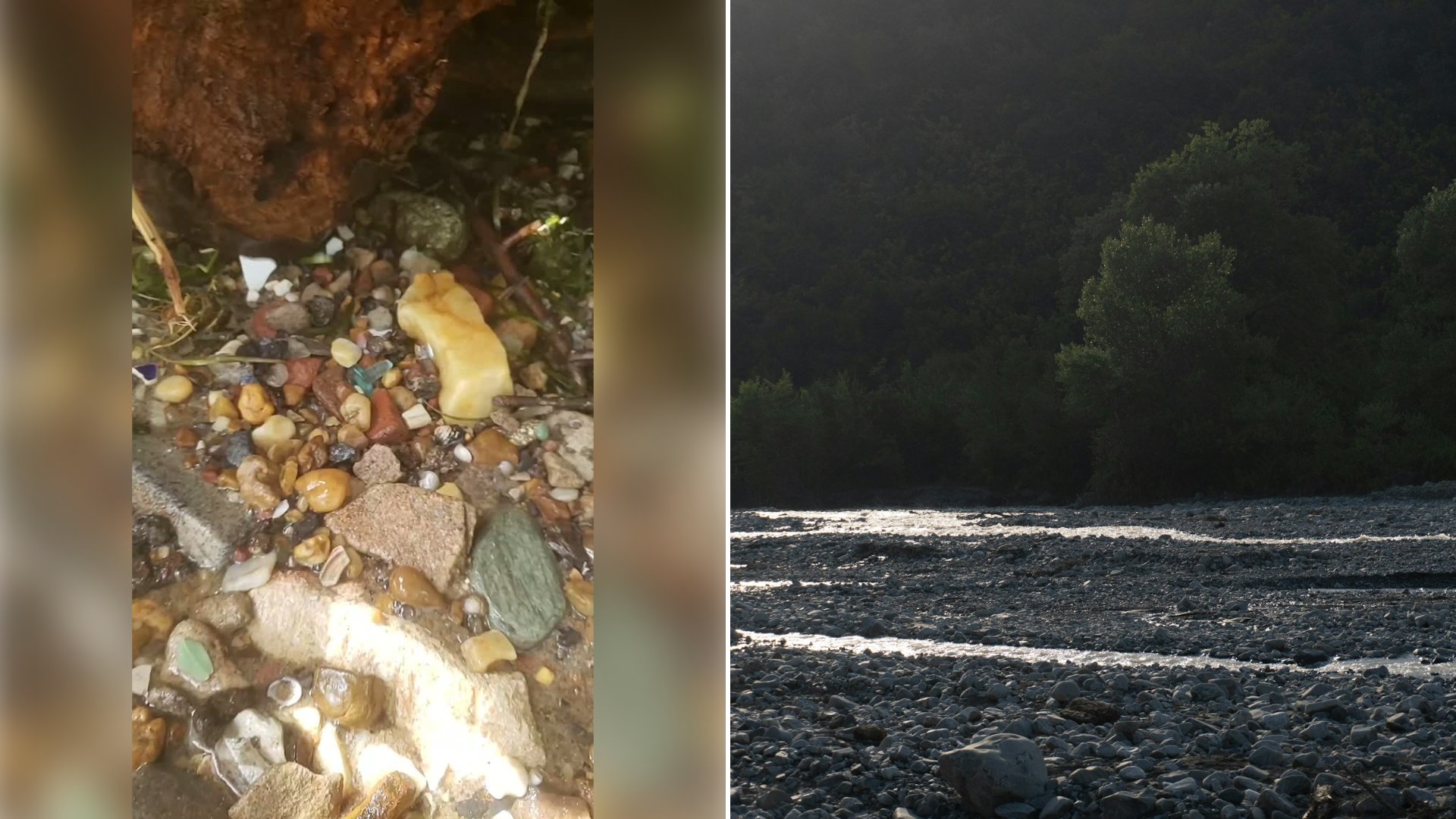
The clip opens on a high-angle shot looking straight down at a stretch of wet riverbank gravel, scattered with stones, broken pottery shards, and plant debris. Nestled right in among the pebbles is a small, light-blue glass object that doesn’t belong there: an antique bottle stopper, embossed lettering still visible on its rounded top, just sitting in the open water-worn gravel as if it had been placed there on purpose. “I knew you were lying. Do you see it?” the creator says, before the reaction tips fully into excitement. “Oh, it was worth it! It was worth all the danger!”
That “danger” line isn’t throwaway hype. Riverbed and shoreline mudlarking, searching exposed banks and tidal flats for debris and artifacts uncovered by shifting water, is a genuinely physical hobby. Currents move fast, rocks shift underfoot, and the richest finds tend to sit in exactly the spots that are hardest and least stable to reach. Enthusiasts accept that risk because rivers and tidal zones are constantly rearranging their own sediment, which means objects buried for decades can resurface without any digging at all. The find is less about searching a fixed location and more about timing: being there after the water has already done the work of uncovering something.
Once the stopper is in hand, the camera shifts into a close-up inspection, rotating the piece to show its rounded, slightly flared top and narrower stem designed to wedge into a bottle’s neck. Glass bottle stoppers like this one were the standard sealing method for soda, mineral water, and patent medicine bottles well into the early twentieth century, before crown caps and screw tops took over the beverage industry. Embossed lettering on a stopper typically identified the bottling company or brand that originally used it, which is exactly the kind of detail collectors chase down afterward to date and place a piece, even when, as here, the full inscription isn’t fully legible on camera.
“This is so dangerous, but it’s part of the lore down here,” the creator says, laughing through the discovery. “When it’s insane you want to be down here, right?” It’s an honest encapsulation of what keeps people coming back to this kind of hunting: not the guarantee of a big payout, but the specific thrill of a river handing over a hundred-year-old object exactly where the current chose to leave it, with nothing standing between the find and the finder but wet rocks and a little nerve.
More from Vinyl and Velvet
- Collector Brings His Diet Coke Silver Bar in an Ice Cube Capsule to a Coin Shop, and the Dealer Offers Double Melt, $120 With Silver Sitting at About $60 an Ounce
- Jeweler Reads the Engraving Inside an 18 Karat Wedding Band a Snorkeler Says She Found in the Adriatic Off a Puglia Beach Club, and Vows to Return It to Whoever Knows the Full 2017 Date
- Volunteer Gravestone Cleaner Asked Viewers Who Joseph Lampkin Was, Then Cleaned His 1871 Headstone and Revealed the Railroad Dump Car Accident That Killed Him at 17

Leave a Reply