

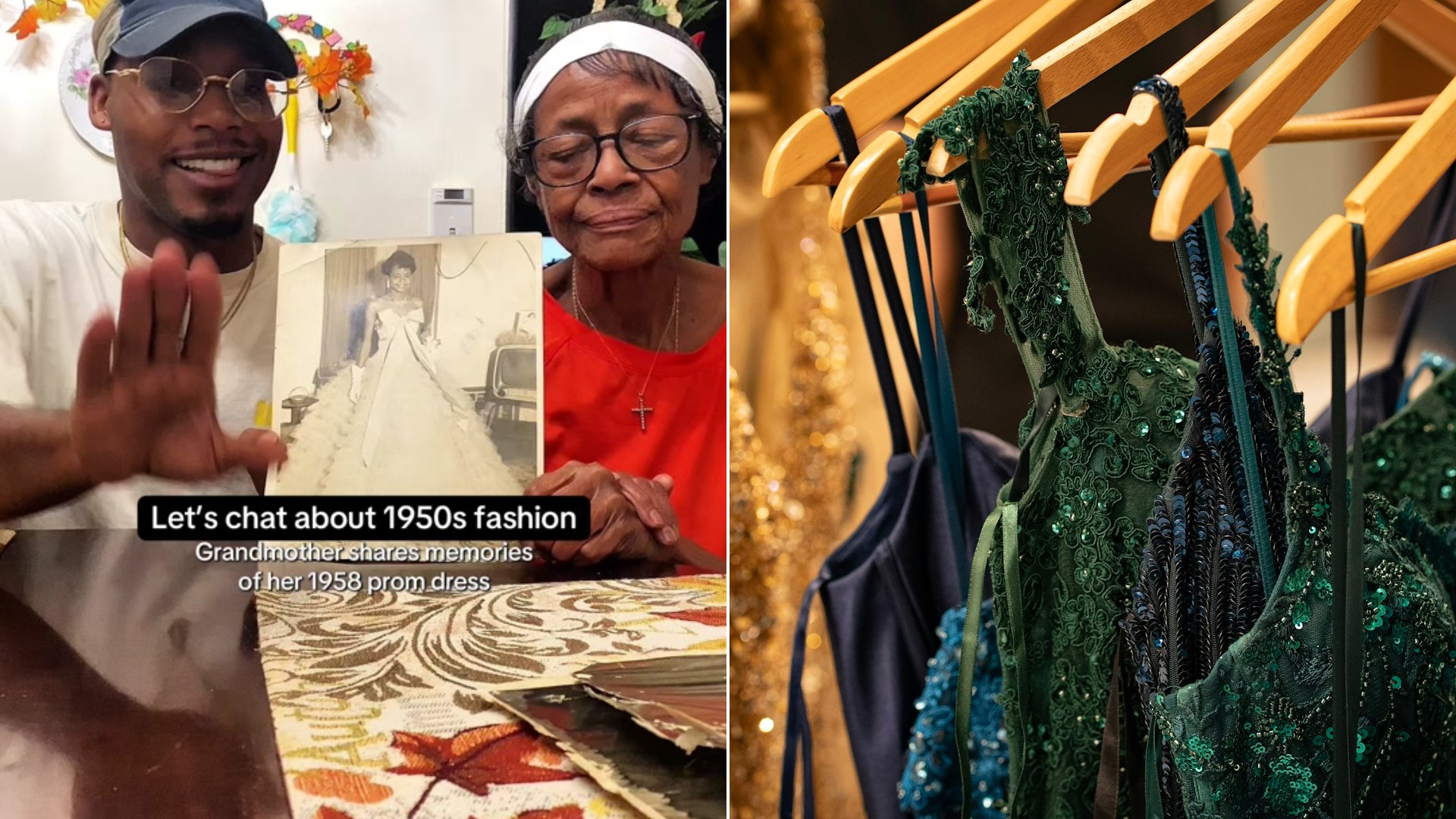
A single photograph can open up a whole afternoon of memories. The creator behind @jaykinjournal sat down with their 85 year old grandmother, whom they jokingly call “the OG content creator,” to talk about 1950s fashion. The subject was one picture: her prom photo from 1958. Her answers are a charming window into how a young woman got ready for a big night more than six decades ago.
Shopping For The Gown
The creator asks the grandmother to tell the story of the dress, and she begins with her mother. Her mother liked fashion, she says, and told her they had to get her a pretty gown for her twelfth grade prom. The grandmother was happy to go along, because she wanted to look nice. They went to a downtown shopping street, where a saleslady brought the dress out. She fell in love with it, and so did her mother.
It was a pretty aqua color. She describes streaming ribbon, a bold look in the front and ruffles all around. It is easy to picture the photograph from her description, a full skirt in a cool blue green shade with ribbons trailing down.
The Secret Under The Skirt
The creator points out how full the gown looks, and the grandmother explains the trick. Back then, she says, to make your dresses and gowns stand out fully, you bought a crinoline slip to wear under them. That is why the gown in the photo flares out the way it does.
The look was typical of the decade. According to a history of 1950s prom dresses from Vintage Dancer, prom gowns of the era borrowed from Victorian ball gowns and debutante balls, with fitted waists and full skirts. Girls layered crinoline, nylon, lace or net petticoats to get maximum volume, and the petticoats were often starched. Pastels were popular for prom, along with white, ivory and gold, so a soft aqua fits right in. The same source mentions that after World War II, prom grew more elaborate, and girls increasingly went on shopping trips to find a dress, shoes and accessories, exactly as this family did.
Gloves, Hair And Satin Shoes
The creator notices that she is wearing gloves in the photo and asks whether that was common. It was, she says. They wore gloves, which came up her arm, though in the picture they have slipped down a little lower. The Vintage Dancer guide confirms that gloves were part of the look, with wrist length gloves for shorter dresses and opera length gloves for floor length gowns.
Her mother helped with her hair, and she credits that care for the finished style. As for shoes, you cannot see them in the photo, so the creator asked, and she remembers wearing little satin pumps. That also fits the period, when dyed pumps in satin or other fabrics were meant to match the gown.
The Boy Who Took Her To The Prom
Then comes the part that makes the story special. The creator asks who took her to the prom, and she answers with a smile that it was her husband, the creator’s grandfather. They were not married then, she explains, but they eventually married sometime later. A prom date who becomes a husband is the kind of story that makes anyone sigh, and she tells it simply, without drama.
The creator also notices something in the background of the photo. There is a television set, and they ask whether it was color or black and white. It was black and white, she says. That is a nice detail for anyone who remembers when a family television was a new and special thing in the living room.
What Happened To The Dress
Many people asked the same question: does she still have the dress? She does not. It is gone, which is a common fate for formal gowns. Prom dresses were often worn once, then altered for another occasion, handed down, donated or simply discarded as styles changed. The photograph is the part that survived, and that is a good reason to keep family pictures.
A New Word For A Compliment
The conversation ends with a generational moment. The creator tells her that people online have described her in the photo as a “baddie.” She asks what that means. It is a compliment, the creator explains, a way of saying beautiful, and it is what people are calling her. She thanks them, and they thank her for sharing the memories.
If you are not familiar with the word, it is current slang for someone who looks confident and stylish. It is a long way from the way people would have complimented a prom queen in 1958, but the sentiment is the same.
How To Interview A Relative About An Old Photo
What makes this post work is how well the creator asks questions. If you have a photograph and a relative who remembers it, you can follow the same lead.
Start with how it came about. Ask where the outfit came from, who chose it and who helped. That question opened up the whole story here.
Ask about the small things. Gloves, a petticoat, the color of the dress and the type of shoes are details that no one thinks to record, and they bring a photo to life.
Look at the background. A television, a piece of furniture or a car in the picture can lead to more memories.
Ask who else was there. In this case, the date later became a husband. People enjoy telling that kind of story.
Write it down or record it. A short audio or video recording preserves a voice and a laugh. Store a copy somewhere safe, and write the date, names and place on the back of the original photo, using a soft pencil.
Be patient and let your relative tell it their own way. Sometimes the best parts come when the person has time to talk.
A Photograph Worth Keeping
More than six decades after that prom, an aqua gown, a stiff crinoline slip and a pair of long gloves are still easy to picture because someone asked. It is a reminder that every family photo has a story behind it, and the people who can tell it will not be around forever. The best time to ask is now.

Leave a Reply