

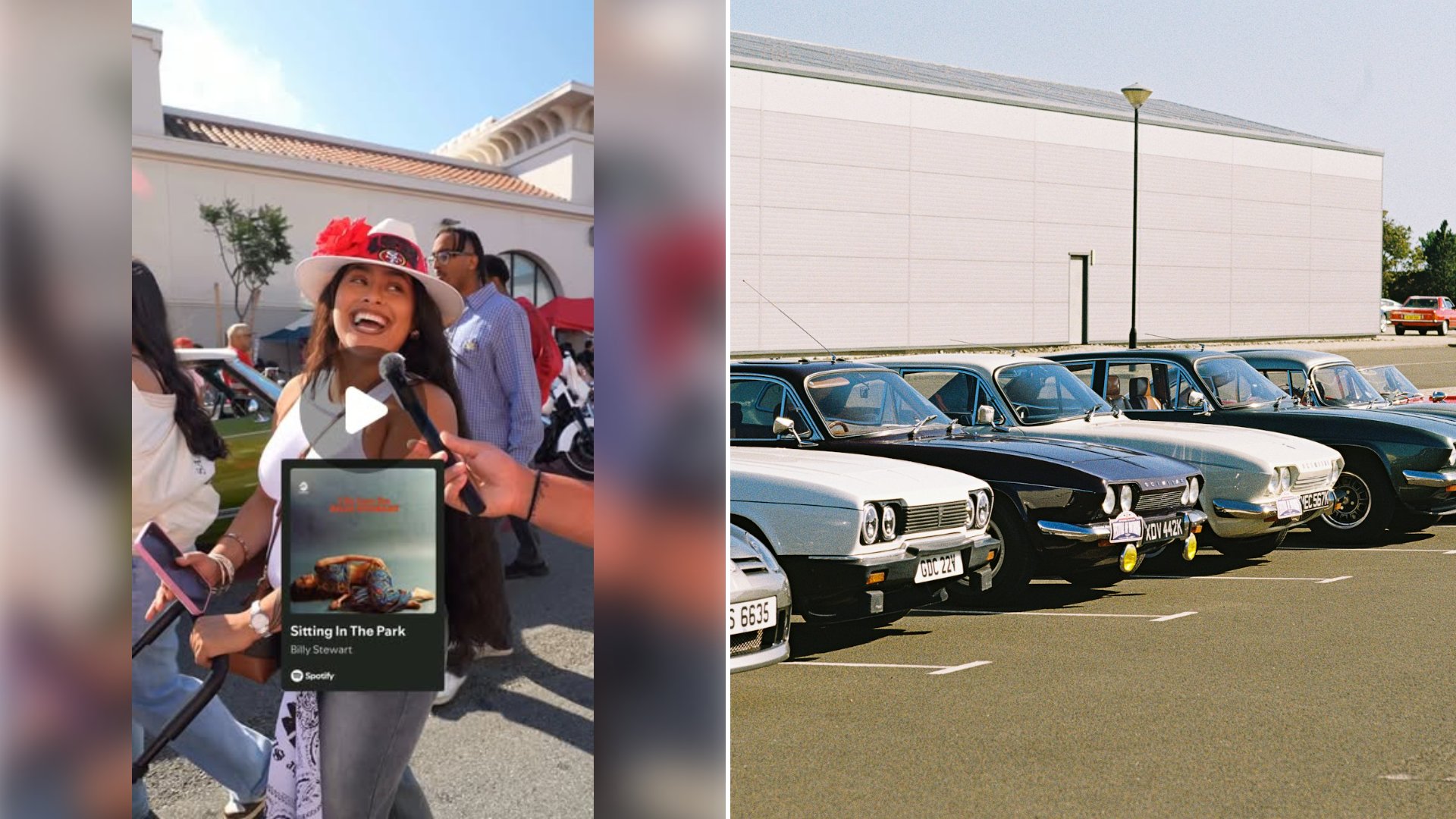
The video follows a simple, repeatable format: a creator walks up to one person after another, microphone in hand, and asks a single question, what’s your favorite oldies song? Behind them, rows of gleaming classic cars line the lot, the kind of setting where people who love vintage machines tend to also love the music that played when those machines were new. The creator, @mario0o0o0o0o0o, barely has to prompt anyone. Each answer comes fast, usually followed by a quick clip of the song itself playing over the footage.
What makes the format work is how different every answer is. One person’s pick instantly dates them to a specific decade, while the next answer swings somewhere else entirely, and by the end of the reel the viewer has essentially sat through a crowdsourced mixtape built entirely from strangers standing around a parking lot full of old cars. Nobody needed a script. The music clearly meant enough to each person that the answer came out instantly, which is exactly the energy that makes street-interview content like this spread.
The pairing of classic cars and oldies radio isn’t a coincidence; it’s practically baked into car culture’s own history. AM and early FM radio were standard equipment in the vehicles now considered classics, and the songs that charted during each car’s original production years became permanently linked to the memory of driving, owning, or wanting that specific model. For plenty of collectors, restoring a car accurately means getting more than the paint and chrome right, it means having the correct era-appropriate radio in the dash, and sometimes even a period-correct 8-track or cassette deck depending on exactly how far into the following decades the car’s production run stretched.
Car shows and informal meetups built around vintage vehicles have also become one of the more reliable places to find this kind of built-in musical nostalgia in one spot. Attendees tend to skew toward the generation that either drove these cars new or grew up riding in a parent’s version of one, which means a single question like “what’s your favorite oldies song” naturally pulls answers spanning doo-wop, early rock and roll, Motown, and classic rock, often depending on exactly how old the car parked behind the person being asked actually is. The format works as a kind of unscripted generational snapshot, where the music people name tends to track closely with the decade of the car they drove up in.
Street-interview content built around a single repeated question has become one of the most durable formats across short-form video precisely because it removes almost all production complexity while still guaranteeing a different answer every single time. Pointed at a crowd that already shares one obvious interest, in this case classic cars, the format becomes even more effective, since the pool of likely answers naturally narrows toward a specific era of music without the creator having to steer anyone there directly. It’s a simple idea executed well, and the genuine enthusiasm in each quick answer is what carries the whole thing.
More from Vinyl and Velvet
- Builder Installs a 30 Year Old Billet Steel Crankshaft His Grandfather Ground as Surplus From NASCAR Powerhouse Robert Yates Racing Into a 1965 Mustang Build Aiming for 650 Horsepower
- Professional Detailer Surprises a Daughter by Fully Cleaning Her Father’s Dream Firebird After It Sat Untouched for 30 Years, Pulling Decades Old Trash Out With the Vacuum Along the Way
- A Restorer in Belgium Pulls Open a Vine-Covered Barn Door and Reveals a 1971 Citroën DS21 Pallas That Had Been Hidden Since 2005, and Commenters Call the ‘Goddess’ the Most Beautiful Car Ever Built

Leave a Reply