

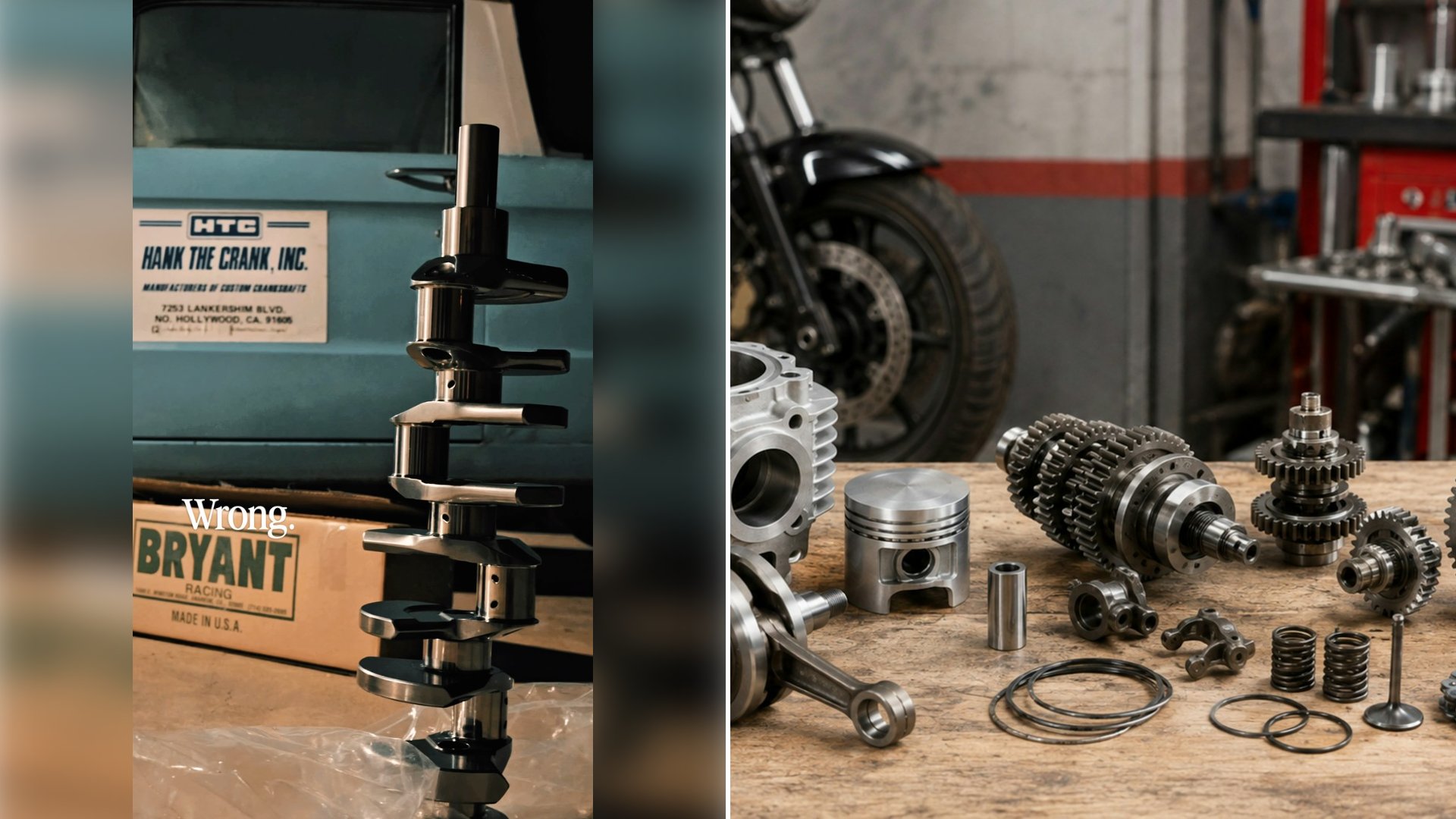
Most spare parts sit in a box until someone throws them out. This one sat in a family’s garage for thirty years, waiting for the right engine to be worthy of it.
“Thirty years ago my grandpa Hank the Crank ground this crankshaft from a block of billet steel,” the builder writes, describing a piece that started life as surplus material from a batch ordered for Robert Yates Racing, one of the most respected engine-building operations in NASCAR history. Robert Yates built his reputation over decades as a master engine builder, eventually earning induction into the NASCAR Hall of Fame for work that powered championship-level teams, which means a leftover billet crankshaft blank tied to his shop wasn’t scrap material in any ordinary sense, it was premium racing-grade steel that simply never made it into a car at the time.
That blank didn’t sit idle for three decades by accident. “My Uncle Scotty saved it all these years and spec’ed out this crankshaft the best way possible,” the post continues, crediting a family member with the foresight to hold onto a raw piece of high-grade steel on the bet that it would eventually find the right project. That’s its own quiet form of collecting: not acquiring a finished, valuable object, but recognizing that a piece of material itself, properly sourced and properly stored, could be worth more to the right builder decades later than it would have been used in whatever ordinary engine was available at the time.
The crankshaft’s second act came courtesy of Sonny Bryant Racing, credited with balancing, polishing, and knife-edging the piece to prepare it for its new home: a 1965 Mustang build. Knife-edging is a real, specialized machining process in which a crankshaft’s counterweights are shaped into a sharper, more aerodynamic profile, reducing the aerodynamic drag the crank creates as it spins at high RPM inside the engine. It’s the kind of refinement typically reserved for genuine performance builds rather than a stock rebuild, and it signals that this Mustang project is being engineered, not just restored.
The target the builder sets for the finished engine, at least 650 horsepower, gives the whole story its stakes. A thirty-year-old piece of surplus NASCAR-grade steel, saved by one family member, machined by a specialty shop, and installed by a third generation of builders, is now being asked to do real work again: turning a 1965 Mustang into something that can genuinely perform on a track, not just look the part sitting in a garage.
More from Vinyl and Velvet
- Collector Pays $30 for a Broken Sharper Image DVD Power Tower He Says Sells for Over $700, Then Fights Its Clips to Swap the Drive Band and Get the Carousel Turning Again
- Safe Technician Empties a Hidden Safe He Says a Family Found Two Months After Losing Their Sister and Pulls Out Coin Collection Books, a Pouch of Rolled Coins and a Revolver Booklet
- A Vintage RV Gets Decorated Head-to-Toe in 1990s Nostalgia for a Quick Walkthrough Tour

Leave a Reply