

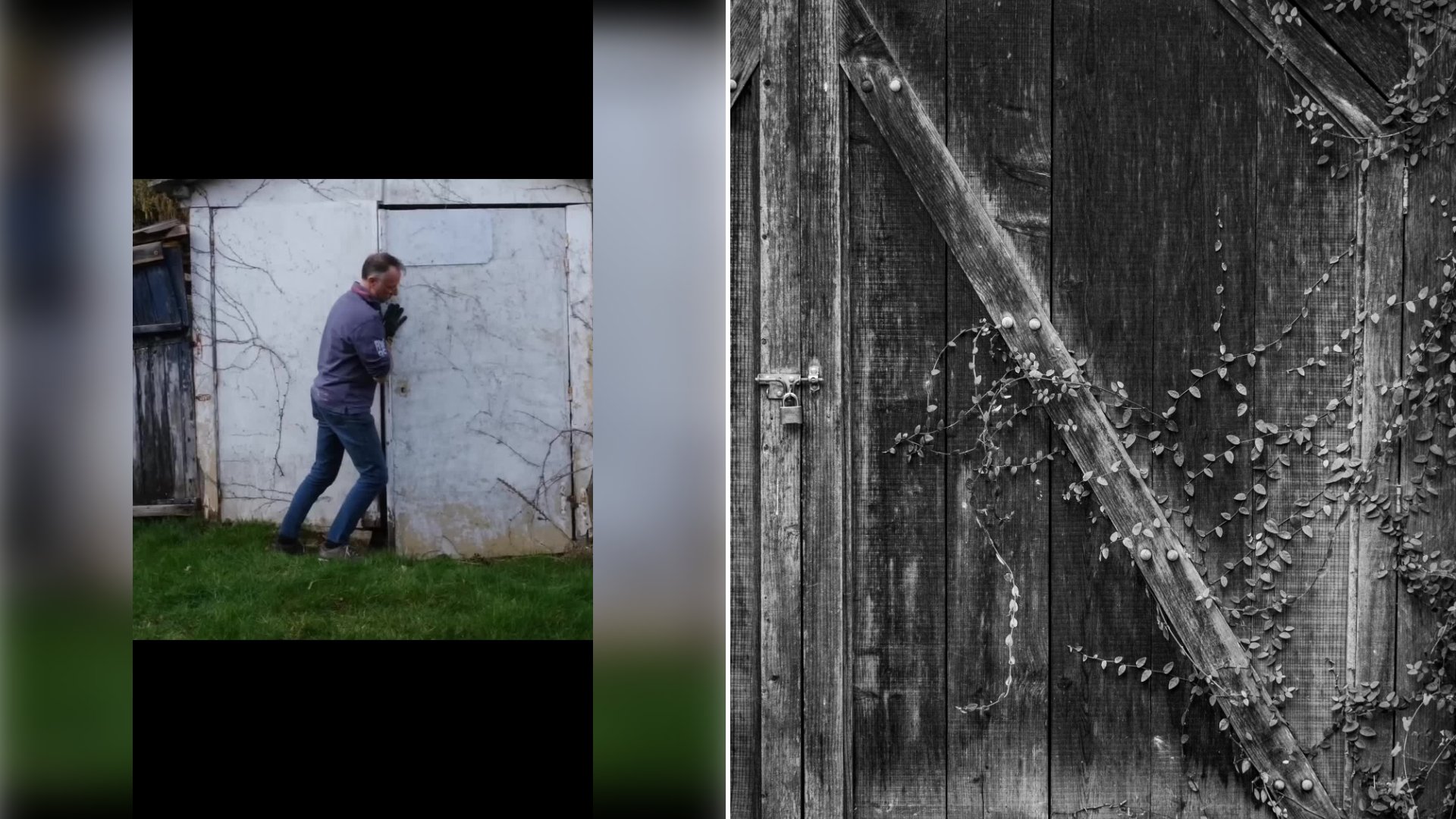
A restorer working under the account Auto Master posted a short clip of himself pushing open a sagging, vine-strangled barn door somewhere in Belgium, and the caption alone was enough to stop scrollers cold: the building had been sealed since 2005, and inside sat a 1971 Citroën DS21 Pallas that nobody had touched in two decades. The video has pulled in roughly 20,000 likes and 489 comments, many of them from French, German, and Spanish viewers who recognized the car on sight and could not stop gushing about it.
@automaster.dm This 1971 DS21 Pallas had been stored in a Belgian barn since 2005 #abandoned #restoration #fyp #viral #foryou
That reaction says a lot about what the DS actually is. When Citroën unveiled the model at the 1955 Paris Motor Show, it was such a leap past anything else on the road — aerodynamic bodywork, disc brakes, a semi-automatic transmission, and a hydropneumatic suspension system that let the car float over potholes and self-level no matter how it was loaded — that the press nicknamed it “la Déesse,” French for “the Goddess,” a pun on how the model letters DS are pronounced in French. The name stuck so completely that decades later, fans still default to it, which is exactly what happened in the comments on this video, where one person in German simply wrote that it was a “Göttin” — a goddess — and the most beautiful car ever built.
The Pallas trim in the video’s title was not part of the original 1955 launch. Citroën introduced it in 1964 as the DS’s top-of-the-line luxury package, adding extra sound insulation, a more refined interior, and chrome trim aimed at buyers who wanted the car’s futuristic engineering wrapped in a plusher cabin. The “21” designation refers to the 2.1-liter engine that replaced the original 1.9-liter unit starting in 1965, giving the Pallas noticeably more power to match its upscale positioning. A 1971 DS21 Pallas, in other words, represents the model near the peak of its development, just a few years before the DS line was phased out in favor of the CX in the mid-1970s.
The clip itself is almost deliberately restrained. There is no dramatic engine start, no slow-motion dust reveal — just a man in a purple jacket and work gloves leaning his full weight into a garage door that clearly has not moved in years, vines creeping across the weathered white panels and grass grown up around the foundation. That restraint is part of why it worked. Commenters filled in the emotional weight themselves, several noting that a car this significant deserved better than two decades locked in the dark, while others simply left variations of “last look at the car” — the kind of comment usually reserved for something people assume is too far gone to save but can’t look away from anyway.
A handful of commenters pointed out that the DS has a pop-culture footprint well beyond car-collector circles. One wrote, half-joking, that it looked like the car Fantomas had been hiding in Belgium — a reference to the campy 1960s French thriller franchise starring Jean Marais and Louis de Funès, in which the villain’s gadget-laden getaway car was a customized DS. Another Russian-language commenter echoed the same reference, calling it simply “Fantomas’s car.” The DS earned that kind of recognition honestly: French President Charles de Gaulle was riding in one in 1962 when assassins opened fire and shot out two of its tires, and the car’s self-leveling suspension kept it stable enough for the driver to speed away and get him to safety, a moment often credited with cementing the DS’s reputation as engineering marvel rather than just a stylish sedan.
None of that history is confirmed to apply to this specific barn-find car — there is no indication in the video that this DS21 has any documented celebrity or political provenance, and nothing in the clip or caption claims otherwise. What is clear is the condition problem any restorer would be looking at after a car sits sealed in an unheated Belgian barn for twenty years: the hydropneumatic system’s rubber seals and spheres are almost certainly perished and will need a full rebuild before the suspension can hold pressure again, and the bodywork will need a careful rust assessment once it is pulled into daylight. Citroën’s hydropneumatic system was revolutionary in 1955, but it is also notoriously unforgiving of long dormancy, which is precisely why DS restorations tend to be measured in years rather than weekends.
Auto Master’s account has built a following on exactly this kind of patient, unglamorous barn-find content, including an earlier multi-part series pulling a 1952 International Cabover truck out of the woods. Whether this DS21 Pallas gets the same documented treatment remains to be seen, but based on the volume of comments begging for a follow-up, there is clearly an audience ready to watch a Goddess get her suspension back.
More from Vinyl and Velvet
- An Antique Victorian High-Wheel Tricycle Takes a Lap Around a Classic Car Festival in Greenfield Village
- A Nissan 300ZX’s Physical Switches and Dials Make the Case for Why 90s Cars Still Beat a Tesla’s Touchscreen
- A Mechanic Documents Painstakingly Freeing Up a Seized 99-Year-Old Engine Piece by Piece

Leave a Reply