

One of the nicest things about an old house is how often it teaches its owners something. The couple behind @oliveinjc are on part 74 of restoring their 100 year old home, and in this installment a feature that drove one of them crazy turns out to be a clever piece of history. It also gives them the perfect place to hang a newspaper from 1943 that they found inside the house and have kept safe through a full year of renovation.
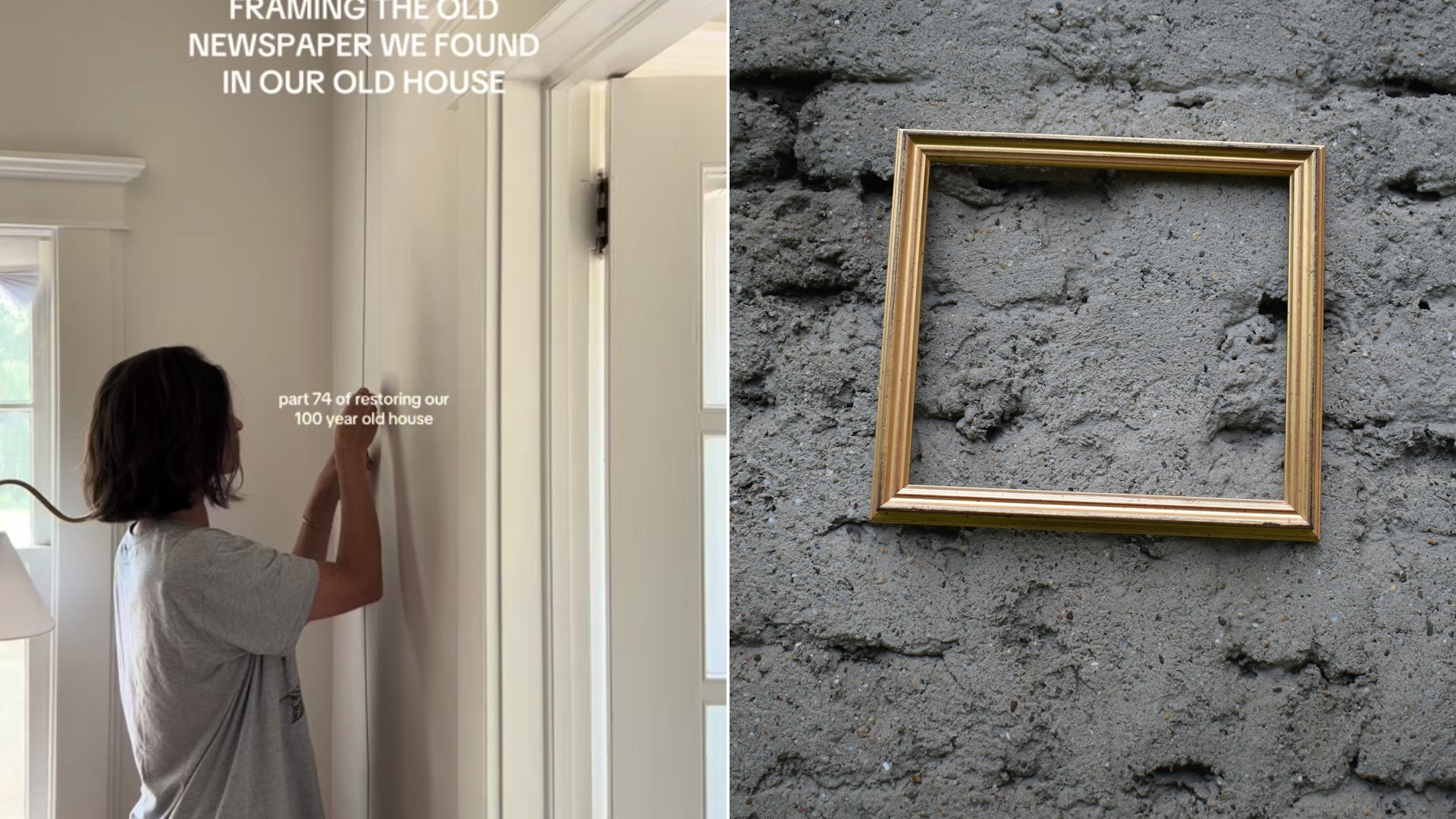
It is a charming story about patience, about not rushing to fix what looks wrong, and about treating a small paper find with respect.
The Gap That Was Driving Them Crazy
The creator says one of the first things the couple noticed about the house was the beautiful trim work. But in the main living spaces there was a gap between the ceiling and the crown molding, and it was driving the creator crazy. When the renovation began, filling it in could not happen fast enough.
It turned out to be a good thing they did not rush. After looking at it more closely, the creator realized it looked really intentional. Then came the discovery of what it was: an old picture rail. The idea is that you can hang pictures without damaging the walls, which is a big deal in a home with original plaster.
A 1943 Newspaper, Saved For A Year
The other piece of the story is a newspaper dated 1943 that the couple found in the house. The creator has kept it for the entire last year of renovating. Today it finally gets its moment.
To hang it from the rail, the creator bought a simple picture hanging hook with a cord and a slider so you can adjust the height. There are plenty of styles to choose from, including clear ones that hide the wire and decorative ones with gold chains. Long term, the creator would love a brass one with chains or something more decorative, but wanted to try the easy version first.
Choosing A Page
The creator has looked through the old paper a million times and has favorite pages, but was not sure which one to frame. In the end the choice was a page that had only just been discovered. It was not one of the favorites, but it was simple, with a little daffodil illustration and flowers alongside text. The page talks about how great daffodils would be in your garden, with all sorts of information about the flowers.
Beside the garden article, there is a column of marriages from New Jersey. As the creator points out, the couple are from Jersey, so anyone with family from there is invited to look for relatives. The creator finds that extra sweet, since they are in their married with no kids era in their first house.
The Hard Part: Making It Fit
This is the moment where the creator admits it felt wrong. Cutting the paper was painful. The plan was to wrap it around the backing piece that goes in the frame so it would not be disturbed any more than necessary, because the goal is to preserve it as best as possible. But with all the layers, it would not fit. The creator tried for about 15 minutes, folding and refolding, and finally trimmed off the extra, reminding themself that the page was going to be on display where it could be enjoyed.
Once it was up, the creator loves it. Plain text turns out to be a favorite, and the creator notes that it looks a little crooked from the angle of the camera, though promises it is not. There are more plans too, because the original wallpaper in the kitchen was also preserved, and the creator intends to frame some of that as well.
What Is A Picture Rail?
If your own home has a similar strip near the ceiling, you may be wondering what you are looking at. A picture rail is a molding installed high on the wall, usually around 7 to 9 feet above the floor, from which framed art is hung, according to Wikipedia’s entry on the feature. It is common in older homes and buildings with plaster walls. Plaster does not take nails kindly. A nail can crack it, and a hole can send a crack across the wall. A rail lets you hang art from hooks that sit on top of the molding, so the wall itself is never touched.
This also explains why the art in older homes often hangs low from long cords or chains. The hook sits on the rail up high, and the wire or chain runs down to the frame. The creator’s adjustable hook does the same job in a modern, simple way, and it lets the height slide up or down until the piece looks right.
If You Have A Picture Rail
- Do not fill it in. It is an original feature that many buyers love, and it is useful.
- Choose the right hooks. Look for hooks made for picture rails, in finishes from clear to brass.
- Mind the weight. Check the weight limit on the hook and use two for heavier frames.
- Layer a gallery. Hang pieces at different lengths for a casual, collected look.
- Change things often. Because nothing is nailed, you can swap art with the seasons.
Framing An Old Newspaper
Old newsprint is fragile. The Library of Congress, in its guidance on caring for paper, advises keeping paper in a cool, clean, stable place away from strong light, using acid-free materials, and avoiding rubber bands, tape and glue. It also suggests storing acidic papers separately so their acids do not migrate to other items. Newspaper is a classic acidic paper, which is why it turns yellow and brittle with time.
If you want to display a find like this one, a few steps will help it last:
- Use an acid-free mat or backing so the paper does not touch anything that could stain it.
- Choose a frame deep enough to hold the sheet without cramming. A deeper frame or a shadow box may spare you the trimming the creator did.
- Keep the frame out of direct sun. Light fades and weakens old paper, and glass that blocks ultraviolet light can help.
- Do not use tape or glue on the paper itself.
- Consider making a good copy for display and keeping the original flat in an archival folder.
For something truly valuable or badly damaged, a professional paper conservator is the safest route.
Saving The Story Of The House
What makes this post so appealing is that the couple treats the house like a guest with a story to tell. A newspaper found within the walls, wallpaper in the kitchen and a picture rail overhead are all small clues to how earlier families lived. By choosing to preserve instead of replace, they keep that story visible in the rooms where they live now.
The creator even asks followers what to hang next, which is a fun question for anyone with a picture rail of their own. Vintage maps, family photos, old postcards, a framed recipe in a grandmother’s handwriting, or a pressed flower would all be at home there.

Leave a Reply