

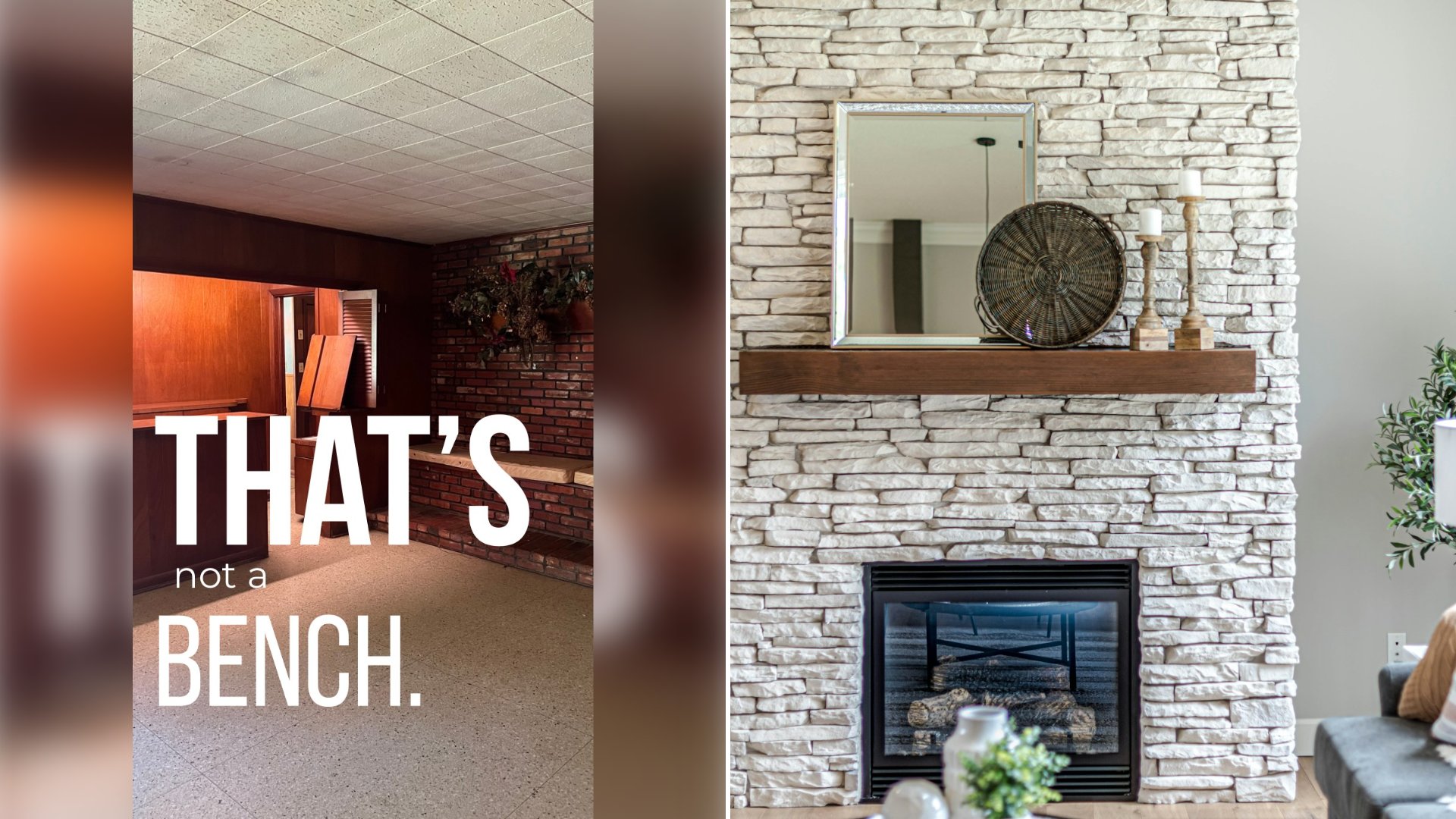
Some renovations start with a sledgehammer and a plan. This one started with a cushion.
A home renovation account walked viewers through what looked, at first glance, like an ordinary built-in bench next to a red brick fireplace. Three cushioned seat pads sat on a low brick ledge, with a dried floral arrangement mounted on the wall above. It read like a cozy, if slightly dated, mid-century seating nook. “Well, we thought this was a built-in bench,” the renovator says in the clip. “Turns out, we were wrong.”
Underneath the cushions was a sheet of plywood, cut to size and dropped into the top of the brick structure like a false floor. Lifting it out revealed the ledge was never a bench at all. It was a planter box, original to the house, with a deep hollow trough built right into the brickwork, electrical conduit still threaded through the cavity for lighting that once lived above it.
“Under the plywood and cushions were the original built-in brick planters,” the renovator explains. “We also found wiring for lighting above the bench.” The reveal is the kind of thing that makes sense only in hindsight: someone, at some point, decided a planter needed less maintenance as a seat, boxed it in, and left the brick good enough to pass as furniture for decades.
Built-in planters like this one were a genuine architectural feature in mid-century American homes, especially in the ranch and split-level houses that spread across the suburbs in the 1950s and 60s. Interior planters flanking a fireplace or dividing a living room from an entry were pitched by builders and home magazines of the era as bringing the outdoors in, long before “biophilic design” was a phrase anyone used. They were almost always brick or block to match the fireplace masonry, and almost always wired for a spotlight or gallery light above, meant to show off whatever greenery or sculpture sat inside. When indoor plant trends cooled and maintenance got old, plenty of homeowners did exactly what happened here: dropped in a board, added a cushion, and called it a bench.
The renovator’s plan is to undo that decision rather than repeat it. “So, the planters are coming back with plants, gallery lighting, and one huge piece of art,” she says, closing out the clip with the wall-mounted floral arrangement already taken down and the brick cavity sitting open and ready.
It is a small reversal as renovations go, no load-bearing walls involved, no structural surprises. But it is the kind of find that keeps mid-century homes interesting to flip and restore: a house built with intention decades ago, boxed over by a well-meaning owner somewhere along the way, waiting for someone to pull back the plywood and give it its original job back.
More from Vinyl and Velvet
- Collector Pays $30 for a Broken Sharper Image DVD Power Tower He Says Sells for Over $700, Then Fights Its Clips to Swap the Drive Band and Get the Carousel Turning Again
- Thrifter Who Has Checked the Art Section of Every Secondhand Store for Years Finally Scores Four Framed Patrick Nagel Prints in One Go Through Facebook Marketplace
- A Vintage RV Gets Decorated Head-to-Toe in 1990s Nostalgia for a Quick Walkthrough Tour

Leave a Reply