

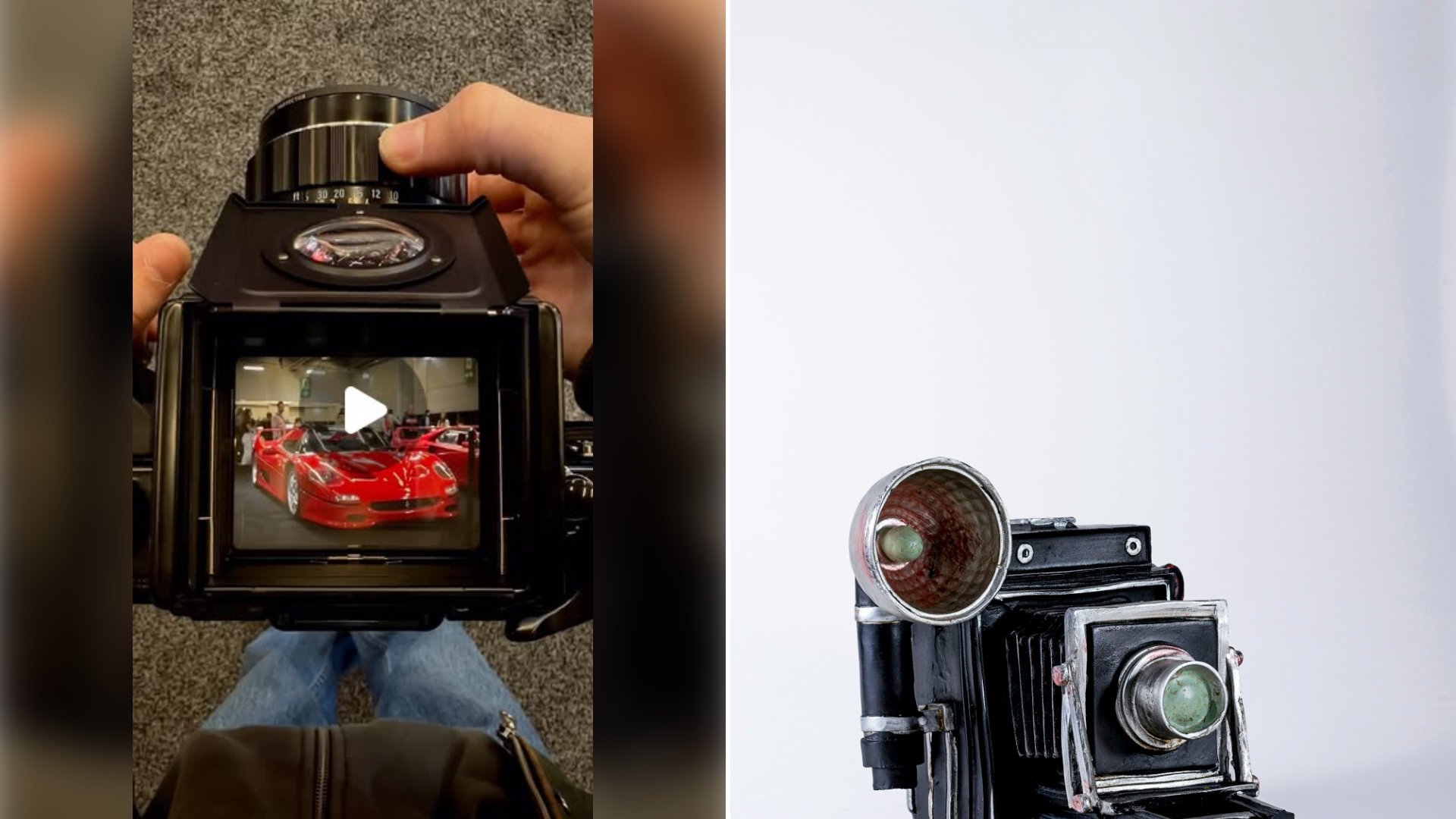
The video drops the viewer straight into the mechanical viewfinder of a vintage medium format film camera at a car show, framing a gleaming supercar through the camera’s own optics before the shutter physically snaps shut with an audible, satisfying click. There’s no digital preview screen, no instant image review, just the slow, deliberate process of composing a shot the way photographers did decades before autofocus and live view existed. The photographer behind the lens, @droneshotsmtl, lets the mechanics of the camera itself be just as much the subject as the car in the frame.
Watching the viewfinder frame and refocus on the supercar creates a strange, satisfying loop: one icon of mechanical engineering capturing another, separated by decades of design philosophy but united by the same basic appeal of physical, tactile craftsmanship over digital convenience. The shutter’s click lands almost like a punctuation mark, the one moment where all that manual composing and focusing finally resolves into an actual exposed frame of film.
Medium format cameras use film larger than standard 35mm, typically 120 or 220 roll film, which produces a bigger negative capable of holding far more fine detail and tonal range than smaller formats. Brands like Hasselblad, Mamiya, Rolleiflex, and Pentax built reputations in the mid-20th century on medium format systems that professional photographers relied on for portraiture, fashion, and commercial work, often using a waist-level or hooded viewfinder exactly like the one framing the supercar in this video, where the photographer looks down into the camera rather than up through it the way most modern cameras work.
Medium format photography has seen a genuine revival in recent years, driven largely by photographers and younger creators seeking an alternative to the oversaturated, endlessly editable nature of digital images. The format forces a slower, more deliberate shooting process, since a single roll of medium format film typically holds far fewer exposures than a 35mm roll, and each shot costs real money in film and development once the roll is finished. That built-in scarcity pushes photographers to think harder about composition and timing before pressing the shutter, which is part of the appeal captured in a video that lingers on the framing process itself rather than cutting straight to a finished image.
Car shows have become a natural gathering point for exactly this kind of analog revival, since the crowd already skews toward people who appreciate mechanical engineering and craftsmanship for its own sake, whether it’s under the hood of a restored classic or inside the body of a decades-old camera. Vintage camera gear, much like the cars themselves, has become its own collector market, with well-maintained medium format bodies from the mid-20th century commanding real money among film photography enthusiasts specifically because fewer working examples survive each year. Pairing one directly with a modern supercar, as this video does, makes for an unusually clean visual argument that good mechanical design, whether it’s shooting film or burning gasoline, never really goes out of style.
More from Vinyl and Velvet
- Builder Installs a 30 Year Old Billet Steel Crankshaft His Grandfather Ground as Surplus From NASCAR Powerhouse Robert Yates Racing Into a 1965 Mustang Build Aiming for 650 Horsepower
- A Rare 1948 Tucker 48 Surfaces Online With a Helicopter-Derived Engine, Three Headlights, and Six Exhaust Tips, and the Creator Says It Was Preston Tucker’s Own Personal Car
- A Restorer in Belgium Pulls Open a Vine-Covered Barn Door and Reveals a 1971 Citroën DS21 Pallas That Had Been Hidden Since 2005, and Commenters Call the ‘Goddess’ the Most Beautiful Car Ever Built

Leave a Reply