

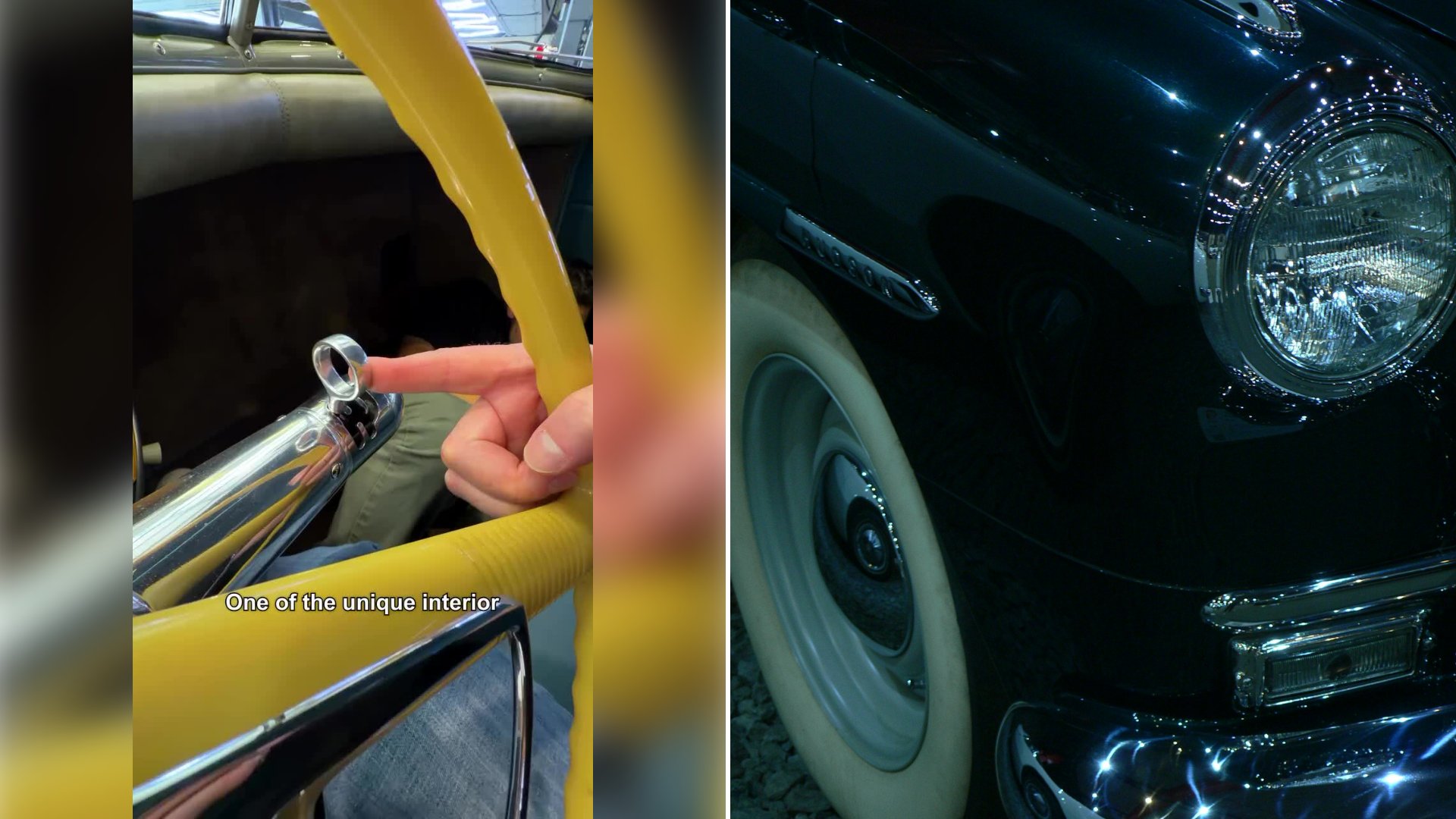
A video posted under the account aydeealdana walks through the engine bay and interior of a 1948 Tucker 48, pointing out one unusual detail after another: three headlights instead of two, six visible exhaust tips paired with six mufflers, and a flat-six engine that traces its design back to a helicopter powerplant rather than anything built for a passenger car. The clip has drawn more than 64,000 likes and 341 comments, many from viewers who had never heard of the Tucker before and could not believe it was real.
@aydeealdanass Meet the 1948 Tucker 48 with a helicopter engine, three headlights, six exhaust tips, and six mufflers. #Tucker48 #ClassicCars #CarRestoration #AutomotiveHistory #PebbleBeach
It is real, and it is one of the strangest success-turned-failure stories in American car history. Preston Tucker set out after World War II to build the Tucker 48, a sedan loaded with features that were genuinely radical for 1948: a padded dashboard, a windshield designed to pop out on impact rather than shatter inward, seatbelts at a time when almost no other American car offered them, and a third headlight mounted in the center of the nose that swiveled to follow the steering wheel, so it could light up the road around a turn before the car’s regular headlights caught up. That center light earned the car its enduring nickname, the “Cyclops eye.”
The engine is just as unusual as the video claims. Tucker’s original engine plans fell through late in development, so his engineers adapted a flat-six that had originally been designed by Air Cooled Motors as an aircraft and helicopter powerplant, converting it to run on water cooling and mounting it in the rear of the car. That helicopter lineage is exactly why the engine bay in the video looks nothing like a standard 1940s Detroit six-cylinder — the layout, the cooling plumbing, and the exhaust routing all reflect an engine that was never meant to sit behind a car’s back seat in the first place.
The company’s story ended almost as fast as it began. Facing a Securities and Exchange Commission investigation and fierce resistance from the established Detroit automakers, Tucker Corporation produced only 51 cars before collapsing in 1949. Preston Tucker was later tried on fraud and conspiracy charges tied to how he raised money for the company and was acquitted on every count, but the company never recovered, and the Tucker 48 passed into history as one of the great what-could-have-beens of postwar American design. Of the 51 cars built, roughly 47 are believed to survive today, which is part of why any Tucker sighting draws this kind of attention online.
The video’s own caption adds a more specific claim: that this particular example, identified as chassis 1029, was Preston Tucker’s personal car and recently completed an eight-year restoration that culminated in a Best in Class win at Pebble Beach. That kind of provenance would make this car exceptionally significant even by Tucker standards, since Tucker’s own personal cars are the most documented and sought-after examples among collectors. The claim is the creator’s own account of the car rather than something independently verified here, but it tracks with a broader, well-established pattern: Tucker’s personal vehicles, including the prototype often called the “Tucker Torpedo,” have surfaced at major auctions and concours events for decades, each time drawing the kind of attention usually reserved for one-of-one engineering oddities.
Commenters zeroed in on exactly the details the video highlighted, trading theories about how the six-exhaust, six-muffler arrangement could possibly route cleanly around a rear-mounted engine and asking whether the center headlight still functions on the restored car. Several pointed out that most people only know the Tucker 48 from the 1988 Francis Ford Coppola film “Tucker: The Man and His Dream,” and said this was the first time they had actually seen one of the real cars up close rather than a movie prop.
Whatever the exact chassis history, the car in the video is a rare, working reminder of how different the American automotive landscape might have looked if Tucker’s company had survived. Fewer than 50 of these cars exist anywhere in the world, and finding one freshly restored, running, and filmed in enough detail to see its oddest engineering choices up close is not something that happens often, even in a corner of the internet built around exactly that kind of find.
More from Vinyl and Velvet
- A Seized 1920s Stationary Engine Slowly Comes Back to Life Through Repeated Hand-Cranking and Troubleshooting
- A Vintage Medium-Format Film Camera Frames Up a Car Show Through Its Viewfinder Before the Shutter Clicks
- A Custom Multi-Level Diorama Garage Gets Built From Scratch to Display a Model Car Collection

Leave a Reply