

That old toy in the closet has been through a lot. It survived your kids, the move to the new house and probably a few garage sales. Now it may be worth money, and the next mistake you make could cost you.
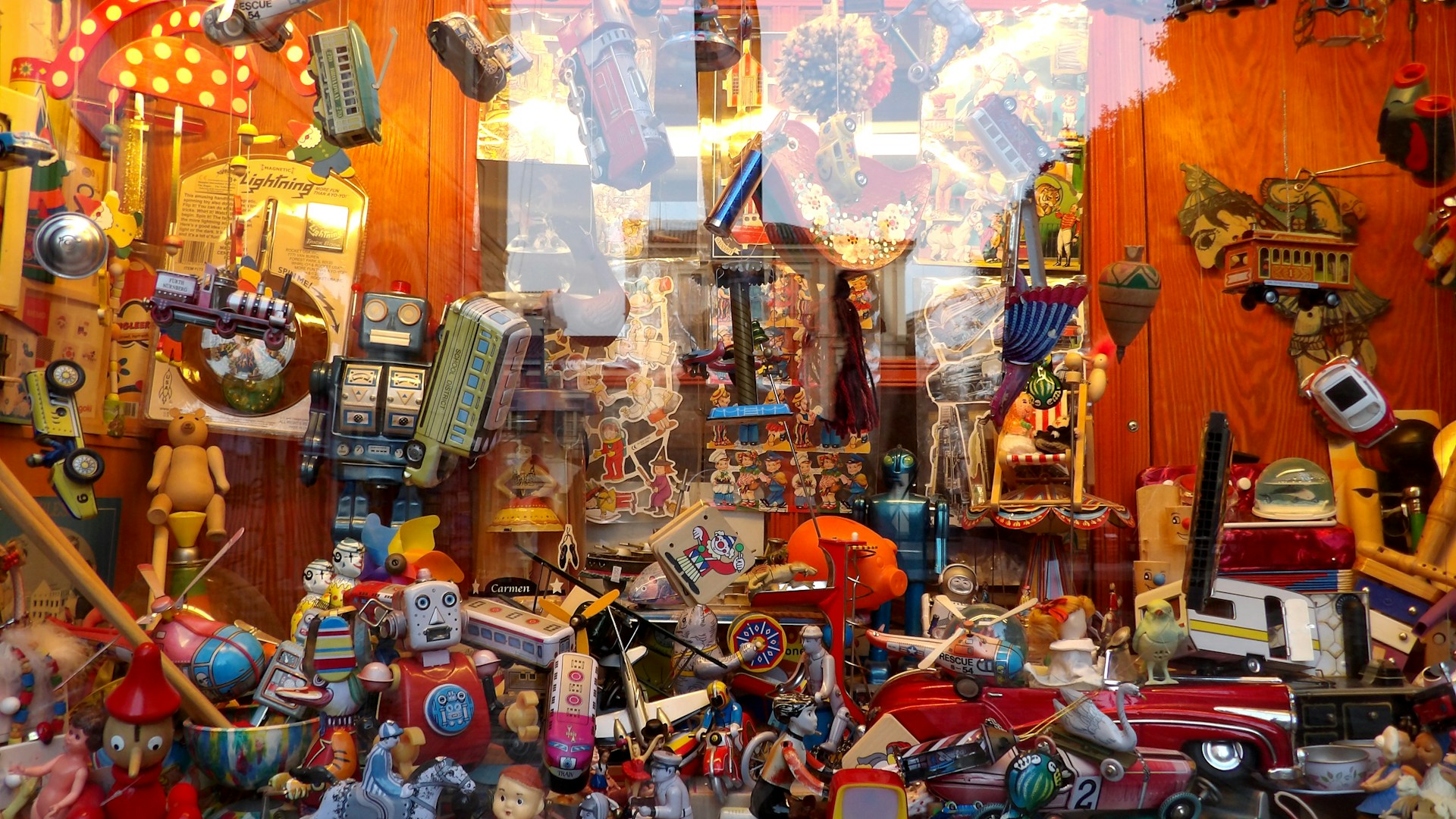
The good news is that most damage is easy to avoid. Todd Coopee, in an April 2026 guide called Practical Tips to Preserve Vintage Toys and Games on Toy Tales, lists the habits that quietly ruin vintage toys. Here are seven things you should never do.
You do not need fancy equipment for any of this. You need a little patience and the willingness to leave a toy alone.
Think of it as caring for an old friend. The toy has already lasted decades, and your job is to keep it from getting worse.
Never Leave Vintage Toys In The Sunlight
A sunny shelf looks charming, and that is exactly the trouble. Toy Tales warns against prolonged display in direct or reflected sunlight, because UV exposure fades boxes, yellows plastics and weakens paper and adhesives.
If you want to show off a favorite toy, pick a spot out of the sun. A faded box can cost a collector’s interest in a hurry. If a window gets afternoon sun, a bookcase on the opposite wall is the safer choice.
Never Store Them In The Attic, Basement Or Garage
Here is the twist: the places we put things we want to keep are the worst ones. Toy Tales says to avoid basements, attics, garages and sheds, because temperature swings cause warping, cracking, mould growth and adhesive failure.
A closet in the main part of the house, where the temperature stays closer to what you live in, is a better bet. Plastic bins do not fix the problem in damp places. The guide cautions against plastic storage in areas prone to condensation for the same reasons.
Never Stack Heavy Items On Boxed Games Or Toss The Paper Parts
Toy Tales says paper degrades faster than plastic and is harder to replace authentically, so heavy weight on a boxed game is a bad idea. A crushed box takes value with it.
Keep the flat inserts and rule sheets together with the toy too. The guide notes that boxes, inserts and rule sheets often determine value.
Never Wrap Them In PVC, Vinyl Or Rubber Bands
It seems harmless to snap a rubber band around a set of cards or a bundle of small pieces. Toy Tales warns that some plastics can off-gas, which speeds yellowing or stickiness.
It also cautions against airtight containers for paper items, since sealed environments can trap moisture and speed up damage. Breathing room matters.
Never Leave Batteries Inside
This one catches people off guard. Toy Tales says not to store electronics with batteries installed, because leaking batteries permanently damage contacts and plastic housings.
Take the batteries out before a toy goes in the box. It takes five seconds and may save a toy that would otherwise be ruined. Open the battery door on any old toy you have already stored, just to be sure nothing has started to leak.
Never Over-Clean With Water Or Household Cleaners
The urge to scrub is strong. Toy Tales states that over-cleaning causes more harm than light wear.
Its advice is to skip household cleaners entirely and keep water away from paper, decals and labels. A little dust is a lot kinder to a toy than a soaked label. If you must do something, a gentle, light touch is the rule.
Never Repaint, Re-Glue Or Mix Up The Parts
A chipped paint job tempts a lot of us to grab a brush. Toy Tales is blunt: repainting, re-gluing or making other fixes can lower value and collectability.
It adds a related warning about similar pieces from different toys or games, saying not to mix them, since completeness significantly affects value and collectability.
Put the seven together and a clear picture emerges. Light, damp, weight, chemicals, batteries, scrubbing and repairs are the enemies, and doing nothing is often the best plan.
The idea that repairs add value is a common one. Toy Tales says the opposite: a fix can lower value, and honest wear is safer than a fresh coat of paint.
So what should you do instead? Keep toys somewhere steady and dry, such as a closet inside the living space. Store each toy with its own parts, its box and its papers, and leave it as you found it.
Here is a simple routine to follow this weekend. Pull out your toys one at a time, check the box for crushing, check the batteries, and put each piece back with its own papers.
Write a quick list of what you have while you are at it. A simple note with the toy’s name, what is in the box and any marks on it will help if you ever decide to sell or pass it on.
Then move the whole collection away from windows and out of the attic, basement or garage. Ten minutes of sorting could protect something that has survived fifty years or more.
If you think a toy could be valuable, get an expert opinion before you change anything. You can always clean or fix something later, but you cannot undo a repaint.
More Stories You May Like
- Putting Vintage China With Gold Trim In The Dishwasher Can Erase The Value Of A Piece That Has Lasted Decades
- Chipping Paint On Vintage Toys And Painted Kitchenware Can Carry Lead So Think Twice Before Kids Or Food Touch Them
- Young Woman Quietly Carried Her Southern Belle Grandmother’s Vintage Dresses Out Of The Basement For A Ninetieth Birthday Surprise Grandma Has Wanted For Years

Leave a Reply