

Thirty dollars and one jar stuffed with somebody else’s old jewelry. That was the gamble TikTok creator @millylivin took when she carried a mystery jewelry jar out of an antique shop and sat down to sort through it, one piece at a time, to find out whether anything valuable was hiding in the pile.
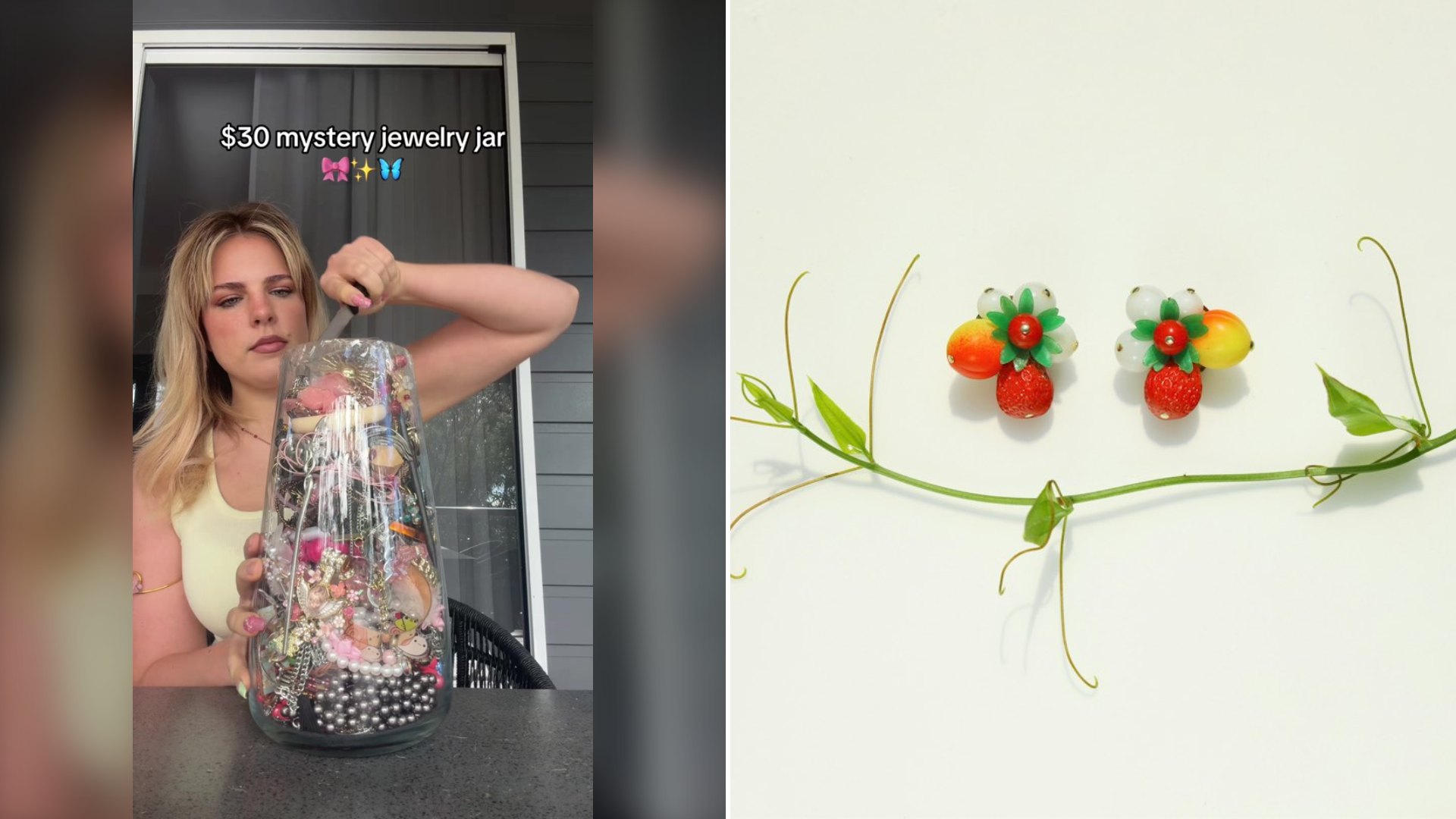
“I bought a $30 mystery jewelry jar from an antique shop… let’s see if there are any hidden treasures,” she wrote with her video. She credited the idea to another creator, @Mariona.roma, and tagged it as a thrift haul, vintage jewelry and a treasure hunt.
There is no talking in the clip, just music and her hands at work. She opens the jar and works through the haul piece by piece, giving each find its moment on camera. It is the kind of quiet, patient sorting anyone who has ever emptied a grandmother’s jewelry box on the kitchen table will recognize.
That is a big part of why mystery jars are so popular. Antique shops and estate sale companies often scoop up loose costume jewelry, single earrings, broken chains and odds and ends from a house and sell them by the jar or the bag instead of pricing every little piece. For the shop, it clears out clutter. For the buyer, it is a lottery ticket with a guaranteed prize, because even if nothing turns out to be gold, you still end up with a jar full of vintage sparkle to wear, gift, repair or craft with.
@millylivin
Whether a $30 jar pays off depends entirely on what is buried inside and on knowing how to spot it. The good news is that the clues are usually right there on the jewelry if you know where to look.
How to Tell Real Gold and Silver From Costume Pieces
Before you sort anything, get a cheap jeweler’s loupe or a strong magnifying glass and good light. Most of the important information on a piece of jewelry is stamped in tiny letters on the clasp, the back of a pendant, the inside of a ring band or the post of an earring.
Here is what those stamps generally mean:
- 10K, 14K, 18K or 417, 585, 750: These indicate solid gold of different purities. 585 is the European way of marking 14 karat, and 750 means 18 karat.
- 925, Sterling or Ster: Sterling silver, which is 92.5 percent pure silver.
- GF, GP, HGE, RGP or 1/20 12K GF: Gold filled or gold plated. These have a layer of gold over a base metal. Gold filled pieces can still be worth something, but they are not solid gold.
A small magnet helps too. Gold and silver are not magnetic, so if a chain jumps to the magnet, it is almost certainly a base metal. The magnet test cannot prove something is gold, though, because plenty of non-magnetic metals are not precious either. Treat it as a quick way to rule things out, not a final answer.
Also look for wear. When gold plating rubs off on the high points of a ring or the edges of a clasp, you will often see a coppery or gray metal peeking through. Solid gold does not change color when it wears.
Costume Jewelry Can Be Worth Money Too
A jar does not need a single karat of gold to be a good buy. Vintage costume jewelry has a devoted collector base, especially signed pieces from the mid-twentieth century. Turn brooches and clip earrings over and look for a maker’s name. Signatures such as Trifari, Coro, Monet, Napier, Weiss, Sarah Coventry, Kramer and Juliana are all worth setting aside and looking up.
Other signs of a quality vintage piece include rhinestones that are set into prongs rather than glued flat, a heavier feel in the hand, careful finishing on the back, and old-style clasps such as a C-shaped catch on a brooch.
Single earrings and broken necklaces are not trash, either. Crafters buy them for jewelry repair, Christmas tree ornaments, button art and altered pieces, so a bag of “parts” can still sell.
Tips Before You Buy Your Own Mystery Jar
If watching this video has you eyeing the jars at your local antique mall, a few habits will help you come out ahead.
Look through the glass first. Most shops will not let you open a sealed jar, but you can still turn it around and see what is visible along the sides. A jar that is mostly plastic beads is a different buy from one with heavy chains and old brooches.
Ask where it came from. A jar assembled from one estate can hold a whole lifetime of someone’s jewelry, while a jar filled with leftovers from many sales may already have been picked over.
Do not clean everything right away. Harsh dips and polishes can damage stones, plating and old finishes. A soft dry cloth is the safest first step. For rhinestones, keep pieces dry, because water can seep behind the stones and ruin the foil backing that makes them sparkle.
Get a second opinion on anything promising. A local jeweler can test metals in a few minutes, and many will do it for little or nothing. For signed costume jewelry, searching the maker and design online, including recent sold prices, gives a much more realistic sense of value than asking prices do.
Set your expectations. Most mystery jars are mostly costume jewelry. Think of anything solid gold or sterling as a bonus, and the fun of the search as the real thing you paid for.
That is exactly the spirit of @millylivin’s video. Thirty dollars bought her an afternoon of digging, a pile of vintage pieces with stories behind them, and the chance that somewhere in that tangle sat something special.
More From Vinyl and Velvet
- Woman Goes to Her First Ever Estate Sale Where Everything Was Two Dollars a Piece and Leaves With a Haul of Bling Bags and Shoes for Around Six Hundred Dollars Total
- Seller Brings a Thousand Raw Baseball Cards to a Buyer With the Best Ones Already Pulled Out and Learns the Going Rate Is About Ten Dollars for the Whole Box
- Woman Finds an 1800s Hand Painted German Marriage Cabinet on Facebook Marketplace Ten Minutes From Her House and Says It Might Be Her Favorite Marketplace Find to Date

Leave a Reply