

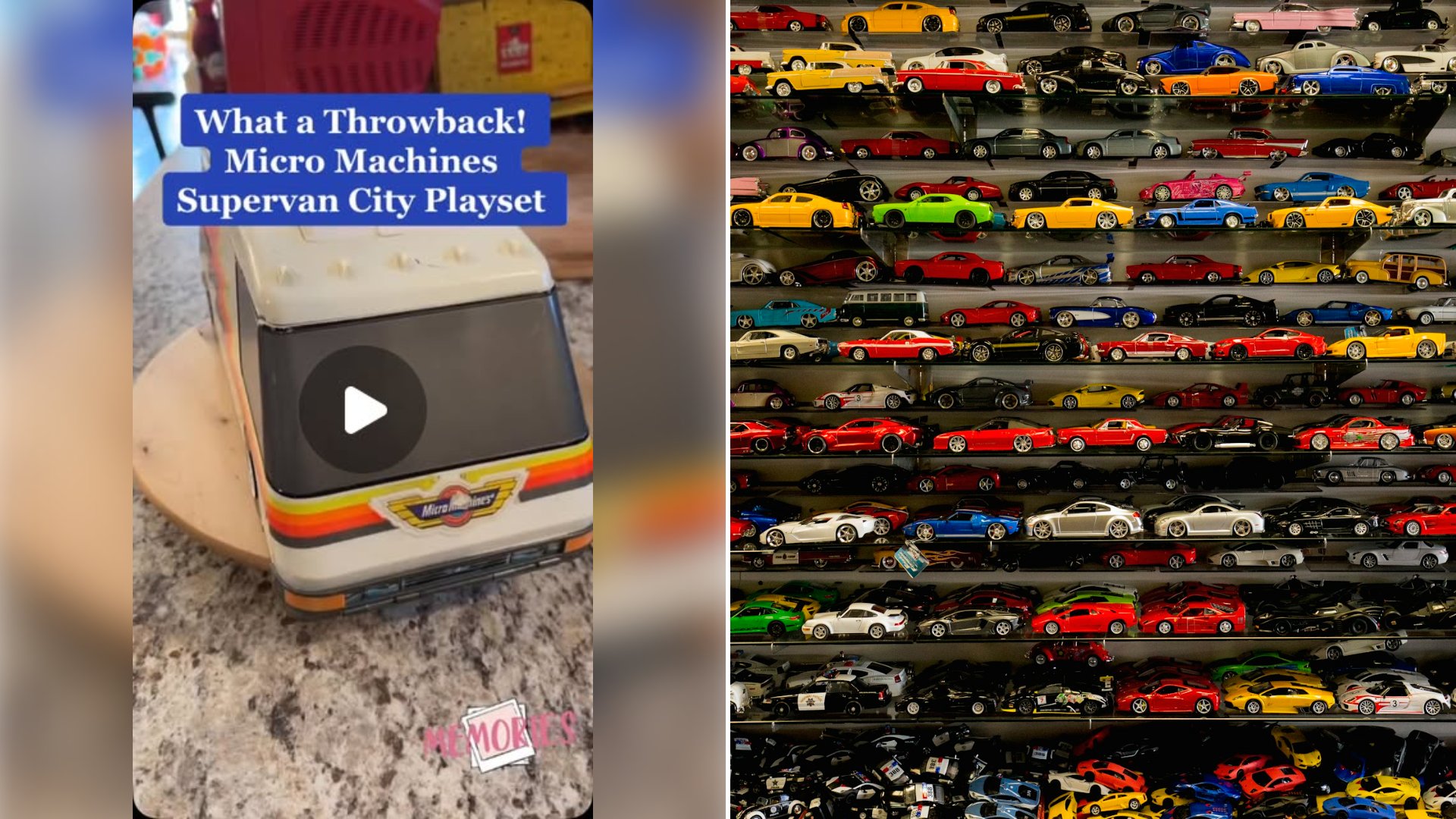
At first glance, it just looks like a toy van. Chunky plastic, bright colors, the kind of thing that would have blended into a toy box next to a dozen other forgettable Hot Wheels adjacent pieces. Then the collector in this video starts unfolding it, and the van stops being a van entirely. Panels drop down, walls flip out, and within a few seconds a simple toy vehicle has become a fully detailed miniature city, complete with tiny roads, buildings, and play surfaces packed into a shape that fit in one hand a moment earlier.
The piece in question is the Micro Machines Supervan City Playset, and the collector behind the account @cpj_collectibles clearly knows exactly how to time the reveal for maximum nostalgia impact, holding the closed van on screen just long enough for viewers to forget what is coming before letting it unfold.
Micro Machines themselves were a genuine phenomenon in toy aisles during the late 1980s and into the 1990s. The brand, created and sold by the toy company Galoob, built its identity around miniaturization, packing highly detailed die cast vehicles into a scale small enough that dozens of cars could fit in a pocket sized carrying case. That portability was the entire selling point in an era before handheld electronics dominated kids’ attention, letting children carry an entire fleet of cars, trucks, and even playsets anywhere they went. Galoob later merged with Hasbro in the late 1990s, and the Micro Machines brand continued under different ownership and various relaunches in the years that followed, with the original run remaining the most fondly remembered by the generation that grew up with it.
The City Playset line, which this Supervan belongs to, took the miniaturization concept one clever step further by turning the vehicles themselves into the storage and play surface, rather than requiring a separate carrying case or city mat. A playset like this one could look like an ordinary toy van sitting on a shelf and then physically transform into a detailed environment with roads, buildings, and scenery built directly into the folding panels, meaning a child’s entire city essentially traveled inside the vehicle until it was time to play. That transform first, play second design is exactly the kind of mechanical engineering that made certain toy lines from this era memorable decades later, long after flashier but less inventive toys from the same shelves have been forgotten entirely.
Part of what makes a reveal like this one resonate so strongly online is how specific the memory is. Plenty of people who grew up in the 1990s will remember owning Micro Machines in some form, but the exact mechanism of a playset like the Supervan, the precise way it unfolds and what the inside actually reveals, tends to be the kind of detail that fades first. Watching it unfold again does not just trigger generic nostalgia. It restores a very specific piece of childhood muscle memory that most viewers did not realize they still had until the video brought it back.
Toys built around genuine transformation mechanics like this one also tend to hold up better in the collector market than toys that were simply well designed visually, because the engineering itself is part of what collectors are preserving. A Supervan City Playset in working, complete condition, with all of its folding panels intact and functional decades later, represents the kind of toy that was genuinely overbuilt for its era, which is exactly why it still impresses people seeing it for the first time or the first time in thirty years.
More from Vinyl and Velvet
- Game Boy Owner Says Mom Kept the Toys R Us Receipt From July 18, 1994, Showing a $49.99 Game Boy and a $19.99 Yoshi Game, and the Old Handheld Still Turns On Today
- Gamer Realizes Halo 3 Launched 19 Years Ago Today, Watches His Hair Turn Gray on Camera and Says He Is Booting Up the Master Chief Collection That Night
- Convention Attendee Brings His Childhood Pokemon Binder to a Dealer Booth Just to See If He Has Anything Good, and Walks Away Minutes Later With a Blind Cash Offer of 21,000 Dollars

Leave a Reply