

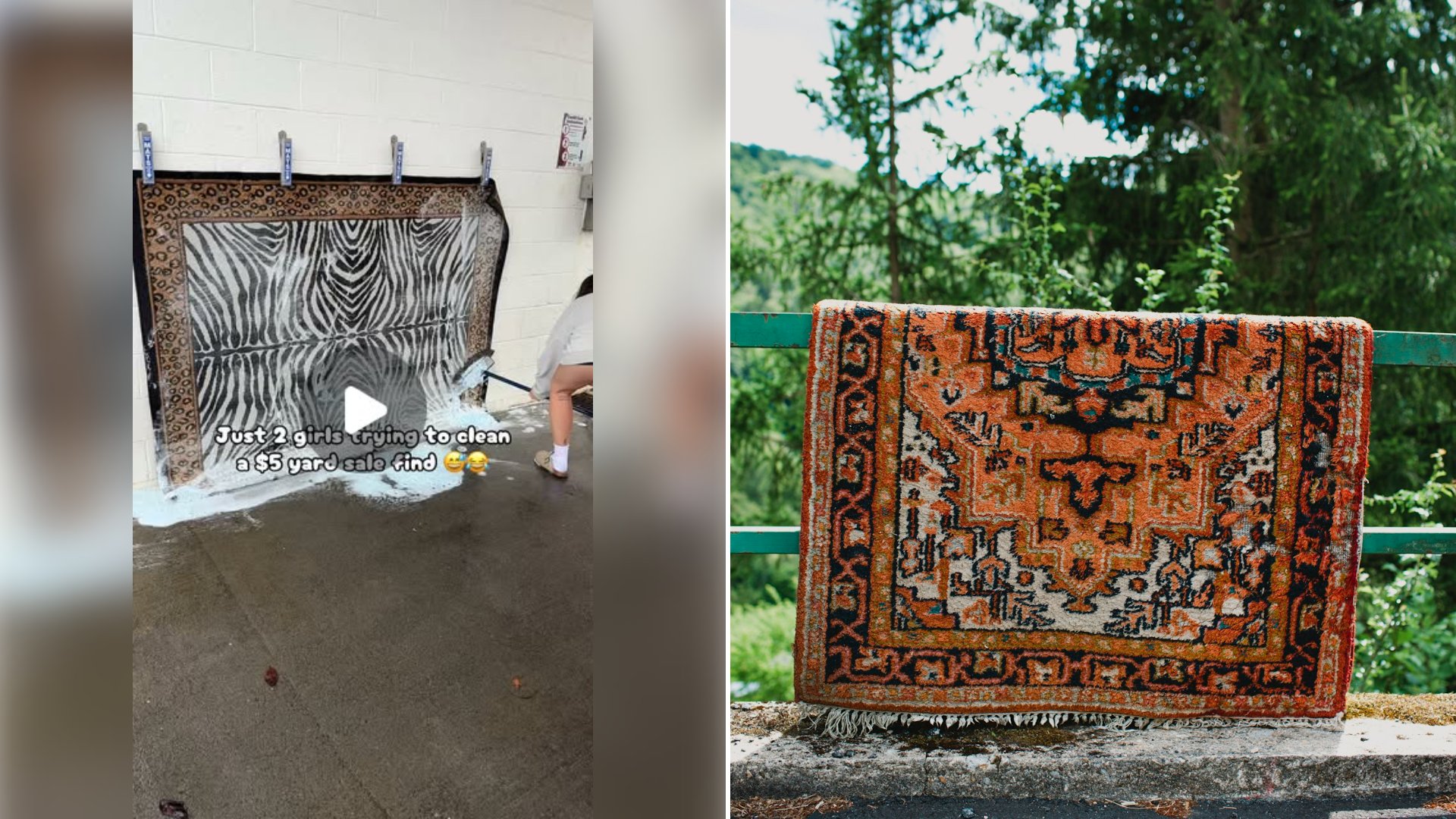
@nikkikeith96 posted a video of two friends hauling a filthy, dust-caked rug into a self-service car wash bay, feeding quarters into the machine, and going to work on it with an industrial power washer meant for cars. It sounds like an unhinged idea right up until the water hits the fabric and the grime starts sheeting off in waves, revealing a pattern that had been completely buried under what looks like years of dirt. The rug, picked up for five dollars at a yard sale, clearly hadn’t been properly cleaned in a very long time.
@nikkikeith96 and her friend work through it section by section, spraying, scrubbing, and spraying again, and the transformation plays out almost like a reveal. Once the dirt is gone and the rug is laid out to dry, a dense, detailed pattern emerges in colors that had been completely invisible under all that grime just minutes earlier, the kind of busy, saturated design typical of rugs made for decades before synthetic, minimalist patterns became the modern default.
Once the pattern is visible, it offers real clues about the rug’s age and origin. Densely patterned wool and wool-blend rugs with intricate, repeating medallion or floral motifs were extremely common imports into American homes from roughly the 1960s through the 1980s, often woven in regions with long-standing textile traditions and sold through department stores and furniture catalogs as an affordable way to bring a handmade look into a home. The tight, busy weave visible once this one is clean, along with the color saturation that survived underneath all that dirt, points toward that general era and style of production rather than a more recent, mass-manufactured machine-made rug, which tend to have flatter, more muted, and far less intricate patterns.
Power washing a textile rug isn’t standard cleaning advice, and it’s not something most rug specialists would officially recommend for a delicate or valuable antique, since high-pressure water can loosen fibers, strip natural dyes, or damage a weak foundation if the rug is fragile. But for a sturdy, synthetic-era rug bought for five dollars with nothing to lose, it’s an understandable gamble, and the payoff here is exactly why the video works. A rug that looked like a lost cause sitting in a yard sale pile came back looking genuinely vibrant, at a total cost that barely registers against what a comparable new rug of similar size and density would cost in a home goods store.
The real appeal of the video isn’t really about rug cleaning methodology at all, it’s the gamble and the payoff. Buying something this filthy for pocket change is a bet that there’s something worth salvaging underneath, and most people wouldn’t take that bet, let alone follow through with a car wash power washer instead of a vacuum. Watching the dirt disappear and a genuinely good-looking rug appear underneath is the exact kind of satisfying, unconventional transformation that keeps this corner of thrifting content so watchable.
More from Vinyl and Velvet
- Houston Creator Soaks a Customer’s Pope Gosser Plates in Hydrogen Peroxide for 24 Hours, Bakes Them at 200 Degrees and Shows Decades of Brown Stains Gone
- Creator Who Tags It Dumpster Diving Finds a Dirty Yellow Chair, Searches It and Sees Used Hosu Listings From $2,200 to $4,000, Then Deep Cleans It and Lounges in It
- Professional Detailer Surprises a Daughter by Fully Cleaning Her Father’s Dream Firebird After It Sat Untouched for 30 Years, Pulling Decades Old Trash Out With the Vacuum Along the Way

Leave a Reply