

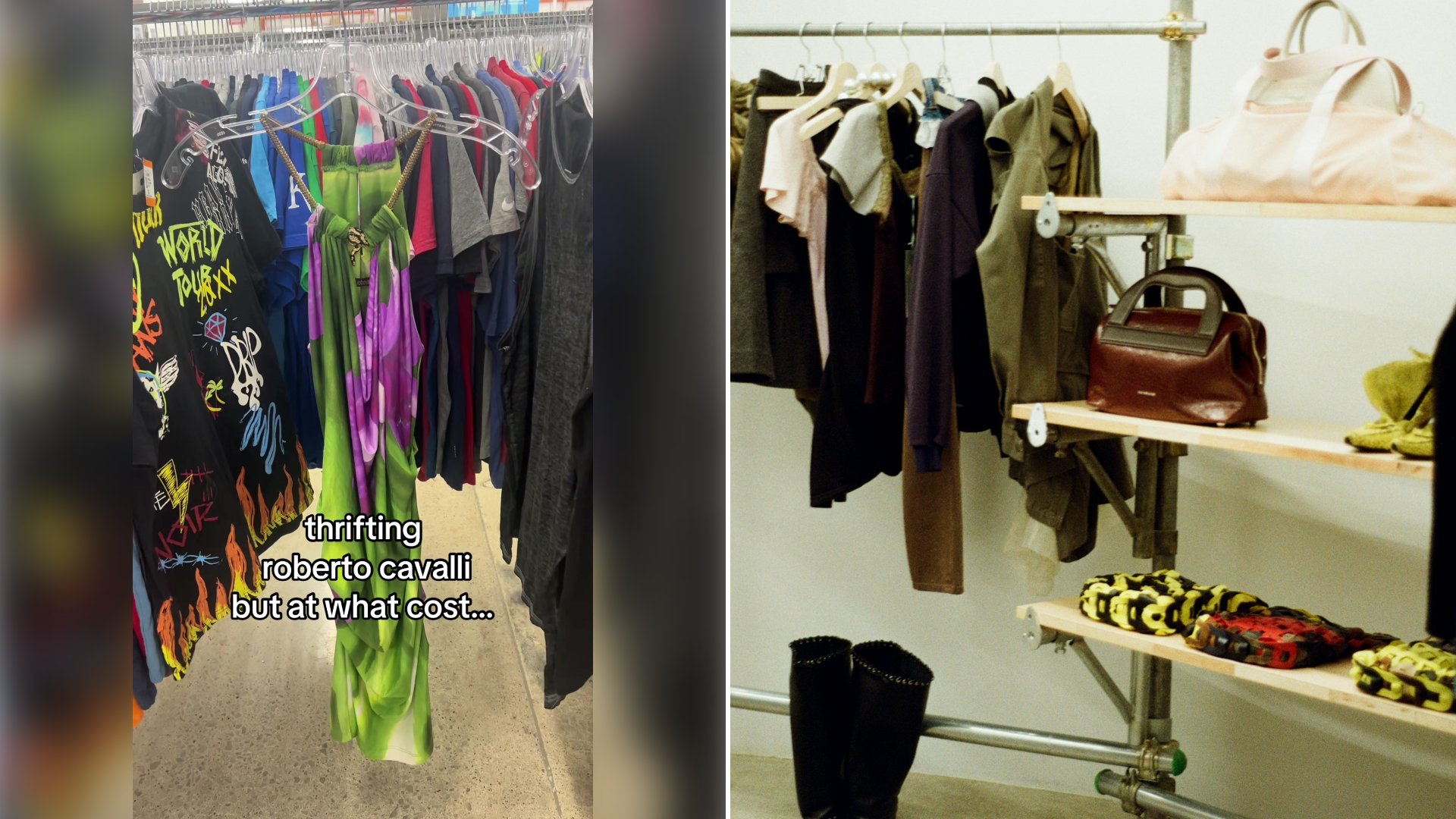
Hanging between ordinary clearance dresses was something that clearly did not belong there: a genuine Roberto Cavalli piece, the label unmistakable once it was flipped around to check. The thrifter’s reaction shifted fast, from excitement at spotting a real designer find to visible shock the moment the price tag came into view — a number that landed nowhere close to typical thrift store pricing.
The moment was shared by @kpeltz41, whose thrift content regularly tracks the swings between incredible deals and the occasional surprisingly steep price tag on a designer label. This particular find leaned hard into the second category, turning what started as a classic thrift win into a genuine double take.
@kpeltz41
Roberto Cavalli founded his namesake label in 1970, building a reputation over the following decades on bold prints, animal motifs, and a glamorous, body-conscious silhouette that became especially associated with late-1990s and 2000s red carpet fashion. Pieces from the brand’s archive are genuinely collectible today, with vintage Cavalli dresses from that peak era regularly commanding strong resale prices through consignment shops, vintage dealers, and online resale platforms specifically because the designs have aged into cult status rather than looking dated.
That collector demand is exactly why some thrift stores have started pricing recognized designer labels much closer to their actual resale value instead of treating every garment the same. Many secondhand and donation-based retailers now train staff, or use pricing software, specifically to flag high-end labels during intake, since a handful of correctly identified designer pieces can meaningfully boost a store’s overall revenue compared to pricing everything by category alone. A genuine Cavalli piece getting flagged and priced up rather than slipping through at a few dollars is a direct result of that shift in how thrift and donation retailers operate.
For shoppers, that pricing strategy changes the calculation around designer thrifting. The old assumption that anything found on a donation rack will be priced far below retail no longer holds universally, particularly at larger thrift chains or stores located in areas where resale demand for a specific designer runs high. A dress priced nearly at retail is still often a better deal than buying new, simply because it comes with the scarcity of a piece no longer in production, but it is no longer the guaranteed bargain that older thrifting habits trained people to expect.
Finds like this one are a useful reset for anyone still thrifting under outdated assumptions. The thrill of spotting a real designer label on a random rack has not gone away, but the price tag attached to it increasingly reflects actual market research rather than a blind guess, which makes checking that tag before getting too excited more important than it used to be.
More from Vinyl and Velvet
- Creator Posts a Crowded Archive Shop Shoe Tour Where On Screen Labels Name Comme des Garcons, Balenciaga, McQueen, Tom Ford, YSL and Margiela Seasons as Each Pair Is Held Up
- Thrifter Says Most People Will Miss the Wave of Good Stuff Hitting Thrift Stores and Shows the Donna Karan, Anne Klein, St. John, Escada and Ralph Lauren Western Wear Labels to Grab
- Thrifter Shows Off Her Entire Growing Rack of Vintage Ralph Lauren Sweaters, Every Single One Picked Up Secondhand for Under $12 Apiece

Leave a Reply