

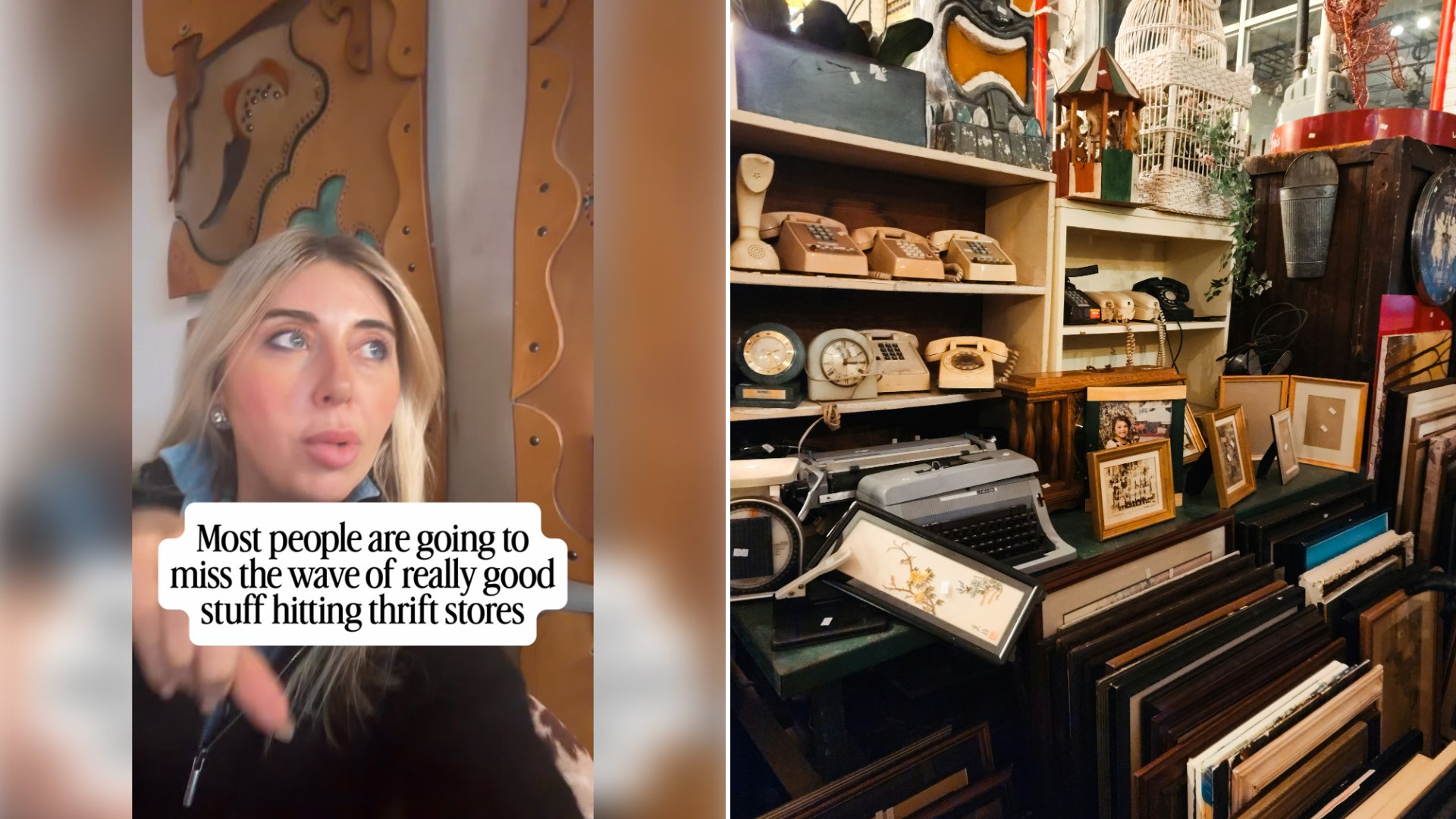
Instagram creator @vchamlee opens her 44 second reel with a line of text printed across the frame: “Most people are going to miss the wave of really good stuff hitting thrift stores.” Then she sits back, talks straight to the camera and starts naming the labels she thinks shoppers should be looking for.
Her caption, posted September 28, 2026, sets up the idea: “The best things at the thrift store aren’t always the brands everyone already knows to look for.” She adds that she is always sharing the brands she loves to hunt for, “so you can add them to your list, too.”
The video is one continuous take. She wears a black zip top over a blue collared shirt and a chunky turquoise beaded necklace, and her words appear one at a time as captions at the bottom of the screen. Early on those captions mention the 90s and the 2000s and then the word labels, which is where the reel turns into a list.
The labels arrive as close ups, one after another, roughly between the 15 and 30 second marks. A woven Donna Karan New York label with gold lettering on black fills the screen first. Next comes an Anne Klein II tag, shown inside a gold and black printed jacket with a pale yellow lining, hanging on a white hanger. A photograph follows of a woman in black with a gold chain necklace, seated beside a man holding a camera. After that the reel shows a St. John label, then an Escada tag with a size 38 printed beneath the name, set against yellow lining, and finally a Ralph Lauren Western Wear label that she holds up to the lens with the camera close on her hand. The captions then run through words such as “clothes,” “beautifully,” “wool” and “incredible,” and later include “overlooked,” “forgotten,” “shopper” and “advantages” as she talks about what a shopper gains from knowing a label.
The brand histories explain why two of those labels carry weight. According to St. John’s own site, the house was founded in Southern California in 1962 by Marie Gray, who began by looking for an ideal dress. Donna Karan’s site says the designer launched her first collection, Seven Easy Pieces, in 1984, built around a bodysuit, a tailored jacket, a skirt, pants, a cashmere sweater, a leather jacket and an evening look, and that the younger DKNY line followed in 1989.
Two more of the tags tie back to official histories. Anne Klein’s own history page dates the brand to 1968, when Anne Klein and Company was formed, and says that after Anne’s death her design assistants, Donna Karan among them, carried her vision forward. Escada’s website says the brand was founded in 1978 by Margaretha and Wolfgang Ley and calls itself a German luxury heritage brand, so a tag with that name is a European label rather than an American one.
For a thrifter, the reel gives a short, concrete checklist. Know the five tags by sight: Donna Karan New York in black and gold, Anne Klein II, St. John, Escada and Ralph Lauren Western Wear. Check the inside of jackets and linings, because two of the labels she shows are stitched inside the garment where a quick glance at the front of the rack will not reveal them. Look at the size tag too, as the Escada example shows a size 38 printed under the name.
Once a label looks right, the next step is checking what that exact piece has sold for before paying more than a thrift price. Search the label and the garment type on a resale site, filter to sold listings and compare condition, since a stained lining or missing buttons changes the number. Save the list to your phone so you can scan a rack in seconds.
More from Vinyl and Velvet
- Thrifter Finds a Roberto Cavalli Dress at a Local Thrift Store, Then Reveals the Surprisingly Steep $191.99 Price Tag Still Attached to It
- Reseller Says He Paid $2,100 for an Abandoned Storage Unit, Opened a Duffel Bag to Find an Audemars Piguet Box With No Watch, Then Pulled Out Dior, Balenciaga and Chrome Hearts
- Thrifter Lifts A Goyard Print Bag She Says She Knew Was Fake Off A Thrift Store Rack, Then Unzips It And Finds A Tag From The RealReal Tucked Inside

Leave a Reply