

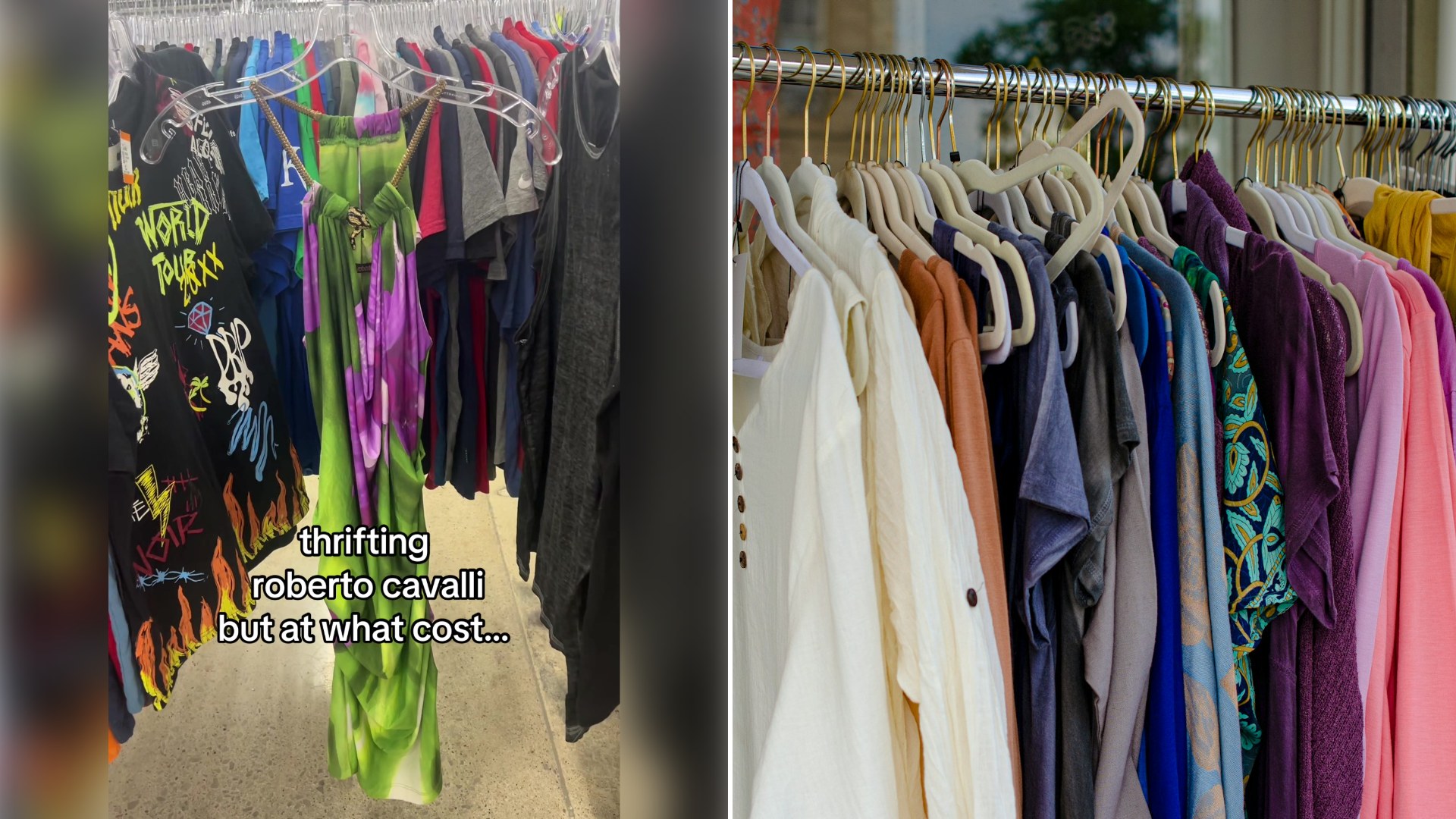
Thrift-store designer finds are one of the most reliable ways to go viral in the secondhand-shopping corner of TikTok — but not every high-end discovery ends in a bargain. A thrifter who posts as @kpeltz41 recently learned that firsthand, finding a Roberto Cavalli dress on a local thrift-store rack, only to flip over the tag and discover a price that undercut the thrill of the find almost immediately: $191.99, still attached.
Her caption sums up the emotional whiplash perfectly: “thought i had my come up,” tagged with #robertocavalli, #dress, #thrifting, and #thriftfinds. That phrase — “come up” — is thrifting shorthand for the moment a shopper believes they’ve stumbled onto a serious deal, the kind of designer piece that would normally sell for hundreds or thousands of dollars, priced instead like an ordinary rack item. Spotting a Roberto Cavalli label, an Italian luxury fashion house known for bold prints and high price points, is exactly the sort of tag that sets that expectation in motion.
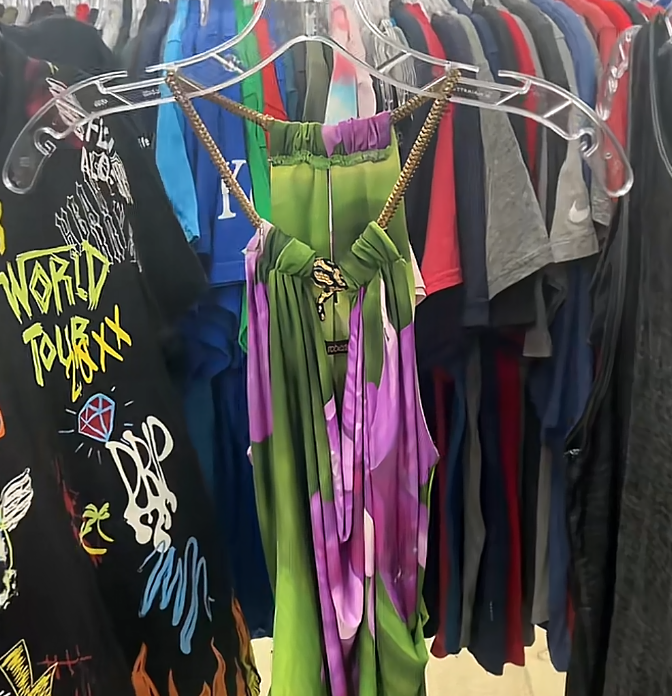
What makes this particular video land differently than the usual designer-thrift-win format is the twist: instead of a jaw-dropping bargain, the on-screen text and footage reveal a price tag of $191.99 — a number far closer to retail than to the deep discount thrift shoppers hope for when they spot a luxury label. For a store that typically sells items for a few dollars, a price approaching $200 is a jarring departure from the format’s usual payoff, and it’s easy to see why the creator’s reaction leaned toward disappointment rather than celebration.
It’s worth noting what the video actually confirms and what it doesn’t. The designer identification and the price come directly from the item’s tag and the on-screen text in the post — that much is squarely documented. What isn’t independently verified is the dress’s authenticity as a genuine Roberto Cavalli piece; thrift stores occasionally carry counterfeit or mislabeled designer items alongside real ones, and nothing in the clip indicates that the dress underwent any kind of formal authentication process. Even setting authenticity aside, thrift and consignment stores have increasingly caught on to designer resale values, pricing recognizable luxury labels well above the flat rates charged for everyday donations — which may explain a price tag that reads more like a boutique markup than a traditional thrift-store find.
That shift is itself part of a broader trend reshaping the secondhand market. As thrifting and reselling have grown into a mainstream hobby — driven in large part by exactly this kind of viral content — many stores have started pricing recognizable designer labels closer to their resale market value rather than treating every item as an undifferentiated donation. For shoppers who remember an earlier era of thrifting, when a designer label meant an almost guaranteed steal, videos like this one serve as a reality check: the days of a five-dollar Roberto Cavalli dress, if they ever existed reliably, are increasingly rare.
Whether the dress in the video is ultimately worth the asking price is a judgment call that depends on its condition, its authenticity, and what a similar piece would actually fetch on the resale market — none of which the clip resolves definitively. What it captures clearly is a moment familiar to a lot of thrifters: the split-second high of spotting a coveted label, followed immediately by the more sobering math of the price tag.
Spotting a Real Designer Deal
Finding a designer label at a thrift store is only the first step — confirming it’s genuinely a deal takes a bit more work. Before getting excited about a price tag, it helps to check the item’s condition closely for damage, alterations, or missing embellishments that could affect resale value, and to look up what similar pieces from the same brand and era are actually selling for on resale platforms. Authenticity matters too: checking stitching quality, label fonts, and materials against known examples of a brand’s genuine work can help rule out counterfeits, and when in doubt, a consignment shop or professional authenticator can offer a second opinion before a purchase. Most importantly, it’s worth remembering that a designer name alone doesn’t guarantee a bargain anymore — as secondhand shopping has grown more popular, pricing has grown savvier right along with it.

Leave a Reply