

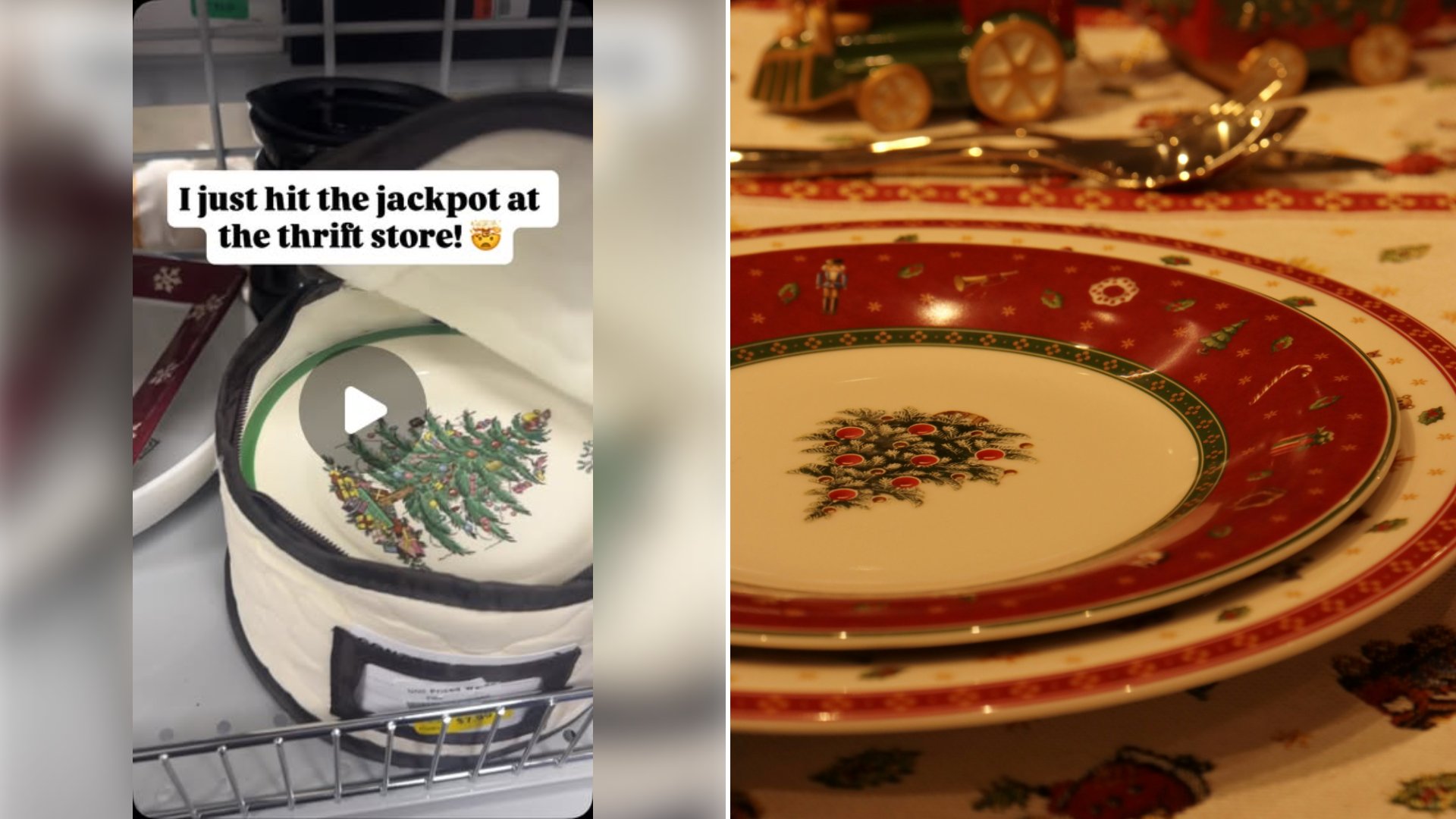
Most thrift store finds reveal themselves gradually, piece by piece on a shelf. This one came packaged as a single surprise. In a reel from @sokydesignstudio, a shopper spots an unassuming zippered storage case tucked away in a random corner of the store. There’s no label hinting at what’s inside, no obvious holiday display nearby to tip anyone off. She unzips it anyway, and the case opens to reveal a full, matching set of vintage Spode Christmas dinnerware, stacked neatly and clearly cared for by whoever owned it before.
It’s the kind of find that plays out like a mini treasure hunt: a mystery case, a slow unzip, and then a payoff that lands immediately because the pattern is instantly recognizable. Spode’s holiday dinnerware has been a fixture on American holiday tables for decades, which is exactly why spotting a full set at a thrift store price feels like such a win.
Spode is a British pottery and tableware company with roots stretching back to the late 1700s, when Josiah Spode developed a formula for fine bone china that would go on to define English ceramics. The company’s Christmas-patterned lines, featuring deep green holly leaves, red berries, and gold trim against white china, became especially popular in American homes from the mid-20th century onward, often purchased piece by piece over the years or passed down as family heirlooms specifically reserved for holiday meals.
That gradual, heirloom-style collecting pattern is part of why finding a complete matching set secondhand is such a notable event. Most families built their holiday china collections slowly, adding place settings, serving pieces, and specialty items like gravy boats or tiered dessert stands over years or even decades. A full set surviving intact, with no mismatched replacement pieces or missing items, usually means it was either kept in storage and used sparingly, or that an entire household’s holiday collection was sold off at once, often following a downsizing, an estate sale, or the passing of whoever originally built the set.
Resale prices for complete vintage Spode Christmas sets vary depending on the exact pattern, the number of place settings, and whether serving pieces are included, but secondhand marketplaces regularly show full sets listed anywhere from a couple hundred dollars up toward four figures when the set includes rarer serving pieces or is in excellent condition with no chips or crazing. Individual plates and cups from these lines routinely sell for meaningful money on their own, which means a complete set bundled together, especially one found in a case rather than piece by piece, represents real value concentrated into a single purchase.
Condition is everything when it comes to figuring out what a set like this is actually worth. Collectors look closely at the glaze for crazing (fine networks of hairline cracks that develop in old ceramic finishes over time), check gold trim for wear or flaking, and inspect edges for chips that can happen even with careful storage. A set that survived decades zipped away in a protective case, rather than sitting out on open shelving exposed to handling and dust, often turns up in noticeably better shape than pieces that were used and displayed regularly, which is likely part of why this particular set looked so pristine the moment the case came open.
There’s also a simple explanation for why holiday-specific dinnerware shows up at thrift stores at all: it only gets used once a year, which means it often ends up stored away and eventually forgotten, donated during a move, or passed along when the next generation in a family already has its own set and doesn’t want duplicates. That makes thrift stores and estate sales genuinely good places to look for this category of china, especially in the months surrounding the holidays when households are more likely to be sorting through seasonal storage.
For anyone hoping to replicate this kind of find, the advice is straightforward: check zippered cases, boxes, and bins in the housewares section instead of only scanning open shelves, since full sets are often tucked away exactly like this one was. Look for the Spode backstamp on the underside of each piece to confirm authenticity, and inspect every item in a set before buying, since one cracked serving piece can change the math on whether the whole lot is worth the price tag. Most of all, don’t assume a plain storage case holds nothing interesting. Sometimes the best finds are the ones nobody else bothered to unzip.
More from Vinyl and Velvet
- Antiques Dealer Opens a Wooden Chest Holding 764 Pieces of Gorham Sterling Made for a Table of 18, With Separate Forks for Oysters, Strawberries and Even Ice Cream
- Houston Creator Soaks a Customer’s Pope Gosser Plates in Hydrogen Peroxide for 24 Hours, Bakes Them at 200 Degrees and Shows Decades of Brown Stains Gone
- Two Women Shopping at Parma Flip Open the Glass Lids on a Dark Wood Drinks Cart and Find Glasses, Decanters and a Cocktail Shaker Waiting Inside

Leave a Reply