

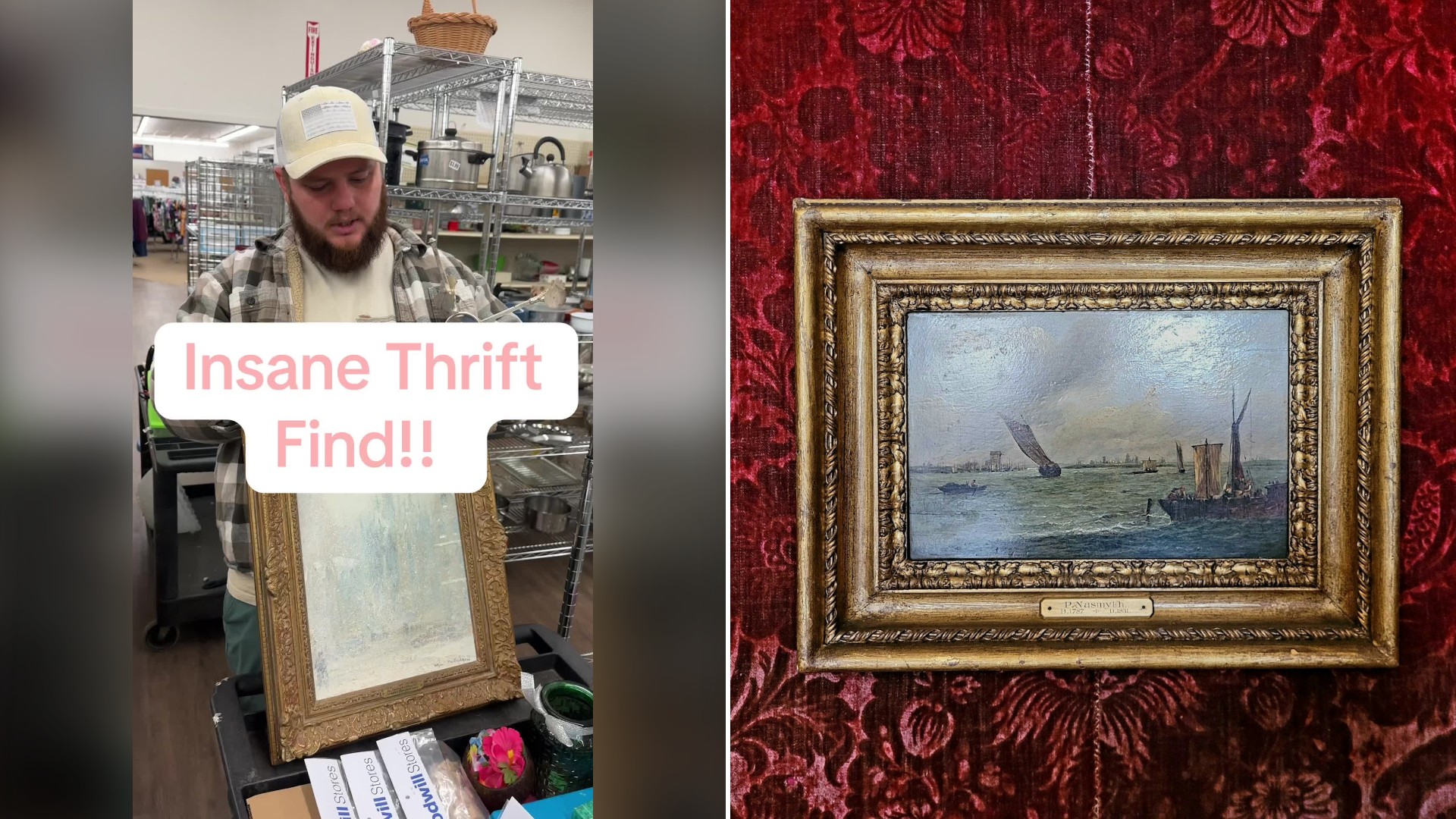
Every thrifter has a story about the one that almost got away, but the best stories are about the ones that nearly got treated like scrap. @marisamacy shared on social media what she calls her most insane thrift find ever, and it started with a purchase she made for the frame alone.
@marisamacy
A Frame Worth Buying
By her account, she picked up a painting at Goodwill strictly for the frame. Reusing old frames is a classic thrift strategy. A solid wood or gilded frame can cost far more in a craft store than an entire thrifted picture does, and plenty of shoppers happily toss the artwork inside so they can use the frame for something else.
But something changed once she got to the car. She says she realized that what she was holding was an actual painting and not a print. That one observation is the hinge of the whole story, and it is a good reminder that the thing in your hands is not always what it appears to be at the checkout counter.
Doing The Research
Instead of putting it in a closet, she decided to do some research. She says she came to believe it was an original by Johann Berthelsen. Her caption included his name as a hashtag, along with tags for Cincinnati and for an auction. She then posted it to an art appraisal page on Facebook, and she says the members there authenticated it for her.
After making a couple of phone calls, she says she was put in touch with an art gallery in Cincinnati, Ohio, roughly an hour’s drive from her home. She says they met with Will, the gallery’s art curator. According to her, he told them the painting would most likely sell somewhere in the range of three to five thousand dollars.
The plan from there is simple. The painting will be featured in the gallery’s February auction. She ended her update by telling people to stay tuned for part two, where she will share what it sells for. So the final result is still unknown, and an estimate is only that. Auction outcomes can land below, within or above the range given beforehand.
How To Have A Thrifted Painting Appraised
If you ever suspect that a thrifted painting is more than decor, the first step is to learn what kind of opinion you actually need. A free first look from an auction house specialist or a gallery is a good way to find out whether a piece is worth pursuing. Many will review clear photos of the front, the back, the signature and any labels before asking you to bring the work in. A formal written appraisal is a different thing. It is usually prepared for insurance, resale or estate purposes, and it comes with a fee.
When you choose an appraiser, look for someone with credentials from a recognized professional appraisal organization and experience with the type of art you have. Ask what the fee will be before work begins, and avoid anyone who wants a percentage of the value they assign, since that creates a conflict of interest. Ask for the appraisal in writing, and make sure it states which kind of value it reports, such as insurance replacement value or fair market value. Keep every photo, label and receipt together in one folder, because the more documentation you have, the easier it is for an expert to give a useful answer.
How To Tell A Painting From A Print
The moment in the car is something almost anyone can learn to spot. A few quick checks can help you decide whether a framed picture deserves a second look.
First, look at the surface. A true painting often has visible texture, where the paint sits up from the canvas or board in ridges. Tilt it under a light and see whether the highlights follow brushstrokes. A print is usually flat and smooth, or it may have a uniform texture that was added later to imitate canvas.
Second, use magnification. A phone camera zoomed in or a small jeweler’s loupe can reveal the tiny dots or lines of a printed image. Real paint does not form a regular dot pattern.
Third, check the back. Old paintings often have original stretcher bars, canvas tacking, handwritten notes, gallery labels or exhibition stickers. Prints are commonly backed with paper, cardboard or a modern backing board.
Fourth, look at the signature. Is it painted into the image in the same way as the rest, or does it sit on the surface like it was printed? A signature alone proves nothing, because forgeries exist, but it gives you a name to research.
Steps To Take If You Think You Found Something
Resist the urge to clean it, touch up the paint or remove it from the frame. Cleaning an old canvas can strip away value in a matter of seconds. Instead, photograph the front, the back, the signature and any labels in good light.
Next, search for the artist’s name along with words like auction results, then compare your picture to sold works of similar size, subject and period. Appraisal groups online can be a helpful first opinion, as in this story, but they are a starting point and not a final word. For anything that seems valuable, a professional appraiser or an auction house specialist can give a more formal opinion, and many will do a first review from photos.
What To Know About Auctions
If a gallery or auction house agrees to take a piece, you will usually sign a consignment agreement. It spells out the estimate range, the reserve if there is one, the seller’s commission and any fees for photography, insurance or listing. Ask to see all of it before agreeing. The estimate is a prediction made to attract bidders, while the final hammer price is decided by whoever is in the room or online on the day.
Timing matters too. Auction houses generally publish their sale details ahead of the date, giving collectors time to inspect a piece and arrange bids. That patience is part of the process, and it is why her story is a cliffhanger.
The Thrifting Lesson
What makes this story fun is that nothing about the beginning was unusual. She was shopping at Goodwill for a frame. The difference was that she looked closely after the purchase, asked questions and made some calls. Plenty of great finds are sitting on thrift shelves because no one stopped to look.
So next time you are in the aisle, give the artwork a look before you flip it into a frame project. Check the back, feel the surface and snap a few photos. You may end up with nothing more than a nice frame, which is still a good deal. Or you might end up like @marisamacy, waiting for February to find out how the story ends.

Leave a Reply