

The next great treasure at your local thrift store might be the blazer you wore to the office in 1992. That is the message from @virginiachamlee, who says she studies the secondhand market for a living. In a recent video, she argues that shoppers chasing what everyone already thinks of as vintage are about to miss a wave of beautifully made designer clothing, simply because the names on the labels no longer ring a bell for younger buyers.
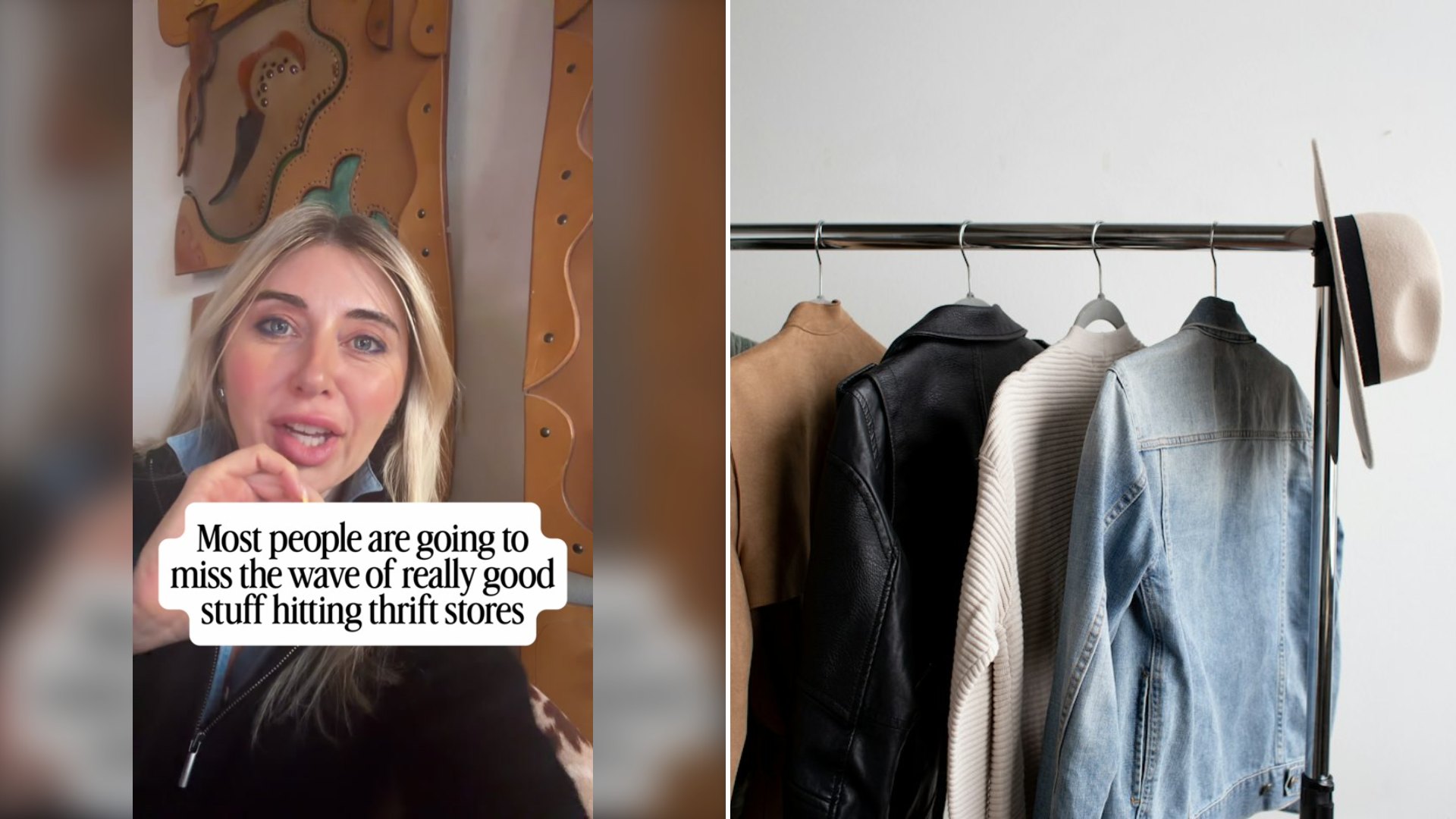
“Most people are about to miss the next wave of really good stuff hitting thrift stores,” she says, “because everyone is still looking for what we traditionally think of as vintage.”
Her reasoning is simple, and anyone who has helped clear out a parent’s home will recognize it. “Think about whose closets are being cleaned out now,” she says. In her caption, she ties it to what she calls Boomer downsizing, as a new generation of clothing makes its way into the secondhand market.
The Forgotten Labels She Says to Watch For
According to her, thrift racks are increasingly filling with “the expensive clothing people bought in the 80s, 90s, and early 2000s.” Many of those labels, she explains, “don’t have the name recognition that they once did.”
She rattles off examples: older Donna Karan, Anne Klein, St. John, Escada, and older Ralph Lauren lines that are no longer in production. She notes that Anne Klein was designed by Donna Karan “back in the day.” Karan took over design at the label after its founder’s death in 1974 and led it for about a decade before launching her own line.
St. John built its reputation on polished knit suits that held their shape for years, a staple for professional women. Escada, the German label founded in 1978, became known for bold colors and confident tailoring that defined power dressing in the 1980s.
“Some of these clothes were beautifully made out of wool, linen, silk, and they had incredible tailoring,” she says. “But they can get overlooked because the label doesn’t mean anything to a younger shopper.”
Her prediction is that knowledge will be the edge. “I think knowing these forgotten names is about to be one of the biggest advantages in modern thrifting,” she says, promising to teach her followers which names are worth hunting for.
@virginiachamlee
How to Spot Quality on the Rack
Labels are a great shortcut, but quality shows up in the garment itself, too. If you are browsing a rack of older clothing, these checks will help you find the gems.
That matters because many thrift stores price clothing by category rather than by brand. When staff do not recognize an older label, a silk designer blouse can land on the rack at the same price as a mall-brand top, and that gap is where the bargains live.
Read the fiber tag. Look for wool, silk, linen, cashmere and cotton, the natural materials she highlights. Garments made mostly of these fibers tend to breathe better, drape better and last longer than many inexpensive synthetic blends.
Look inside. A full lining in a jacket or skirt, neatly finished seams and generous seam allowances that leave room for a tailor to let things out are all signs of careful construction.
Check the details. Plaids and stripes that line up across the seams, sturdy metal zippers, sewn-on extra buttons and hand-finished hems all point to a garment someone took real time to make.
Inspect for damage. Hold wool up to the light to look for moth holes, check silk under the arms for stains and sniff for mustiness. Small issues can be fixed, but they should be reflected in the price.
Clues That Help Date a Garment
Many American clothing tags carry an RN number, a registration number issued to companies by the Federal Trade Commission. You can look it up in the FTC’s online database to find out which company made the garment, which can help when the brand name is unfamiliar.
A union label from the International Ladies’ Garment Workers’ Union is another useful clue. That union merged with another in 1995, so its label usually points to an American-made piece from before then. Care instruction labels became required in the United States in the early 1970s, so a garment without one may be older.
Do not be put off by big shoulder pads. In many jackets from the 80s and early 90s, they are tacked in and can be removed or swapped for slimmer ones, which instantly updates the silhouette. A good tailor can also adjust sleeves and hems for far less than the cost of buying new.
Before You Donate, Take a Second Look
Her advice works in both directions. If you are the one downsizing, the suits and silk blouses in the back of your closet may be worth more than you think. Before dropping them at a donation center, look up the labels, check the condition and consider a local consignment shop or resale site that handles designer clothing.
You may decide to donate them anyway, and that is a generous choice. But knowing what you have means you can pass these well-made pieces along to someone who will truly appreciate them, or put a little money back in your pocket.
More From Vinyl and Velvet
- Woman Goes to Her First Ever Estate Sale Where Everything Was Two Dollars a Piece and Leaves With a Haul of Bling Bags and Shoes for Around Six Hundred Dollars Total
- Seller Brings a Thousand Raw Baseball Cards to a Buyer With the Best Ones Already Pulled Out and Learns the Going Rate Is About Ten Dollars for the Whole Box
- Woman Finds an 1800s Hand Painted German Marriage Cabinet on Facebook Marketplace Ten Minutes From Her House and Says It Might Be Her Favorite Marketplace Find to Date

Leave a Reply