

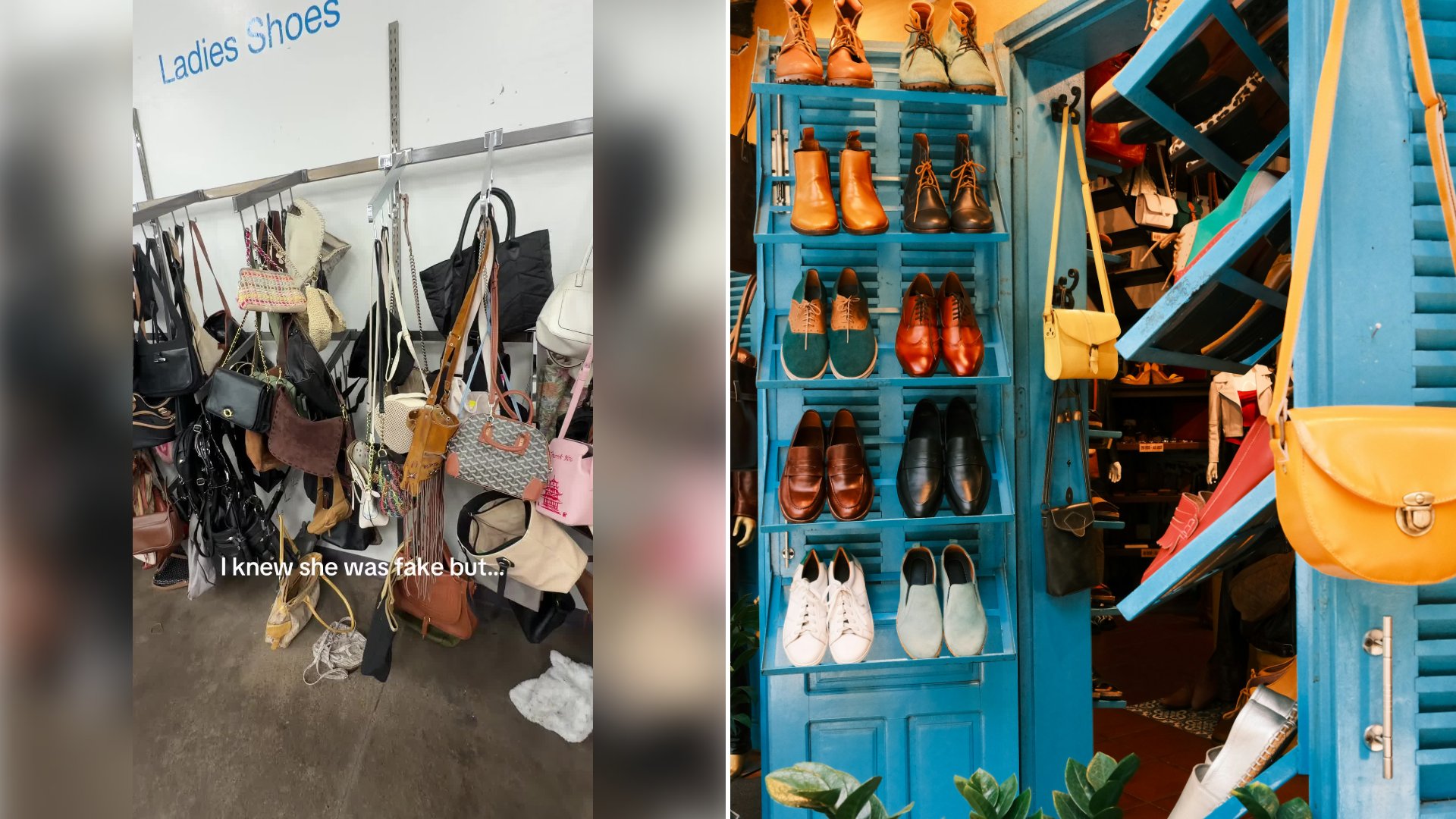
A reseller flipping through a thrift store’s handbag section stopped on something that did not add up. The bag itself had the obvious tells of a counterfeit — off stitching, a logo that was not quite right, hardware that felt cheap in hand — and yet clipped to it was a physical authentication tag from a major resale platform, the kind meant to signal that an expert had already checked the bag and cleared it as genuine.
The find was shared by @secondhandselection, a reseller whose content regularly walks through how to spot red flags on secondhand designer goods. This particular video stood out because the usual advice — check the stitching, check the hardware, check the tag — did not actually protect the original buyer here, since the tag itself was the thing giving a false sense of security.
@secondhandselection
Resale authentication services exist because counterfeit designer goods have become genuinely difficult to spot without training. Major resale and consignment platforms typically combine software-assisted scanning with review from staff trained specifically to spot inconsistencies in stitching, hardware weight, serial numbers, and material quality across the exact bag styles they handle most often. For widely counterfeited brands and bestselling styles, this process is usually fast and reliable, because those models have been studied extensively and real fakes are relatively well documented.
Where the process breaks down is with what the resale industry generally calls superfakes — counterfeits produced with a level of precision that can fool even trained eyes on a quick visual pass, particularly when photos or limited inspection time are involved rather than a full hands-on review. A mismatched detail that would be obvious in person, like the wrong font on an interior stamp or an off-color stitching thread, can be missed in a rushed or remote authentication check. Add human error into any high-volume inspection process, and an occasional fake slipping through with a tag attached becomes a real, if rare, possibility rather than something impossible.
That gap matters because authentication tags carry real weight with buyers. A tag is meant to replace the need for the buyer to be an expert themselves — it is the entire reason people are willing to pay resale prices for a used bag instead of insisting on buying new directly from a brand’s boutique. When a tagged fake eventually lands in a donation bin and then on a thrift store rack, it means at least one earlier buyer paid for a guarantee that did not hold up, and the item’s entire paper trail of “verified authentic” moved right along with it.
For everyday shoppers, the practical takeaway is not to distrust every authentication tag, but to treat it as one data point rather than an absolute guarantee, especially on secondhand platforms where a tag can be physically removed from one item and is not always permanently or digitally tied to the specific bag it was issued for. A find like this one is a reminder that even the systems built specifically to prevent counterfeits from circulating are run by people, and people occasionally get it wrong.
More from Vinyl and Velvet
- Jeweler Says She Took One Look at a Customer’s Family Gold Presidential Style Watch, Knew It Was Not Authentic and Suggested He Keep It and Wear It Anyway
- Creator Posts a Crowded Archive Shop Shoe Tour Where On Screen Labels Name Comme des Garcons, Balenciaga, McQueen, Tom Ford, YSL and Margiela Seasons as Each Pair Is Held Up
- Thrifter Says Most People Will Miss the Wave of Good Stuff Hitting Thrift Stores and Shows the Donna Karan, Anne Klein, St. John, Escada and Ralph Lauren Western Wear Labels to Grab

Leave a Reply