

Some yard sale deals take a long negotiation. This one took about thirty seconds. In a short post from the reseller channel @Thriftors, the creator arrives early in the morning, greets the seller, and asks the question every picker loves to ask, how much for all of it. The seller answers with a number that makes the whole thing worth sharing, and the creator says he will take it.
The Question And The Answer
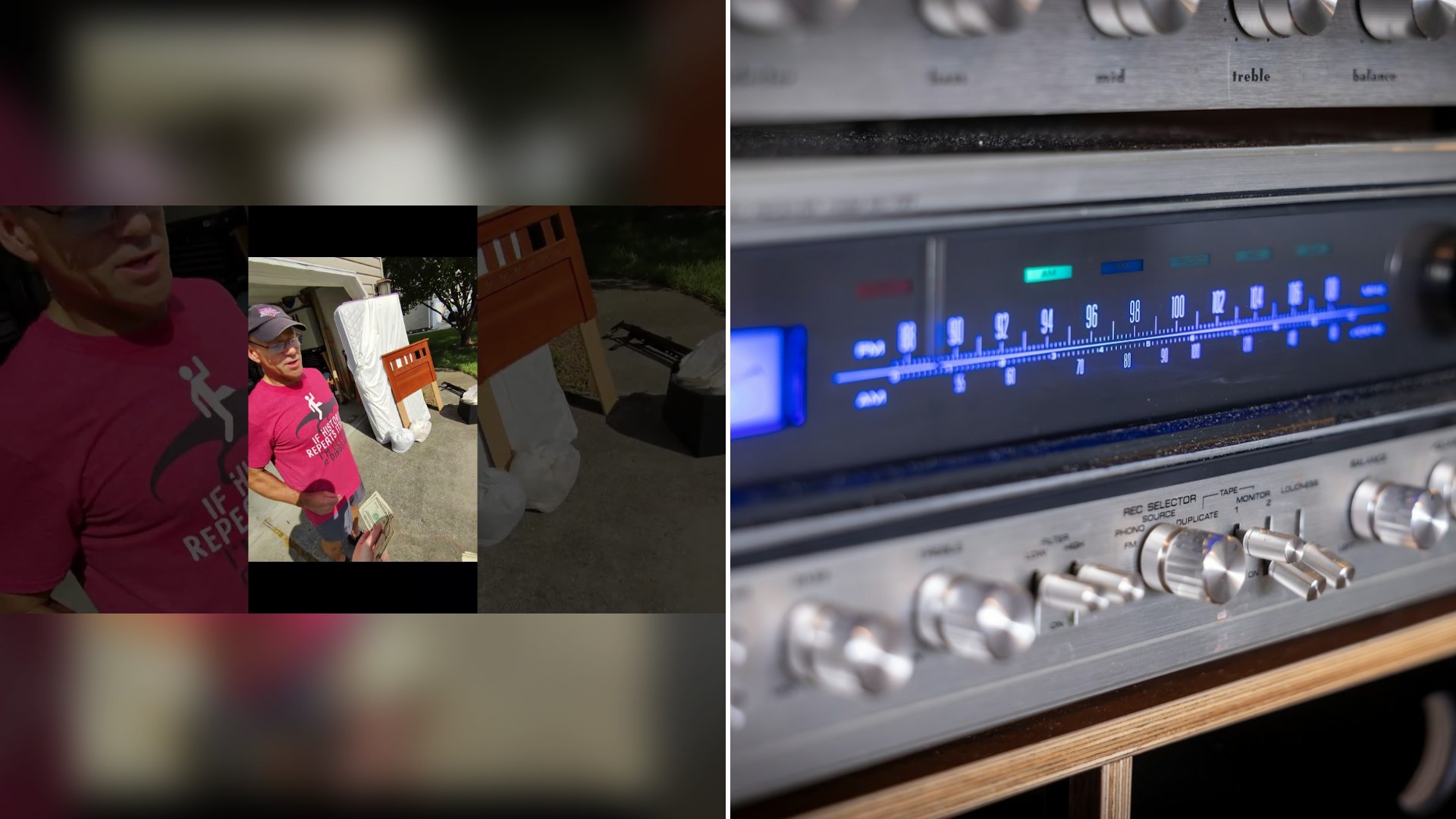
His opening line is simple. He asks, “How much you got on the all the Kenwood stuff?” The seller replies, “Uh 25 bucks.” To be sure he understands, the creator asks whether that is for one piece or the whole lot. The answer is that it is for all of it. Laughter follows, which fits a buyer who is pleasantly surprised by the price.
Kenwood is a well known name in home audio, and a stereo system from that brand usually means a receiver paired with a set of speakers. Here, the system includes large speakers that connect together. A complete system for 25 dollars is the kind of price that makes a reseller’s heart race.
Test First, Then Pay
What happens next is the most important part of the story. Before agreeing, the creator asks whether the equipment works. The seller says it does and offers a plug so he can test it. After a pause for the test, he says he will do the 25 dollars, and the seller thanks him.
There is no haggling here at all. He does not try to talk the price down, and the seller does not try to talk it up. With a number that low and a working test in hand, there was nothing left to negotiate.
Helping Carry It Out
The seller is distracted by a game he is following, and the creator tells him to enjoy it and offers to carry the equipment in for him. He asks whether there is more, and the seller says there are two more pieces, the speakers. They turn out to be big. The creator is told to carry the wires and two pieces, and the seller confirms that everything connects together and that it is “pretty cool.” A final test shows that the system is loud, and the post ends on a burst of noise.
What the creator does not say is what happened afterward. The saved captions do not include a resale price or how quickly the system sold, so we do not know how the deal worked out for him. The original upload’s title suggests the find sold fast, but the details are not given in the part we have. What we do have is the buying side of the story, and that is useful in its own right.
Why It Matters To Collectors
Vintage stereo gear has a loyal following. Many people who grew up with big speakers and a receiver in the living room remember the sound of a record playing through a system like this. For them, a Kenwood set sitting in a driveway is not just electronics. It is a memory.
Gear like this also carries a few risks, which is why the test mattered. Older receivers can have noisy controls, tired capacitors or blown speaker outputs. Speakers can have torn cones or dried out foam around the woofer. A seller who offers a plug is a seller who lets you check before you pay, and that is a good sign.
How To Buy Stereo Equipment At A Yard Sale
If you want to try your luck, a few habits can help.
Ask for a test. Bring a short extension cord, a small portable device with a headphone cable, and an adapter if you have one. Plug everything in, turn it on and listen for crackling, hum or silence on either channel.
Check every piece. Receivers, turntables and speakers can each fail on their own, so look at the whole set instead of only the shiny part.
Look at the speakers closely. Press gently on the cone, if you can reach it, and look at the edge for cracks or flaking foam. Sound from both speakers should match.
Ask about cables. As the story shows, wires are part of the deal. A system without its cables can be a headache to hook up, and speaker wire is easy to replace but remote controls and proprietary cords are not.
Know the weight. Big speakers are heavy. Bring a blanket or a moving strap and, if you can, a helper.
Search before you list. Look up the model numbers on resale sites, and compare sold listings instead of asking prices to see what similar items really bring.
Mind the shipping. Heavy audio gear is expensive to ship, so many sellers list it for local pickup only. Factor that into what you are willing to pay, because a big buyer pool nearby is part of what makes a deal work.
Offer to help carry. It is a kind gesture, and it also puts you in a better position with the seller.
Testing Vintage Audio Safely
Before you power up any older receiver, take a moment to look it over. Check that the power cord is not cracked or frayed, make sure all the speaker terminals are intact, and turn the volume all the way down before switching on. Bring the volume up slowly. If you smell burning, hear a loud hum or see smoke, switch it off at once and walk away from that one.
Connect the speakers to the receiver before you power it on, never after, since running an amplifier with no load attached can damage it. Test both channels by using the balance control, and turn the other knobs and switches to see whether they crackle. A little crackle can often be cleaned with contact cleaner, but a dead channel is a bigger repair.
A Word On Fair Dealing
A price this low raises a fair question about manners. Sellers at a yard sale often just want the garage cleared, and some have little idea what vintage audio can bring. The exchange here is friendly from start to finish. The seller thanks the buyer and the buyer offers to help carry. If you find a bargain like this, a little kindness goes a long way, and it keeps the neighborhood happy to host the next sale you visit.
Taking The Deal
It can be hard to say yes quickly when you are used to haggling. But there is wisdom in knowing when a price is already low enough. If the system works, the whole lot is 25 dollars, and you have the space and the means to resell it, there is little reason to push. The risk is small and the potential reward is large. That is the lesson this short post offers, and it explains why so many people stop to listen to a quick conversation in a driveway.

Leave a Reply