

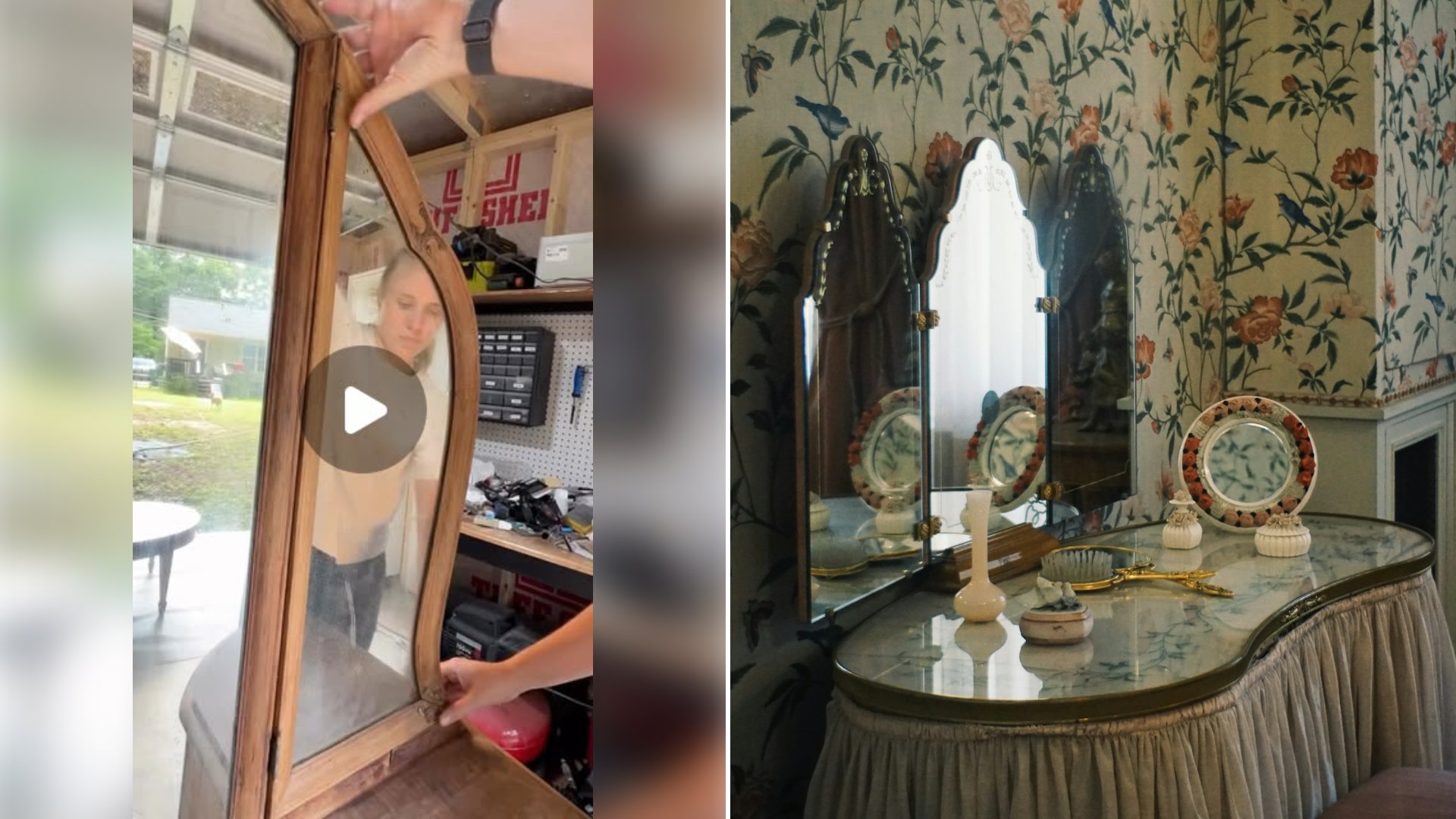
Furniture restorer @roserestorations_atl picks up a wooden antique vanity that someone was simply giving away for free, the kind of piece most people would walk past without a second look. The finish is shot, the wood is dull and scratched, and at first glance it is genuinely hard to tell whether there is anything underneath worth saving. That uncertainty is exactly what makes the restoration montage that follows so satisfying to watch.
The process moves through the stages anyone familiar with furniture restoration would expect: stripping away the old, damaged finish, cleaning and repairing the wood underneath, addressing any structural issues in the joints or hardware, and finally refinishing the piece so it reads as a cohesive whole again rather than a patchwork of repairs. Each stage reveals a little more of what the vanity actually is underneath decades of wear, and by the end it looks like something that belongs in a showroom rather than a free pile on a curb.
Vanities built with this kind of solid wood construction and classic silhouette point to furniture made well before the particleboard and veneer era that took over mass-market furniture manufacturing in the second half of the twentieth century. Pieces from the early 1900s through the 1930s, broadly covering what furniture historians often group under late Victorian, Edwardian, and early Art Deco influences depending on specific detailing, were typically built from solid hardwoods like oak, walnut, or mahogany, joined with techniques meant to last for generations rather than a single decade. A vanity surviving a century later with its structure still sound, even under a ruined finish, is a direct result of that kind of construction quality.
That durability is exactly why free furniture finds like this one are worth a second look before being written off. A damaged finish, water stains, or cosmetic scratches look alarming on the surface but rarely affect whether a piece is actually salvageable, since the finish is just a top layer sitting over structurally solid wood. The real red flags that make a piece not worth restoring are things like rot, severe warping, or insect damage that has compromised the wood itself, none of which show up as obviously as a dull or peeling finish does. Learning to tell cosmetic damage apart from structural damage is the single most useful skill for anyone hoping to spot a free restoration project with real potential.
Restoration work on a piece like this typically involves stripping the old finish with a chemical stripper or careful sanding, repairing any loose joints with fresh glue and clamping, replacing or restoring original hardware where possible to preserve the piece’s character, and then applying a new stain and protective topcoat that lets the original wood grain show through. The goal of a careful restoration is never to make a piece look brand new, which would actually erase some of its value as an antique, but to stabilize it structurally and bring its finish back to something that honors the original craftsmanship.
That is what gives this particular transformation its payoff. A piece that looked destined for a landfill turns out to have been structurally fine all along, just buried under a finish that had simply worn out over a century of use. The free-to-fabulous arc works because it is genuinely true to how furniture restoration works. The hard part was never the wood. It was recognizing what was actually wrong with it before deciding to walk away.
More from Vinyl and Velvet
- Reseller Shows Up to a Yard Sale Right as the Seller Is About to Haul Everything Left Over to Goodwill and Pays Just $50 for the Entire Remaining Driveway Full of Items
- Creator Who Tags It Dumpster Diving Finds a Dirty Yellow Chair, Searches It and Sees Used Hosu Listings From $2,200 to $4,000, Then Deep Cleans It and Lounges in It
- Poster Conservator Reveals the Donor Poster Technique Used to Rebuild a Missing Torn Corner of a Vintage French Travel Poster Without Ever Touching It With Acrylic Paint

Leave a Reply