

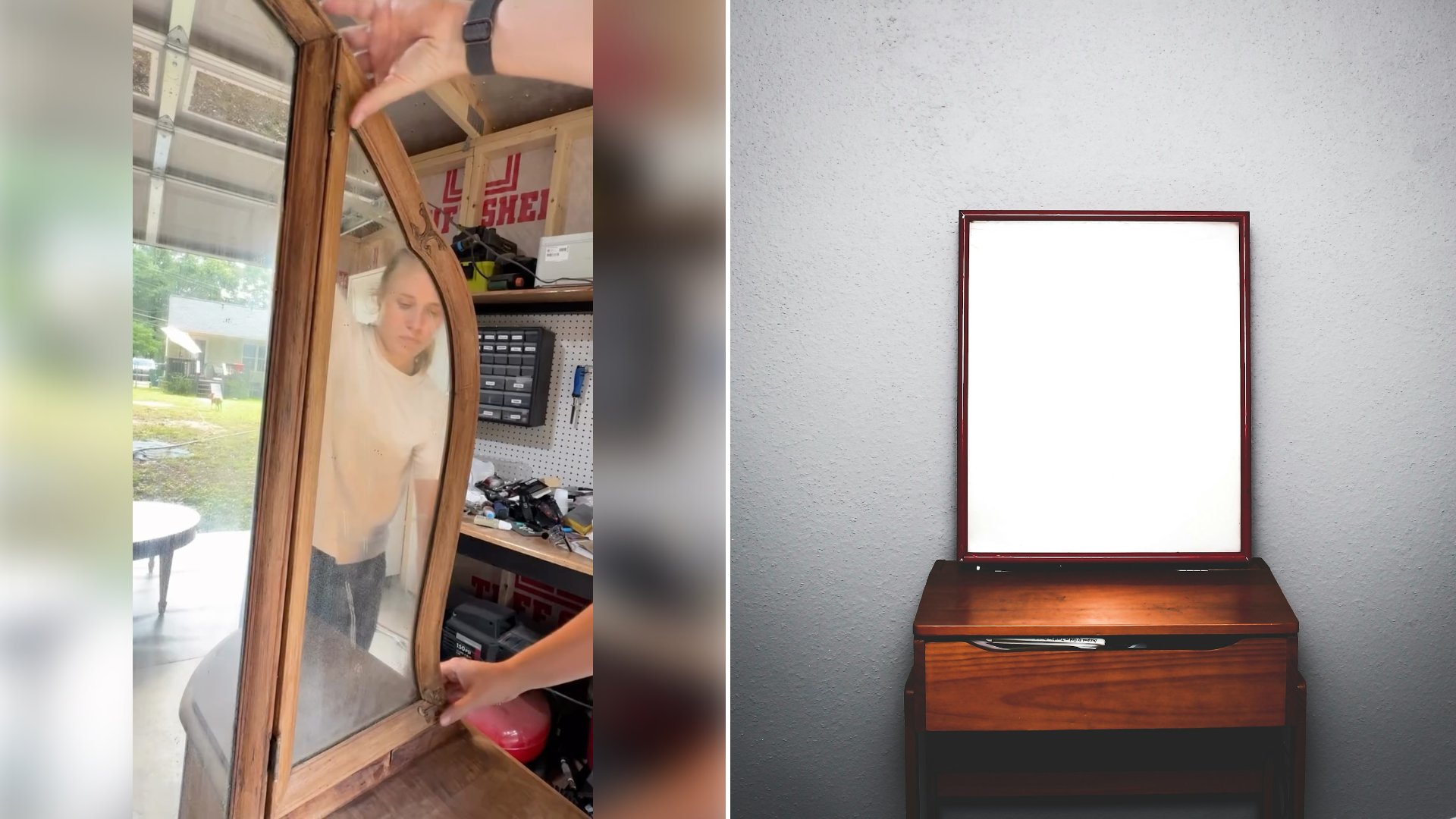
Free furniture listings are always a gamble, since the same word that makes a piece appealing, free, is often shorthand for damage severe enough that the previous owner gave up trying to sell it at all. A furniture restorer who regularly takes on exactly these kinds of gambles recently picked up a weathered antique vanity, its finish dulled and its mirror frame loosely held together, and turned it into a piece that looks ready for a furniture showroom rather than a garage pickup.
The vanity’s condition at the start was rough enough that the restorer opened the video with a half-joking assessment that it was not actually that bad, just in need of a little shaping, before carrying the mirror frame off to what she jokingly called the salon. Antique vanities built with a tall, framed mirror mounted directly to the main cabinet are especially vulnerable to this kind of wear over the decades, since the mirror frame takes the brunt of handling and moving while the drawers and base tend to hold up comparatively well underneath years of surface grime.
The restoration process moved through all the standard stages of a serious furniture refinish, shown in quick succession: wiping down the wood surfaces with solvent to cut through decades of built-up residue, scraping out grooves and decorative detailing where old finish and dirt had settled into the carved lines, and gluing in veneer patches to repair spots where the thin decorative wood layer had chipped or lifted away from the base structure entirely. Veneer damage like this is one of the more technical repairs in furniture restoration, since a patch has to be matched carefully for grain direction and color before it can be sanded flush and refinished convincingly alongside the original material.
From there, the piece received a fresh coat of finish applied by brush, with sections clamped to hold repaired joints and veneer patches firmly in place while everything cured. A wood-toned filler pencil was used to blend small nicks and scratches directly into the surrounding finish, a quick but effective trick professional refinishers rely on for minor imperfections that do not justify a full strip and refinish. The vanity’s original ornate metal drawer pulls got their own separate cleaning pass, polished by hand until they were bright enough to stand out properly against the newly refinished wood rather than looking dull and mismatched against a now-glossy surface.
The final reveal shows the full transformation at once: a rich, warm mahogany-toned finish replacing the dull, worn surface from the opening shots, with the tall mirror reflecting a clean, modern bedroom setting and the polished brass hardware catching the light exactly the way it would have when the piece was originally made. The restorer’s simple verdict, delivered with evident satisfaction, was that she loved it, a fair assessment for a piece that arrived for nothing and left looking like a genuine investment-grade antique.
Free furniture pickups like this one are exactly why experienced restorers rarely dismiss a listing just because it looks rough in photos. Cosmetic damage, veneer chips, dulled finish, and even a cracked mirror frame are almost always repairable with the right combination of patience and basic refinishing materials, while the bones of a well-built antique piece, solid joinery, quality hardware, and genuine wood construction, are the parts that are actually difficult or impossible to replace once they are gone. This vanity had all of that intact underneath the grime, which is ultimately what made it worth the trouble in the first place.

Leave a Reply