

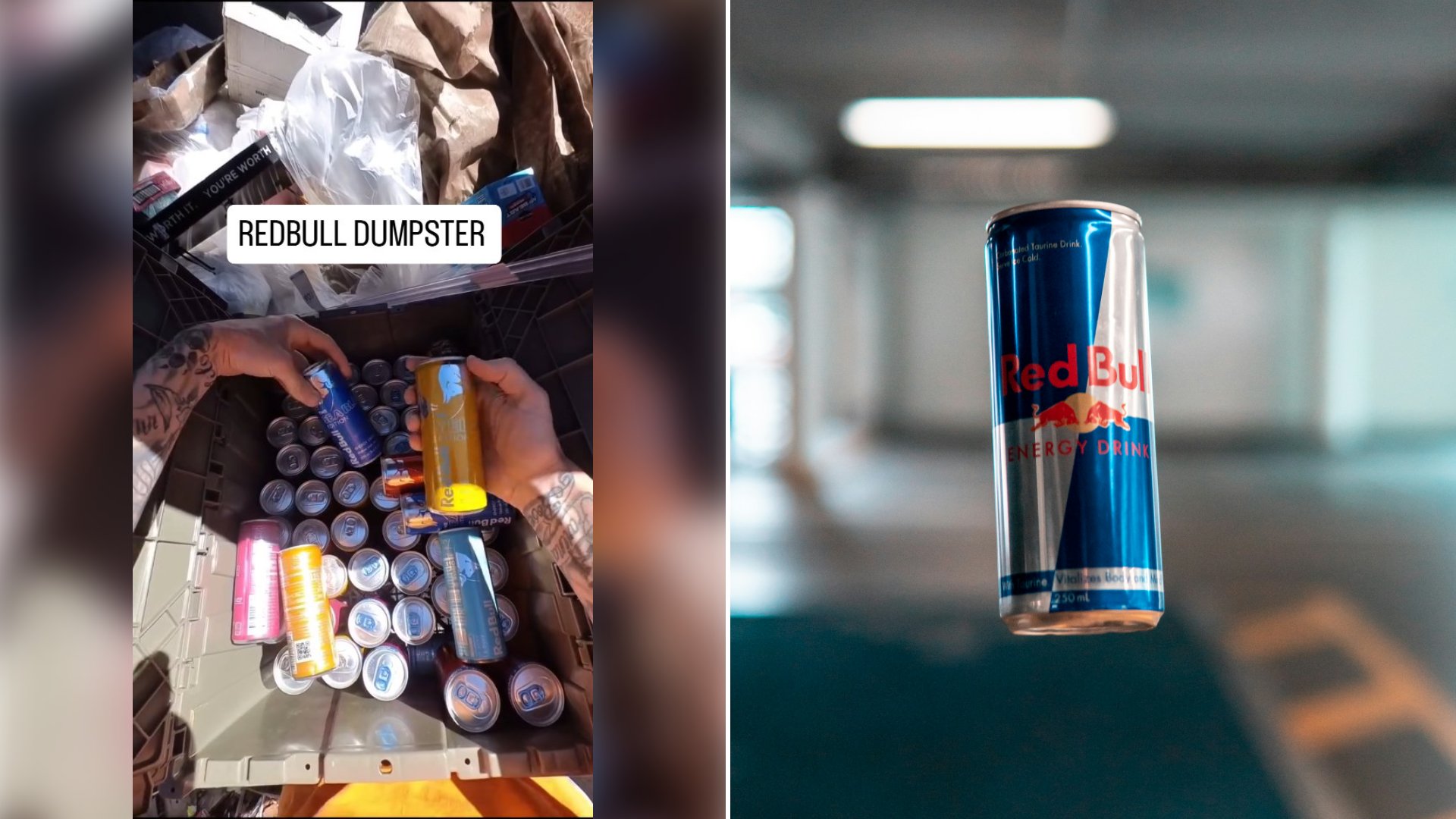
Most dumpster diving videos turn up furniture, electronics, or the occasional piece of mail. The haul @dumpsterdiveking pulled out of a commercial dumpster in a recent Instagram reel was something stranger: case after case of unopened Red Bull, stacked inside like someone had been quietly building a supply and never came back for it.
The caption on the clip lays out the question driving the whole video: “Dumpster was loaded with redbulls!! Employees stash?” The footage backs up the premise. Can after can comes out of the bin, still sealed, still cold in some shots, with none of the dents or sun fading that usually mark something that has been sitting in the trash for days. Whoever put them there, the creator suggests, probably meant to come back for them.
The account behind the find, run by a creator who posts regularly under the handle dumpsterdiveking, has built a following specifically around the idea that commercial dumpsters behind restaurants, retail stores, and distribution centers are far less empty than most people assume. Energy drinks in particular show up in these videos more often than viewers expect, usually because a case gets damaged in shipping, a cooler malfunctions, or a store simply over-orders and runs out of shelf space before a product’s sell-by window closes.
There is also a theory running through the comments on the original post: that an employee, rather than the store itself, is responsible for the stash. Workplace theft investigations and loss-prevention reports from retail and warehouse settings have documented exactly this pattern before, staff quietly setting aside product behind a dumpster or loading dock with the intention of retrieving it after a shift, only for the plan to fall apart when a manager restocks the area, a schedule changes, or the employee is moved to a different shift before they can come back for it.
For anyone who stumbles onto a find like this themselves, dumpster diving legality varies significantly by location. In most of the United States, once trash is placed in a dumpster on public property or the curb, it is legally considered abandoned and fair game under a 1988 Supreme Court ruling, California v. Greenwood, which found no reasonable expectation of privacy applies to discarded garbage. The exception is dumpsters that sit on private property behind a fence or that are posted with No Trespassing signage, since accessing those can still count as trespassing even if the contents themselves are abandoned.
Energy drink dumpster finds also carry a practical safety note that this creator and others in the dumpster diving community tend to repeat: unopened, unexpired cans found cold and sealed are generally considered safe, but anything with a popped tab, a dented seam, or no visible expiration date should be treated as a loss rather than a bonus. Heat exposure can also affect carbonated beverages over time even when the seal is intact, which is why divers who do this regularly say they check both the printed date and the condition of the can itself before deciding a find is worth keeping.
Whether the cans belonged to an employee’s abandoned side project or simply a store clearing out overstock, the reel has resonated with viewers for the same reason most jackpot dumpster finds do: it is proof that what one business treats as garbage can be, for the right person willing to look, a genuinely useful haul.
More from Vinyl and Velvet
- Collector Brings His Diet Coke Silver Bar in an Ice Cube Capsule to a Coin Shop, and the Dealer Offers Double Melt, $120 With Silver Sitting at About $60 an Ounce
- Reseller Says He Paid $2,100 for an Abandoned Storage Unit, Opened a Duffel Bag to Find an Audemars Piguet Box With No Watch, Then Pulled Out Dior, Balenciaga and Chrome Hearts
- Card Restorer Cracks a PSA 2 Gold Star Rayquaza Out of Its Slab, Finds Severe Delamination Lifting One Corner and Spends More Than Two Days in a Humidor and Presses to Flatten It

Leave a Reply