

In January 1982, a jeweler on Canal Street in New Orleans ran an ad in House Beautiful magazine for a Lenox china set. The pattern was Eternal, ivory with a wide gold band at the rim, and the 65-piece service for 12 carried a regular price of $1,213. This month, according to dealer Walter Ashford, 66 pieces of that very same pattern carried a high bid of $110 on an online auction in North Carolina the day before it closed.
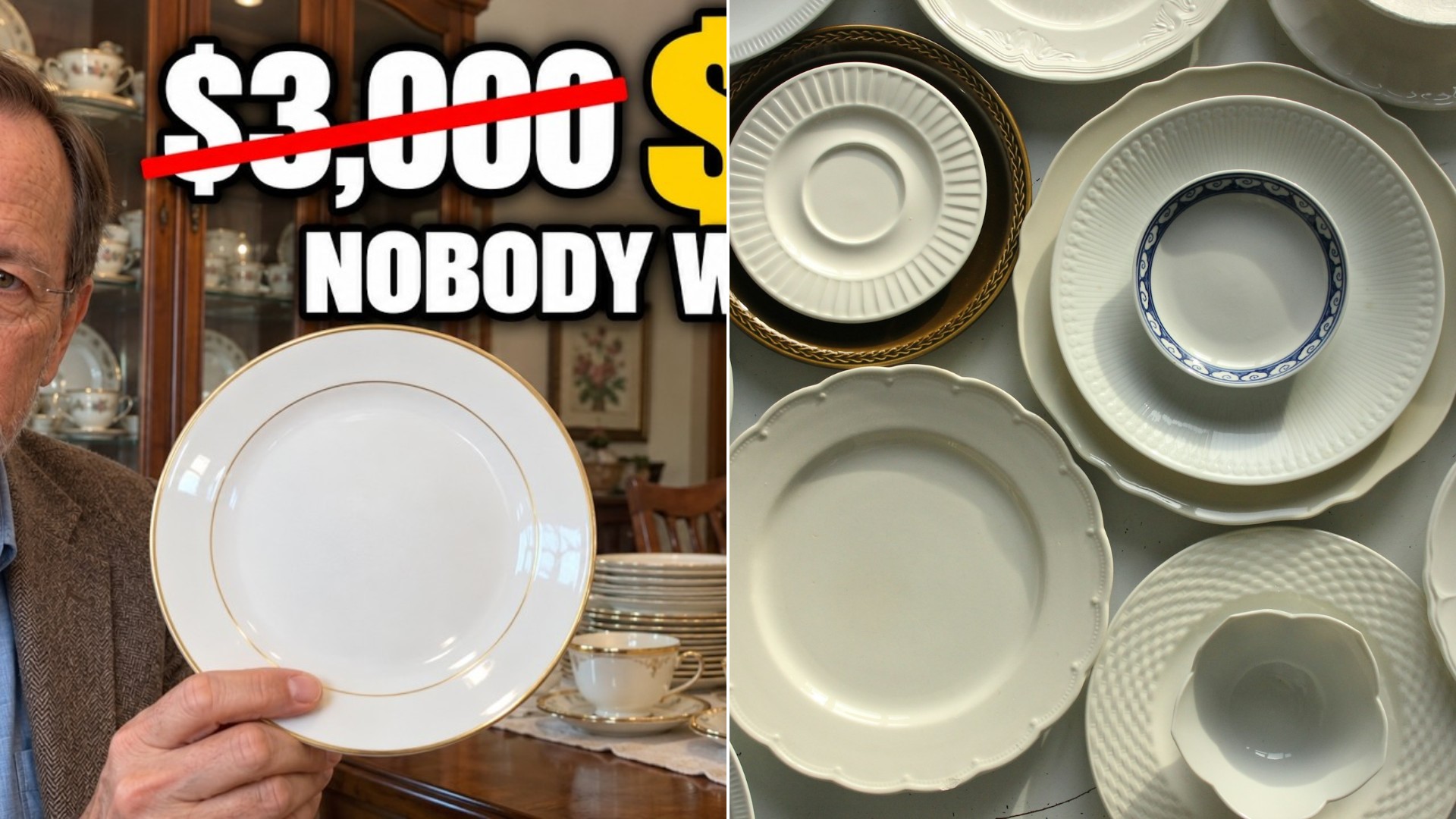
Ashford, who says he has bought and sold at estate sales, farm auctions and house clearances across the Midwest for 40 years, used the plate to explain why so many wedding sets feel valuable in the family memory and bring so little at auction. He is careful to say he is a dealer, not a certified appraiser, and that his talk is general information rather than a formal appraisal.
What The Set Cost In 1982
The ad came from Coleman E. Adler and Sons at 722 Canal Street. It offered 35% off Lenox china, two full years to pay, no interest and no down payment. The 65 pieces included 12 dinner plates, 12 salad plates, 12 bread and butter plates, 12 cups and saucers, a medium platter, an oval vegetable bowl, a creamer and a covered sugar. The sale price came to $788, with payments of $32.83 for 24 months.
Ashford ran the numbers through the government’s consumer price index, which stood at 94.3 in January 1982 and 336.94 in September of this year. By his math, a 1982 dollar is worth about $3.57 today, so the regular price comes to about $4,330 and the sale price to about $2,816. Since few couples paid the full tag at a store advertising a big discount, he says the honest figure is closer to $2,800. A 1984 ad priced a five-piece Eternal place setting at $81, which puts 12 settings near $3,200 in today’s money.
Why Nobody Remembers The Total
Ashford points out that china was sold one place setting at a time, not as a whole service. Brides registered at a store, and friends and relatives bought pieces. An aunt might buy one place setting, the neighbors another, and a mother’s best friend the gravy boat. Over a year or two, the cabinet filled up, and nobody ever wrote a single check for $1,200.
He says that is why the number feels so solid in the family memory. It was a great many small loving purchases, and the full price lived only on a registry card. He also notes that the suggested retail price was not the real market even then. A $81 setting was sold for $46.95 at a jeweler in Rhode Island, and Lenox’s own website this week shows the setting at $165 with a price of $114.95 beside it.
The Auction Numbers
The lot with the $110 high bid is with Hoy Auction Company in Lewisburg, North Carolina, in an online sale that closed on Sunday the 18th. When Ashford looked, it had nine bids. He corrected himself on the contents. The listing says 66 pieces, but the lot is really a service for about 10, with 10 dinner plates, 10 luncheon plates, seven bread and butter plates, eight teacups, 10 saucers, soup bowls, serving bowls and a pair of candlesticks.
With an 18% buyer’s premium, a winning bid of $110 costs the buyer about $130, or about $11 per setting. In 1984 a single setting listed at $81, which Ashford puts at about $268 today. He adds that bids often climb late but usually by tens of dollars, not thousands. Another auction in Twin Falls, Idaho, listed four serving pieces with a $10 opening bid and no bidders when he looked.
He also gave older completed sales for comparison. In December 2016, a collection of more than 50 pieces of Eternal and related pieces sold for $501 after 48 bids, and in March 2017 a service for 10 sold for $325 after 34 bids.
Why This Pattern Fell So Far
Ashford gives three reasons. First, Eternal never went away. Lenox has made it since 1965 and still sells it, so a set at auction is competing with new boxes and stacks at replacement companies. Second, it was one of the most popular wedding patterns for six decades, so many estates are selling it in the same few years. Third, a gold band on a cream plate looks almost the same in 1970 as it does today, so the cheapest set sets the price.
He also shows the other side of the gap. Replacements Limited lists a five-piece place setting at $129.95, which makes 12 settings $1,559.40, and a 40-piece set at $999.95. That is what it costs to buy. What a buyer pays you is another matter, and the company says it offers prices based on its supply and demand and does not buy chipped or cracked pieces.
What To Do With Your Own Set
Ashford says some pieces still hold value. Two dinner plates listed under the same Eternal name sit at very different prices, a porcelain one at $27.99 used and a discontinued bone china one at $79.95. Serving pieces can also be pricey, with a coffee pot listed at $349.95 and a covered vegetable dish at $259.95. His advice comes down to a few steps.
- Turn a plate over in good daylight and read the maker, the pattern name and whether it says bone china.
- Photograph the back and count the set by shape, from dinner plates to serving pieces.
- Keep the set together until you know which Eternal you have.
- Have older bone china or fine serving pieces looked at in person before selling.
Above all, he says a low bid is not a judgment on anyone’s wedding or taste. It is what happens when something was made in great numbers and is still being made. If you would use the china, he says, use it, because it was made to be used.
More Stories You May Like
- The Same Antique Mall Item Can Cost Triple Across Town So Check Sold Prices And Not Asking Prices Before You Pay
- Vintage Board Games Missing Pieces Are Worth A Fraction Of Complete Ones So Check Every Piece Before You Buy
- Antique Furniture Sold As Matching Sets Can Be Assembled From Different Pieces So Check Hardware Screws And Drawers Before You Buy

Leave a Reply