

Long before curbside trash pickup, the family outhouse pit doubled as the household dump. Broken dishes, empty bottles, kitchen scraps and the occasional dropped toy all went down the hole, which is exactly why historians and bottle diggers love them today.
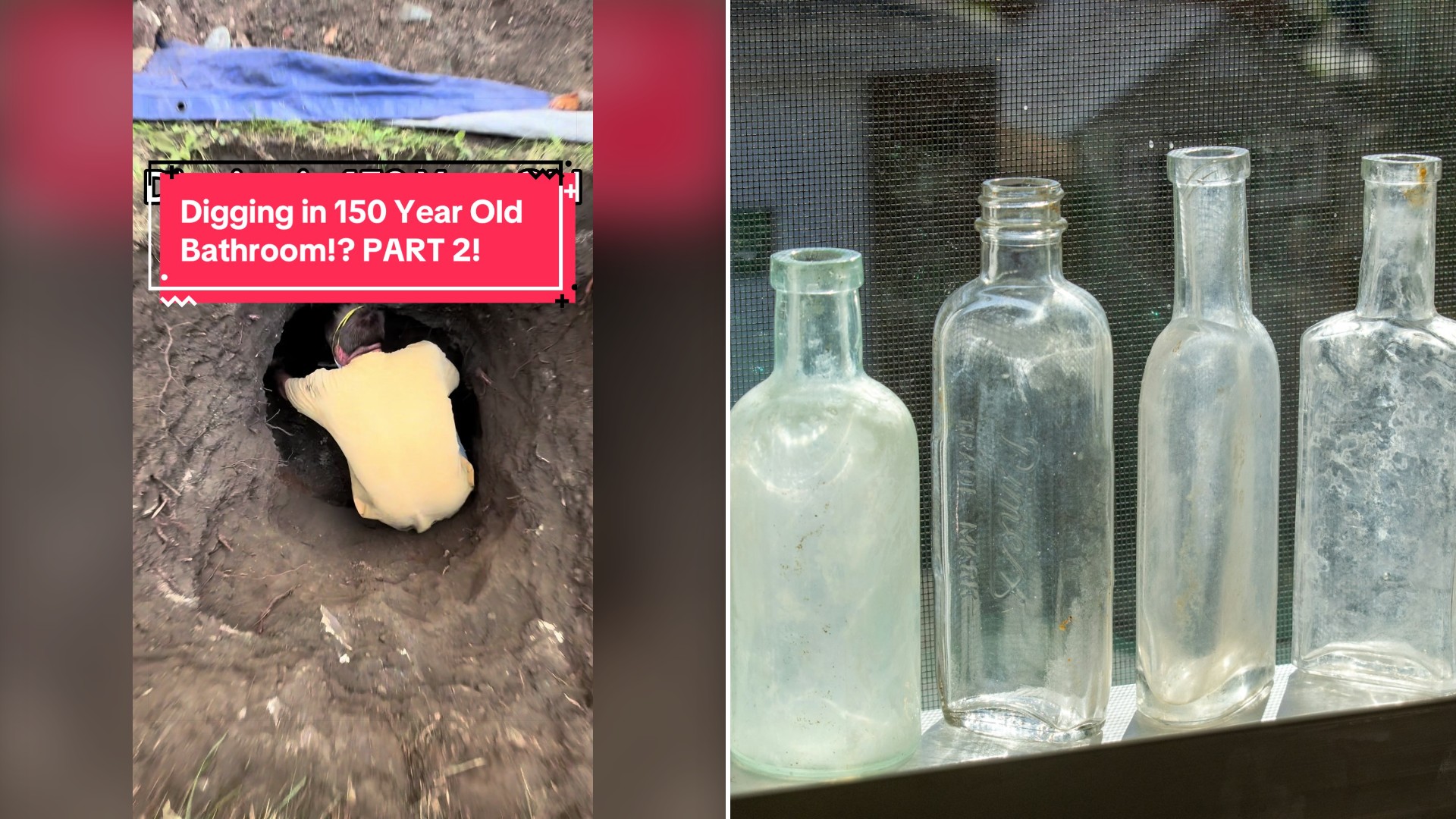
The team at @coolestdigs dug into a 150 year old privy and documented what came out of it, from a glass flask to a children’s marble.
@coolestdigs
Four feet down
The dig starts in a deep, square cut hole in a grassy lawn, with one person crawling into an opening at the bottom while another stands at the edge. The narrator explains that they were digging in a bathroom that is 150 years old. After digging down just four feet, they began to uncover artifacts that had been tossed away more than 150 years ago.
Gloved hands trowel carefully around a buried glass object, and out comes a large, light blue flask. The narrator calls it a beautiful whiskey flask from the late 1870s and wonders aloud who might have been using that bottle.
A mystery in rust
The next find is more puzzling. A hunk of heavily rusted metal emerges from the bottom of the hole, and the narrator invites a guess at what it was before it rusted. A match cut then shows the same shape as an ornate vintage toy pistol.
Deeper in the trench, the team finds a giant bone. The narrator says bones like this are common in holes like this because people would toss the scraps of their dinner down the hole. It is a quick, honest reminder that these pits recorded everyday life in ways that formal records never did.
The Mason jar and the marble
Just when they think the hole might be running out, the excavator retrieves an intact aqua tinted glass jar from the trench wall. The embossing reads “Mason’s Patent,” and the narrator calls it a very rare patent 1858 Mason jar.
Right next to it is a small clay marble that someone must have accidentally dropped down the outhouse. The narrator notes that it was a common kids’ toy back in the day, and that it is extremely clear that children lived in this house. Those kids, they add, would be the great great grandparents of people alive today. The segment ends with a promise of a part three.
Why old privies are such rich sites
In the nineteenth century, many homes had no organized garbage service. Privy pits were filled with ash, broken household items and discarded bottles, then often covered over when a new pit was dug. Because the material sat sealed in soil, glass and ceramics often survive in surprisingly good condition, while paper and fabric usually do not.
John Landis Mason patented his screw top glass canning jar in 1858, and jars embossed with his patent are a classic find for collectors. The patent date on the jar does not tell you exactly when a particular jar was made, since many were produced for years afterward, so condition and markings both matter when you try to date one.
Digging responsibly
Hunting for old bottles is a popular hobby, but a hole in the ground is not a casual project. These are sensible guidelines:
- Only dig on land where you have clear permission, and check local rules about historic sites before you start.
- Do not enter a deep, unsupported hole. Soil walls can collapse without warning, so shoring or a shallow, stepped dig is far safer.
- Call before you dig, since buried utility lines may be nearby.
- Wear gloves and sturdy boots, because broken glass and rusty metal are common.
- Photograph and note where each item was found, since context is part of the story.
- Contact a local historical society if you suspect something significant, such as human remains or an early settlement site.
Cleaning and identifying what you find
Old glass is best cleaned gently. Soak it in lukewarm water, use a soft brush, and avoid harsh scrubbing or sudden temperature swings that can crack it. Skip the dishwasher. Rusty metal is usually fragile and may fall apart if you scrub hard, so many diggers simply document and photograph pieces like a toy pistol rather than try to restore them.
To identify bottles, collectors look at color, seams, the shape of the lip, embossed lettering, and the base. Hand finished lips and rough bases tend to point to older production, while machine made seams that run up the neck usually mean a later bottle. These clues help narrow down an age, but they are not a guarantee, and a specialist guide or local collectors’ club can help.
Common questions
Are finds like these valuable? Some are, but most are valued for history more than money. Condition, rarity and local demand all play a part, so treat any dollar figure as a rough guess.
Why do so many old bottles have no labels? Paper labels rarely survive, so embossed glass is what remains.
The takeaway
The most moving find here is the smallest one. A single clay marble, dropped by accident more than a century ago, reminds us that real children grew up in this house. Old dig sites tell their story through ordinary objects, and treating them with care is the best way to keep that story intact.
Credit for the original post goes to @coolestdigs on TikTok.

Leave a Reply