

Some restoration videos need a voiceover to land. This one didn’t need a single word.
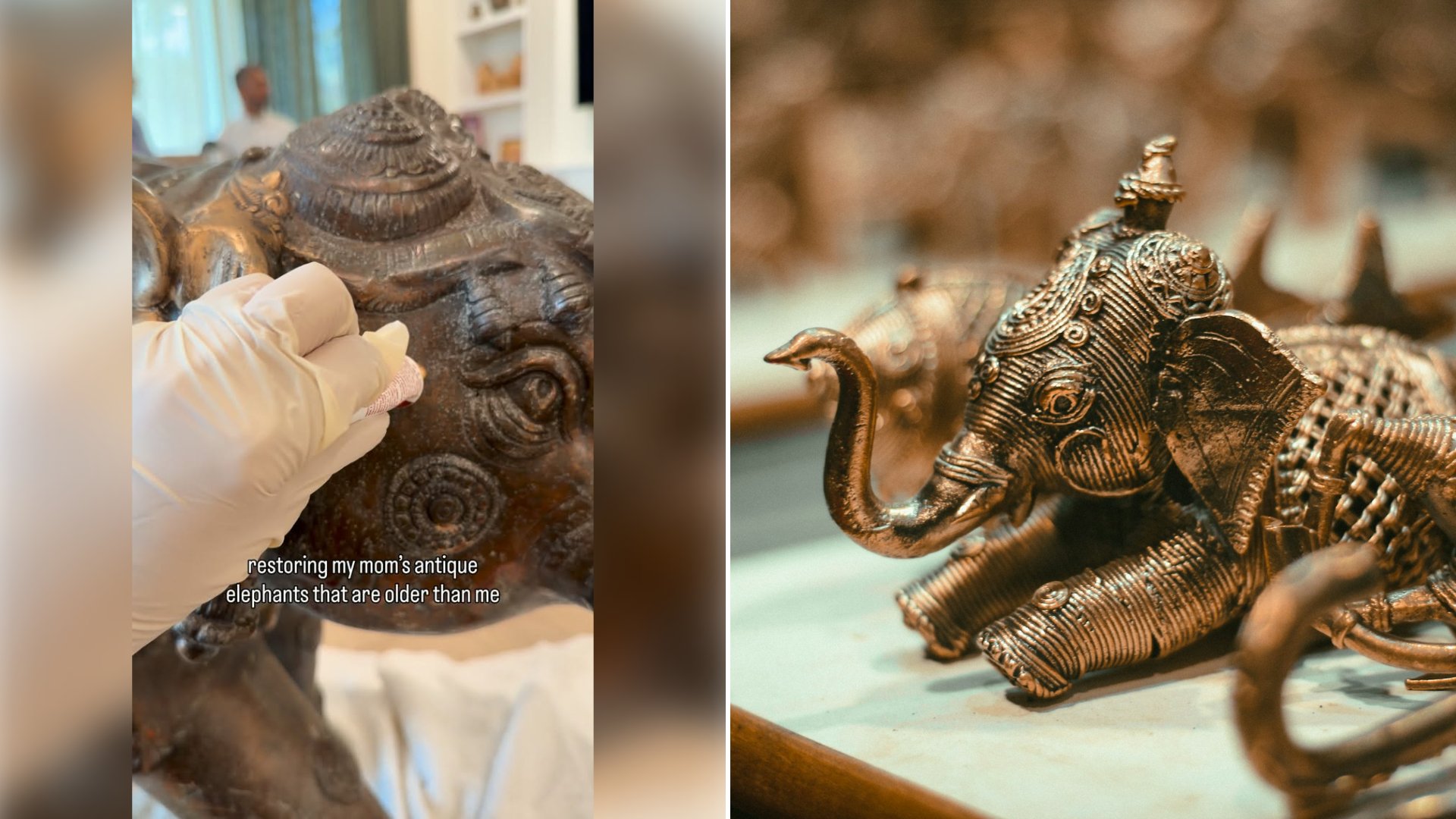
A creator set up a close-up shot of a brass elephant sculpture, its surface gone nearly black with tarnish, sitting on a white protective cloth. The only caption on screen says everything the clip needs to: “restoring my mom’s antique elephants that are older than me.” A gloved hand squeezes metal polishing paste directly onto the elephant’s textured head, and the transformation that follows plays out in silence, save for an upbeat rhythmic track underneath, letting the before-and-after do the talking.
Working section by section, the paper towel and paste cut through the dark oxidation layer to reveal bright, warm brass underneath. The inside of an ear goes from black to gleaming gold first. Then the forehead and cheek. Then the detailed curve of the ear flap, where the intricate carved texture had been nearly erased by decades of tarnish, suddenly sharp and legible again once the grime lifts. By the final shot, the camera pulls back to show an entire elephant figurine, saddle and headdress fully detailed, glowing under the room’s warm interior light.
Brass tarnishes the way it does because the copper and zinc in the alloy react slowly with oxygen and moisture in the air, building up a dark patina that can look almost like cast iron if it’s left alone long enough. It’s a completely natural process, and on antique pieces it’s often treated as a feature rather than a flaw, since an untouched patina can actually support a decorative figure’s value to certain collectors by showing its age is genuine. But for a lot of families, a tarnished heirloom isn’t sitting in a museum case. It’s sitting on a shelf, and at some point someone decides it’s time to see what’s actually underneath.
Brass elephant figurines like this one have a long collecting history, especially pieces imported to the West from India and Southeast Asia from the mid-twentieth century onward, where elephants carry significant cultural and spiritual symbolism tied to wisdom, strength, and good fortune. Decorative brass animals, and elephants in particular, became a staple of American and European home decor in the 1960s and 70s, picked up by travelers or sold through import shops, which lines up neatly with a figurine old enough to predate its current owner’s own daughter.
What makes the clip work isn’t a dramatic reveal line or a shocked reaction. It’s the simple fact that the object itself tells the story: a piece that traveled through at least one generation, tarnished quietly in someone’s house for years, and came back to life with nothing more than polish, a paper towel, and a little patience. No appraisal needed, no valuation given. Just a mother’s elephant, cleaned up for the next generation to actually see clearly.
More from Vinyl and Velvet
- Thrifter Spots a Dried Out Carved Folding Book Stand Someone Donated, Brushes Conditioner Into Every Cutout, and Commenters Say It Is a Rehal, a Stand Used for Reading the Quran
- Thrifter Lifts a Blackened Horned Toad Off a Glass Shelf for $3.99, Says It Is a James Avery Bronze Paperweight That Sells for $190 New, Then Polishes It Gold With a Nail Buffer
- Shopper Pays $20 at a Church Rummage Sale for Seven Hand Painted Plates Stamped 1988 on the Back, the Year She Was Born, Then Finds Single Plates Listed Near $200 Each

Leave a Reply