

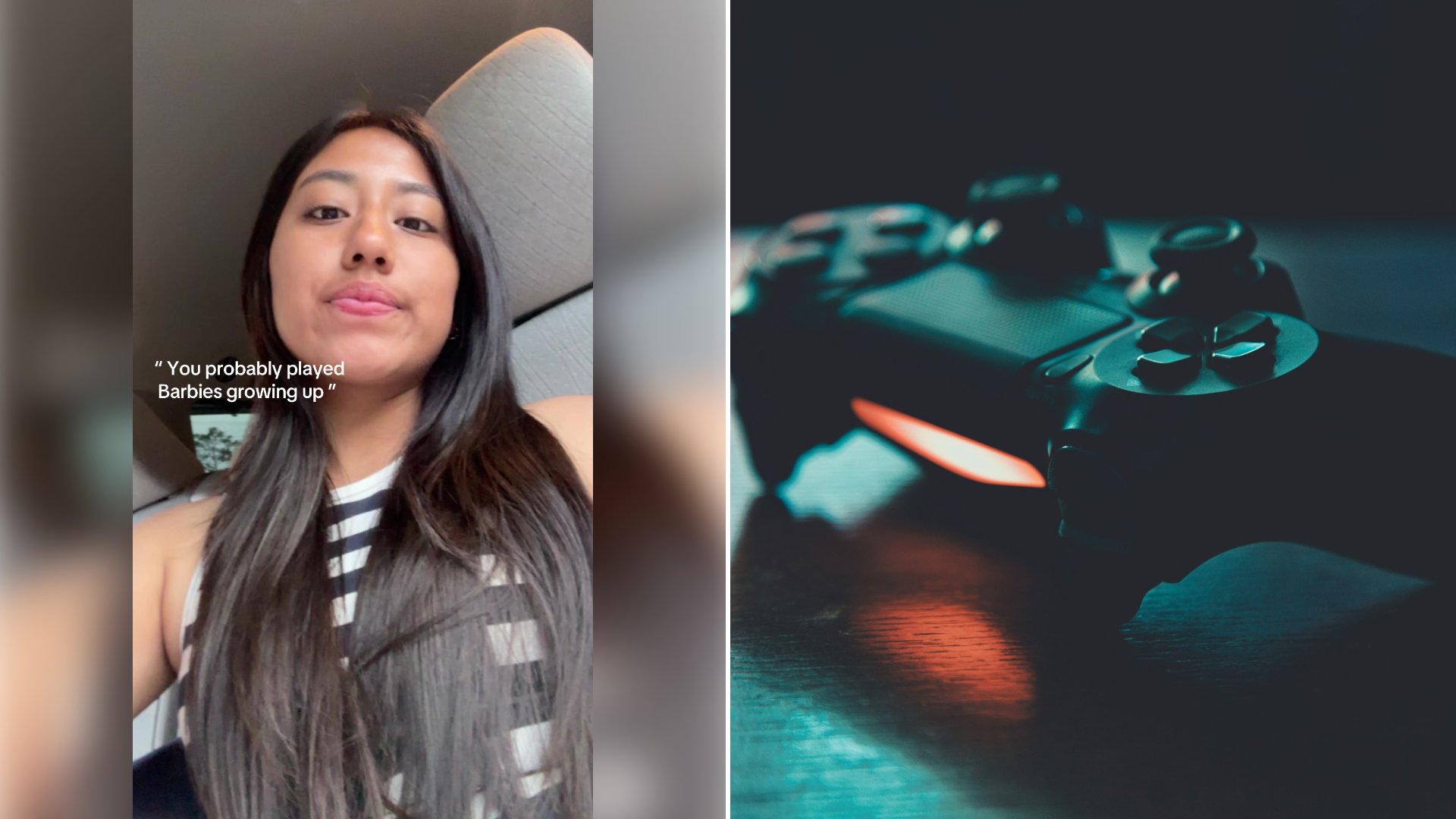
A simple side-by-side comparison of childhood memories turns into a flood of recognition in the comments. The video centers on a familiar divide from so many 90s and early 2000s households: one sibling grew up handed Barbies, the other grew up handed a controller, with the clip framing the gaming side of that split around nostalgic console touchstones many viewers instantly recognized from their own childhoods, Crash Bandicoot included.
@evelynnmundo frames the whole thing as a gentle, funny observation rather than a complaint, the kind of “you probably played Barbies growing up” setup that works because it’s specific enough to feel personal but broad enough that practically everyone who grew up in that era can see themselves somewhere in it. That specificity is exactly why the comment section fills up fast, with viewers jumping in to name their own sibling’s exact equivalent.
@evelynnmundo
Crash Bandicoot itself is a genuinely significant piece of that era’s gaming landscape, not just a convenient nostalgia reference. The original Crash Bandicoot launched on the PlayStation in September 1996, developed by Naughty Dog, and quickly became one of the console’s defining mascot platformers at a moment when Sony was still establishing the PlayStation as a serious rival to Nintendo. The series expanded fast, with Crash Bandicoot 2: Cortex Strikes Back following in 1997 and Crash Bandicoot: Warped in 1998, both landing among the best-selling games on the platform during that window and cementing Crash as one of gaming’s most recognizable characters of the late 1990s.
That timing matters for exactly the generational split the video points at. Marketing for console games throughout the 1990s and well into the 2000s was heavily, and often explicitly, gendered, with action and platforming titles like Crash Bandicoot marketed predominantly toward boys while dolls, fashion, and role-play toys like Barbie were marketed toward girls. Industry retrospectives and toy marketing historians have widely documented this split as a defining, and often criticized, feature of 90s toy advertising, one that shaped a lot of households into exactly the kind of sibling divide this video describes, regardless of what either kid actually would have preferred given the choice.
Crash Bandicoot’s staying power past that original marketing window is part of why the reference still lands with viewers decades later. The franchise has continued through numerous sequels, spin-offs, and a full remake trilogy, Crash Bandicoot N. Sane Trilogy, released in 2017, which reintroduced the original games to a new generation and became a strong seller in its own right. That longevity means the nostalgia isn’t confined to one narrow age group, it spans people who played the originals as kids and people who played the remakes years later, which helps explain why a reference like this one resonates so broadly across the comment section.
What makes the format work isn’t really about Crash Bandicoot specifically, it’s about how precisely it captures a shared, lived experience of growing up in a household where toys and games got sorted by gender before anyone involved had much say in it. That’s a dynamic plenty of siblings recognize instantly, which is exactly the kind of recognition that turns a simple nostalgic observation into a comment section full of people trading their own version of the same story.
More from Vinyl and Velvet
- Gamer Realizes Halo 3 Launched 19 Years Ago Today, Watches His Hair Turn Gray on Camera and Says He Is Booting Up the Master Chief Collection That Night
- Game Boy Owner Says Mom Kept the Toys R Us Receipt From July 18, 1994, Showing a $49.99 Game Boy and a $19.99 Yoshi Game, and the Old Handheld Still Turns On Today
- Man Powers Up the Original Xbox From When He Was 15 for the First Time Since About 2007 and Opens the Tray to Find a Halo 2 Disc Still Inside, With a Warped Tour Sticker on Top

Leave a Reply