

Some people go to a flea market for a bargain. Collector Vlad DetectoRex goes for the history. While digging through a table of old money, he picked up a Mexican bill dated 1914, with the Porfirian eagle on it, and asked the seller the price right away.
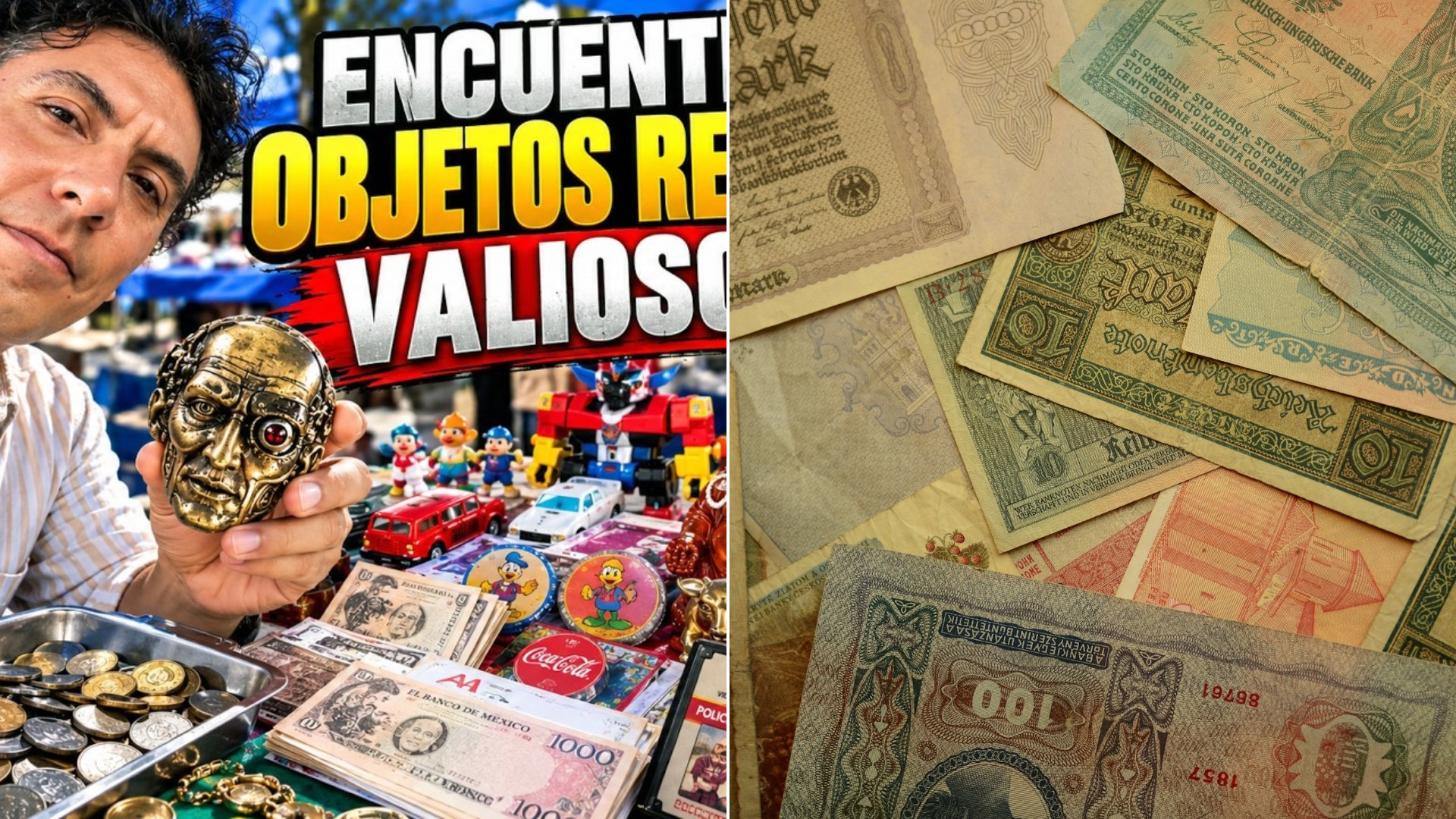
“Is it from that year? Oh, no. No, from 1914. Yes, from 1914. And the Porfirian eagle. How much for that bill?” he said on camera. The seller answered “50,” and he asked the man to set it aside for him.
His channel, Vlad DetectoRex, follows him through the stalls as he hunts for old coins, bills and retro oddities. The 1914 bill turned out to be only the beginning of a long browsing session.
A Table Full of Old Money
The stall had collectibles everywhere: 20-peso coins, a piece showing Pancho Villa, and bills from several eras, including one with Sor Juana Ines de la Cruz. He asked which bill was the oldest, and the 1914 note was the one he picked up. He called it one of the oldest on the table.
He also looked at newer notes from 1975 and 1967, including 1,000-peso bills in good condition. Joking about the face values, he said to imagine if a 1,000-peso note were worth that much today. He set aside a couple of the 1967 bills too, because they looked quite old and clean.
Before long, his pile of picks included a bronze spoon bearing the coat of arms of Spain, with the columns of the new and old world and the word for two pesetas on it. He asked about the price of the little spoon and was told 50, and later 30 for another spoon.
The Silver Coin Rule
The coin section is where the collectors talked money. The 50 and 100 peso coins, the seller said, go for 700 pesos each as long as they have the silver center. Vlad agreed that the prices keep rising and said that is why it is important to collect and keep them.
He said scarcity is the main reason. Those coins are now really hard to find, he explained, and first editions of the 20-peso coins are even more prized. One coin with the Hidalgo design drew a quote of 550 from the seller, and the two men talked about how silver centers have increased the value.
A small five-centavo piece from 1910 also made his stash. The seller wanted 200 for it, and Vlad said that was because it had a good date, the start of the Mexican Revolution, with Porfirio Diaz on it and in good condition. He also pointed out a “chubby” Morelos peso from 1947 with its big cheeks, a coin he said you find sometimes, plus five Mexican centavo pieces from 1934 with monograms.
A wheat-ear coin from 1972 got special attention too. A friend beside him called it one of the oldest and hardest to get, and Vlad agreed it was in pretty good condition.
Retro Treasures Beyond the Coins
The table was not just currency. There was a Sony television you changed with a knob, with channels going up to 13, since only 13 channels were available on Mexican television at the time. He recalled how you had to adjust the vertical, the horizontal and the brightness so the picture would center.
There were also video game magazines, Club America soccer magazines, three 007 movies on Blu-ray and an Atari cartridge. The cartridge needed repair, and the seller asked 150, though Vlad said he was about to take it for 50. He still owns a working Atari 2600 and thought he might fix the game.
Toys brought back memories. He found three Cabbage Patch dolls, which he said were advertised on TV when he was a kid, and Tazos from Sabritas chips. The regular Tazos were 10 and the ones that move were 20. He said he collected them as a boy and that one collection probably went in the trash. He added that he hopes to start collecting them again little by little.
He also spotted a Coca-Cola yo-yo from the 90s and a retro Coca-Cola glass, and a lucky Buddha made of bronze with a Mexican coin inside meant to stand for abundance. Bronze collar accessories once worn on shirts, vinyl records including Julio Iglesias, and Playmobil sets with their vehicles rounded out the finds.
How to Shop a Flea Market Like a Collector
Watching Vlad work offers some practical lessons for anyone hunting old coins and bills at a flea market or swap meet.
- Check the date first. The 1910 five-centavo piece was priced higher because it marked the start of the Revolution.
- Look for silver. The 50 and 100 peso coins were quoted at 700 pesos each when they had the silver center.
- Ask the price early. His first move on the 1914 note was to ask how much, then set it aside.
- Check condition. He kept pointing out which notes and coins were in good shape.
- Be willing to haggle on items that need repair, like the Atari cartridge.
As he put it, all of it keeps going up in value over time, which is why he keeps collecting.
More Stories You May Like
- Woman Explores Her 101 Year Old Grandmother’s House and Finds Spices From 1974, Tooth Powder, Band Aids From the 80s and a Vintage Fisher Price Toy
- Seamstress Rips Apart A Thrifted Nightgown And Sews It Into A Retro 1970s Style Skirt And Top Set With An Oversized Collar And A Hand Sewn Hem
- Record Collector Blind Buys Boxes Of Records And Finds A Rare Derek And The Dominos Layla Test Pressing Hidden In The Pile

Leave a Reply