

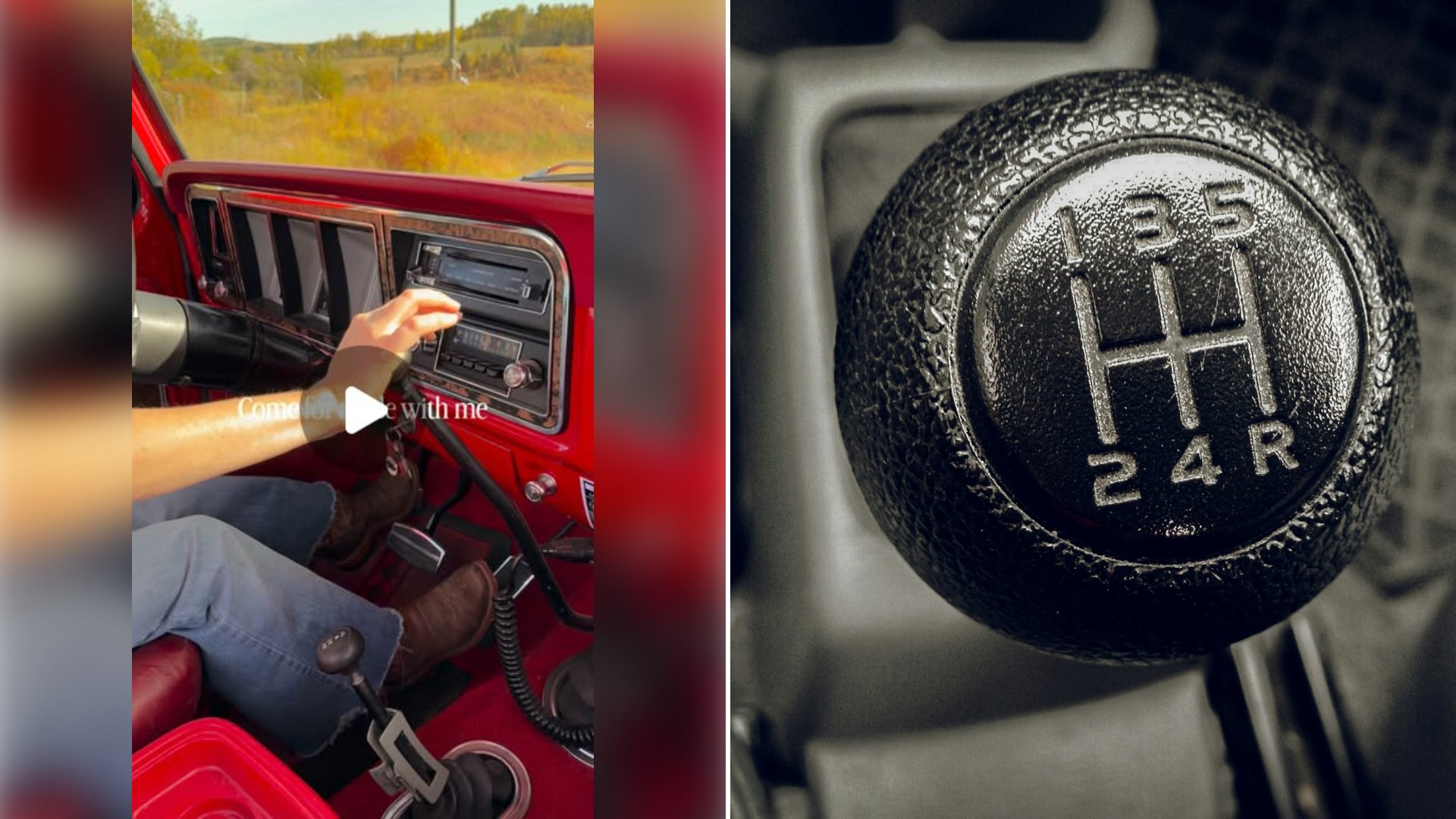
The video opens tight on a hand working a manual shifter inside a vintage 1978 Ford Bronco, the camera staying locked on the gear changes long enough to build real suspense before finally pulling back to reveal who has actually been behind the wheel the whole time. The creator, @78bronc_ho, lets the engine do plenty of the talking too, a deep, unmistakable rumble from the truck’s four hundred cubic inch V8 that confirms this isn’t a modern reproduction dressed up to look the part.
The reveal structure is simple but effective, close-up details first, identity second, and it works because the truck itself is doing enough heavy lifting on its own. The paint, the interior, and the mechanical sound all suggest a Bronco that’s been cared for properly rather than left to decay in a barn somewhere, which makes the final reveal land as a kind of payoff rather than a twist. Viewers get the satisfaction of guessing before the camera confirms it.
The second-generation Ford Bronco ran from 1978 to 1979, a notably short production window that makes these specific model years stand out within Bronco history as a whole. Ford significantly enlarged the Bronco for this generation, moving it onto the F-150’s full-size platform and growing the body substantially compared to the smaller, boxier first-generation Bronco that had run from 1966 through 1977. That size jump let Ford offer genuinely large engine options for the first time in the Bronco lineup, including the 400 cubic inch V8 referenced in this video, a big-block engine shared with Ford’s full-size truck and car lineup at the time.
Because the 1978 to 1979 generation only ran for two model years before Ford moved on to the next redesign, surviving examples are scarcer on the collector market than later, longer-running Bronco generations. Engine configuration matters quite a bit to value within this specific window too; trucks that left the factory with the larger V8 options, rather than the smaller six-cylinder or 302 and 351 V8 choices also offered during these years, tend to draw stronger interest from buyers chasing the most powerful factory configuration available for this body style. Clean, mechanically sound examples with their original drivetrain intact, especially ones that have clearly been maintained rather than restored from a rough state, routinely outprice rougher trucks from the same two-year run by a wide margin.
Full-size Broncos from this era have also benefited from the broader surge in classic SUV and truck demand over the past several years, as buyers increasingly chase vehicles that combine genuine off-road capability with a boxy, uncomplicated design that has aged into serious visual appeal. Unlike some classic cars that only make sense as weekend showpieces, a well-kept second-generation Bronco like the one in this video can still be driven and used the way it was built to be used, which is a meaningful part of why videos built around hearing one run, rather than just looking at one parked, tend to resonate so strongly with people who grew up around trucks like this.
More from Vinyl and Velvet
- Builder Installs a 30 Year Old Billet Steel Crankshaft His Grandfather Ground as Surplus From NASCAR Powerhouse Robert Yates Racing Into a 1965 Mustang Build Aiming for 650 Horsepower
- Professional Detailer Surprises a Daughter by Fully Cleaning Her Father’s Dream Firebird After It Sat Untouched for 30 Years, Pulling Decades Old Trash Out With the Vacuum Along the Way
- Detailer Stops an 82 Year Old Widow From Selling Her Late Husband’s Untouched 1968 Pontiac GTO for Just $1,000 and Uncovers a 19,000 Mile Survivor Hiding Under Decades of Garage Dust

Leave a Reply