

Remember when Saturday meant the mall? You walked past the fountain, grabbed a pretzel and headed straight for the store that played the loudest music.
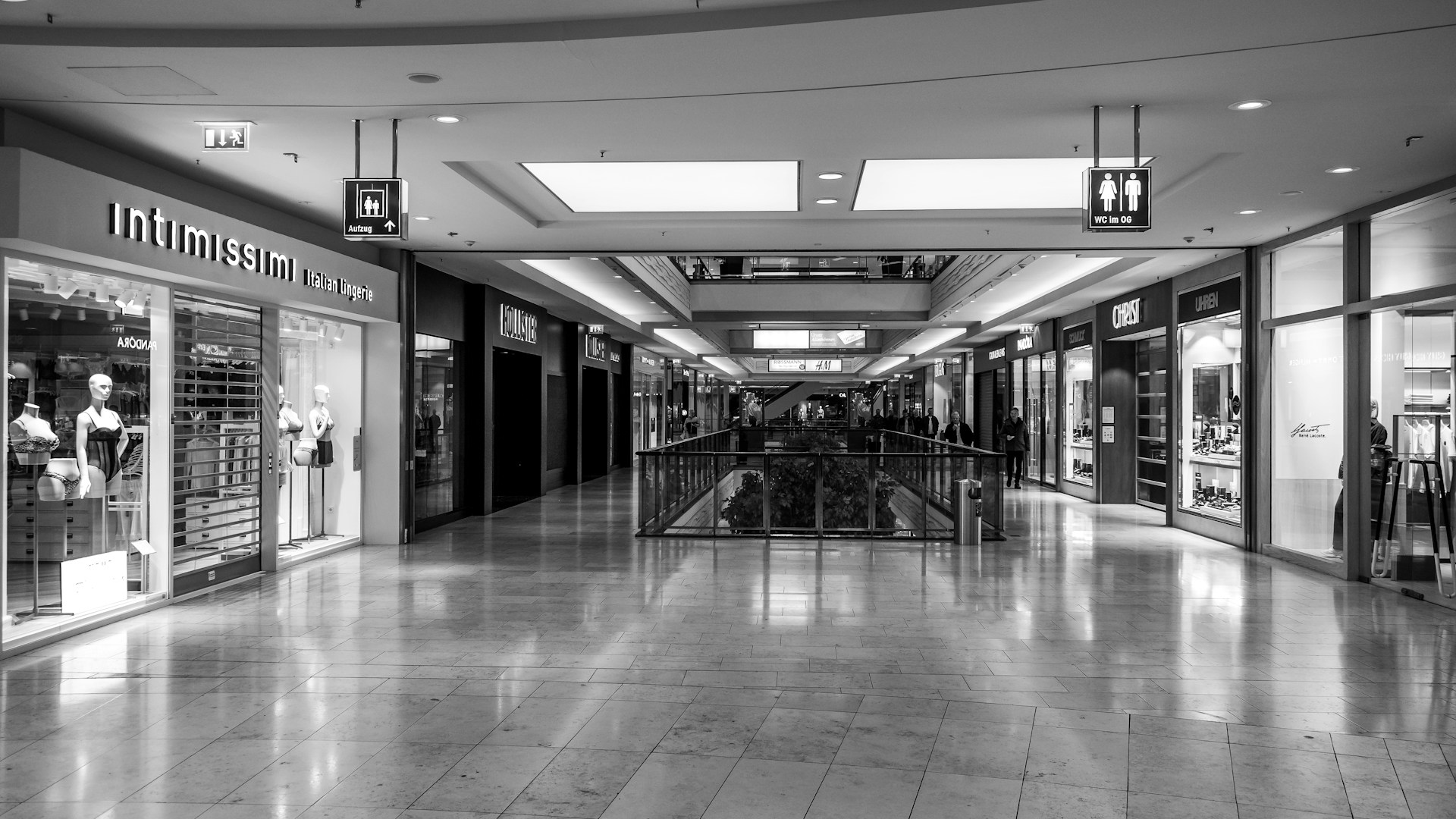
Many of those stores are gone now, and the stories of how they faded are surprisingly different. Here is what happened to 10 mall names Americans once shopped at, based on the company histories on Wikipedia.
Chess King Grew To More Than 500 Stores Before Closing In 1995
Wikipedia says the first Chess King opened in March 1968 at the Dedham Mall in Dedham, Massachusetts, created by Melville Corporation. By 1984 the men’s fashion chain had over 500 stores, its peak.
In 1993 Melville agreed to sell it to Merry-Go-Round Enterprises, which filed for Chapter 11 bankruptcy in January 1994. In November 1995 the entire Chess King chain closed.
B. Dalton Peaked Near 800 Stores Before Its Last Shop Closed In 2013
Bruce Dayton, of the family behind Dayton’s department stores, founded B. Dalton in 1966, with its first store in Edina, Minnesota. Wikipedia says the chain peaked at nearly 800 locations in 1986 and was acquired by Barnes & Noble in 1987.
In late 2009 Barnes & Noble announced it would liquidate the last 50 stores, and the final location, at Union Station in Washington, D.C., closed at the end of February 2013. In February 2022 a Barnes & Noble at Oviedo Mall in Florida was rebranded as B. Dalton, making it the chain’s only store.
Waldenbooks Hit Nearly 1,300 Stores And Then Borders Went Under
Wikipedia traces Waldenbooks to a rental library opened in a Bridgeport, Connecticut, department store in 1933. The first Walden bookstore opened in Pittsburgh in 1962.
It reached a peak of nearly 1,300 stores under Kmart’s ownership. In January 2010 about 200 stores, almost two-thirds of the total, were closed, and Borders Group filed for liquidation on July 18, 2011.
Kay-Bee Toys Became The Largest Mall Toy Chain Before Two Bankruptcies
The company began as Kaufman Brothers, a wholesale candy store in Pittsfield, Massachusetts, in 1922, according to Wikipedia. In 1973 it became a mall-based retailer called Kay-Bee Toy & Hobby, with 26 stores.
By 1985 it had 585 stores, and it counted 1,324 stores as of May 1999. After a bankruptcy in January 2004 that closed more than 600 stores, a second filing came on December 11, 2008, and store-closing sales ended on February 9, 2009.
Wherehouse Records Was Sold For $41 Million In 2003
Wikipedia says the company was founded in 1970 as Integrity Entertainment Corp. By 1983, when it went public as Wherehouse Entertainment Inc., it had 126 stores, mostly in California.
It filed for Chapter 11 bankruptcy in 2003. In September of that year Trans World Entertainment bought the remaining 148 stores for $41 million in cash plus assumed liabilities, and closed 35 of them.
Camelot Music Was Swallowed Whole In A $427 Million Stock Swap
Camelot Music started as Stark Record and Tape Service in Massillon, Ohio, in 1956, and opened its first Camelot-named store in North Canton, Ohio, in 1965. Wikipedia says it had 360 stores by 1993.
As of May 31, 1998 it had 455 stores in 37 states, including 305 Camelot Music stores and 150 The Wall stores. Trans World Entertainment acquired the company that year in a stock swap valued at about $427 million and rebranded its mall music stores as FYE.
Wet Seal Closed Every Store In January 2017
Lorne Huycke founded the chain in 1962 in Newport Beach, California, originally as “Lorne’s,” according to Wikipedia. By January 30, 2010 it had 504 stores in 47 states, counting Wet Seal and Arden B.
It filed for Chapter 11 bankruptcy on January 16, 2015. On January 27, 2017 it was reported to be closing all remaining stores, and the brand was acquired by Gordon Brothers and now operates online only.
Zany Brainy Disappeared After A 2001 Bankruptcy With 187 Stores
David Schlessinger, who had previously started Encore Books, founded Zany Brainy in 1991. Wikipedia says the company filed for Chapter 11 bankruptcy on May 15, 2001, and its assets were sold to Right Start that year.
At the time of the asset sale, it had 187 retail locations nationwide. It announced the closure of its remaining stores in December 2003.
Limited Too Became Justice And Then Went Online
Wikipedia says The Limited, Inc. created Limited Too in 1987 as a line for infants, toddlers and younger girls. It had 288 stores in 1995 and peaked at over 600 stores in 2007.
On August 12, 2008, parent Tween Brands announced that nearly 600 Limited Too stores would convert to the lower-priced Justice brand in early 2009. In 2015 Bluestar Alliance acquired the trademarks and revived the name as an online store.
Gadzooks Was Bought By Forever 21 For $33 Million
Brothers-in-law Jerry Szczepanski and Larry Titus founded Gadzooks in 1983 as a T-shirt business, with its first store in Mesquite, Texas. According to Wikipedia, it grew from 195 stores in 1995 to 330 stores across 35 states in 2000.
It filed for bankruptcy in February 2004, planning to cut its store count from 410 to 252. In March 2005 Forever 21 bought the chain for $33 million, and Gadzooks stores were eventually phased out.
Next time you walk through a half-empty mall, take a moment to remember those neon signs and crowded food courts. They were part of growing up for millions of us.
More Stories You May Like
- Restored Vintage Radios Often Mean A Hobbyist Swapped Parts And Collectors Care A Lot About What Is Original
- Two Full Time Resellers Set Out To Hit 100 Thrift Stores In 100 Days Then Admitted They Failed And Announced An Even Bigger Plan
- Sanding Down An Antique Dresser Can Wipe Out Much Of Its Value Because The Original Finish Is What Collectors Want

Leave a Reply