

In 2014, a 10-year-old boy was standing in the surf on a New Jersey beach when something hit him in the leg. According to Vault of Stones, it was a stone point made about 13,000 years ago by some of the very first people in America. Most arrowheads people find sell for about $5. But one like his, made of see-through quartz, sold for $69,000.
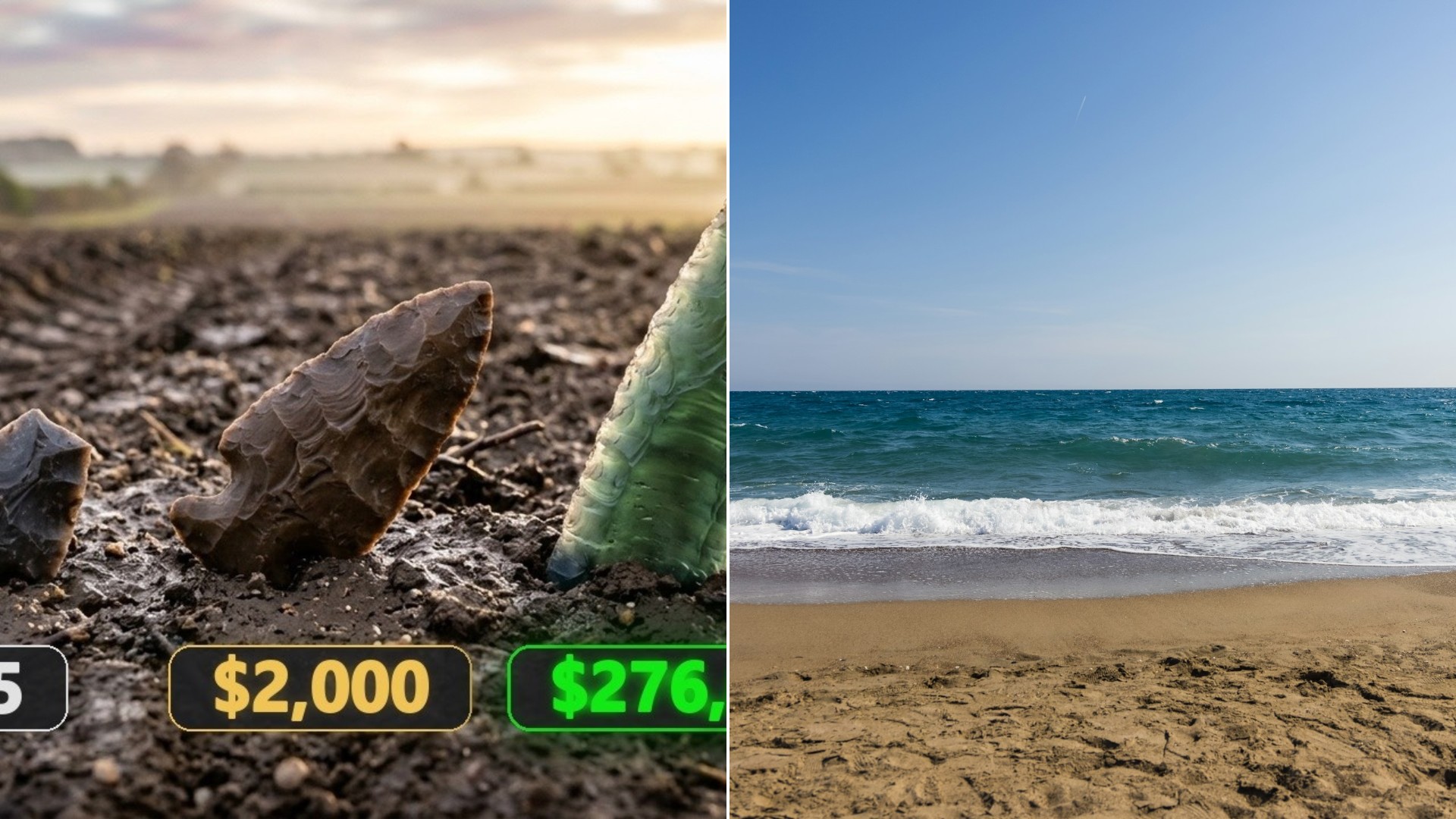
That gap between a few dollars and a small fortune is the heart of the video, which walks through 12 types of arrowhead and what each one is worth. The most anyone has ever paid for one is $276,000. If you have an old cigar box or coffee can of stone points in the garage, the creator says it is worth a second look.
What Decides The Price
Many of the big ones are not arrowheads at all. They are spear points and knives, though everybody calls them arrowheads. People have been picking them up in farm fields and creek beds for as long as there have been farms, and there are millions out there. The creator says value comes down to four things: whether the point is real, what type it is, how big it is and what stone it is made from, and whether anybody can say where it was found.
A legal note comes first. It is legal to keep what you find on private land with the owner’s permission. On federal land, it belongs to the government, and anything from a grave is off limits.
The Cheap End Of The Shelf
The cheapest on the list is a modern replica. People still chip points by hand today, and much of it is sold honestly as a souvenir, such as a hand chipped point at a New York museum gift shop for $2 or three for $5. The trouble comes when replicas are sold as the real thing with fake paperwork. The easy tell is the surface. A point that has been in the ground for thousands of years has a dull, dusty skin and sometimes little crusts of minerals, while a new one looks fresh and sharp with tiny white bruises where flakes were knocked off.
The common arrowhead is the one many families already own. It is usually about the size of your thumb and often missing its tip or one of its ears. An appraiser in Detroit said a common one sells for about $5 to $10. The best way to find them is to walk a plowed field right after a good rain, when the dirt washes off and the stone shines up at you.
Bird points are tiny, some no bigger than a fingernail, and a perfect one is a show-off piece. At a Missouri auction, single bird points were expected to fetch $20 to $40, and a bag of six was expected to bring $15 to $35. Small obsidian points, made of black volcanic glass, were expected to fetch $30 to $50 each at that same sale.
Where The Money Starts
A dovetail point gets its name from a base that flares like a bird’s tail. One from Fulton County, Illinois, a little over 3 and a half inches long, was expected to bring $500 to $600. At a Kentucky auction in 2017, one about 4 inches long with an authenticator’s certificate was expected to fetch up to $2,000. A dovetail without its tail is worth a lot less.
A Dalton point, about 12,500 years old, was expected to fetch $500 to $1,000 at that Kentucky sale when it was 5 inches long with a certificate and a top grade of 10. Knife River Flint, a deep root-beer brown stone from North Dakota, got a different kind of attention. An appraiser valued a spear point found near Mandan, North Dakota, around 1947 at $2,000 to $4,000. A small Folsom point, just over 2 inches long and recognized by a long groove down each face, was expected to fetch $1,000 to $5,000.
The Big Auction Prices
Then come the headline numbers. A cache of 20 Motley points found together in Todd County, Kentucky, sold in 2013 for $28,000, because they stayed together. A 7-inch corner notch blade once owned by well-known collector Earl Townsend sold for $64,800 in 2014. The Ross blade, 8 inches of see-through orange flint from the Hopewell people of Ohio, sold for $276,000 in May 2014.
That same day at Morphy Auctions, a Clovis point of see-through sugar quartz brought $69,000. Clovis points are about 13,000 years old, and they have been found lying next to mammoth bones. Only about 6,000 have ever been found in the country. A plain Clovis about 3 inches long sells for around $300 to $1,000 at auction. The record holder is the Rutz Clovis, 9 and three-quarter inches of sea green obsidian found in a Washington wheat field in the 1950s, which sold for $276,000 in 2013.
What To Do If You Find One
The creator offers a few lessons that apply to any collection, whether it came from a farm field or a grandfather’s drawer.
- Check the surface. Old stone looks dull and dusty, while a fresh replica has crisp edges.
- Look at the base. Missing tails and ears lower the value.
- Keep groups together. A cache is worth more than its points one by one, so write down exactly where you found them.
- Note the story. A famous former owner or a certificate can lift a price.
Few finds will reach the six-figure range, and a plain point from a plowed field is worth about the price of lunch. Still, the boy in New Jersey and the family with the wheat field show that now and then something ordinary turns out to be extraordinary. Before you toss that old box, give each stone a close look.
More Stories You May Like
- Childhood Pokemon Cards Have Already Produced 525 Sales Above $100,000 This Year But 406 Of Them Were Top Grade PSA 10 Copies
- Retired LEGO Sets Averaged At Least 11% A Year In One Study Of 2,322 Sets But Retirement Does Not Guarantee A Payoff
- Your Homeowners Policy May Cap Collectibles At A Low Limit So Ask Your Agent About Scheduling Valuable Items Before Something Goes Wrong

Leave a Reply