

Every December, the same quiet ritual plays out in attics and spare closets. A dusty box comes down, the tape is peeled back, and inside, wrapped in old paper, are the ornaments that hung on your grandmother’s tree. Delicate glass birds, shiny round balls, tiny painted houses. They feel like holding a piece of the past. They are also more fragile, and in some cases more of a concern, than they look.
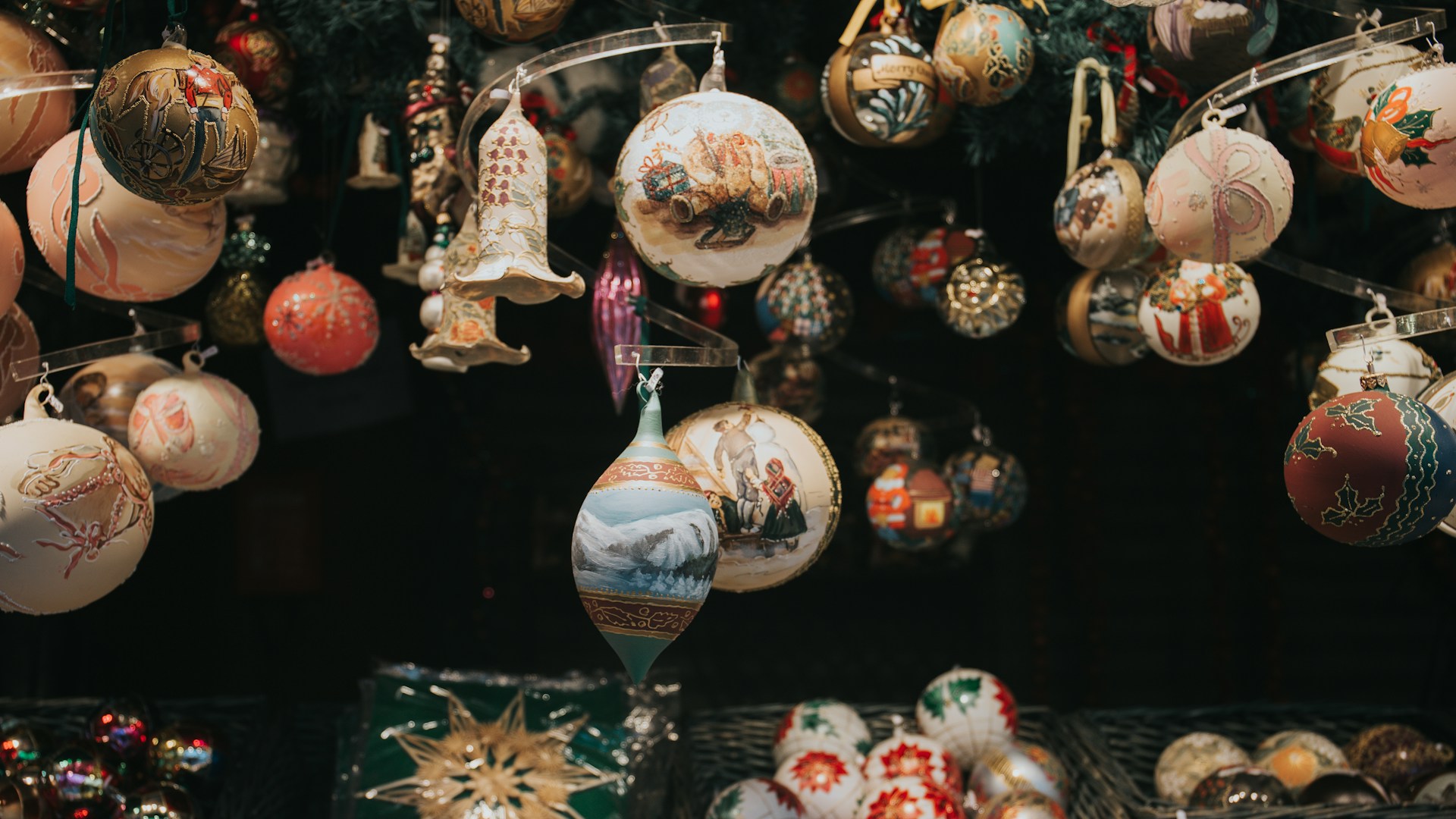
Whether you inherited a box, found one at an estate sale or picked up a few at a flea market, a little knowledge will protect both the ornaments and the people who handle them.
Handle Old Glass Like It Wants to Break
Vintage blown-glass ornaments are often very thin. Many were made to be light, and age has not made them stronger. Hairline cracks can hide in the neck near the cap, and a hanger that has rusted or tightened can crack the glass when you pull on it.
- Pick up each ornament with clean, dry hands, and hold it by the body, not by the cap or the hook.
- Work over a padded surface such as a towel or a blanket, so a slip does not end in a crash.
- Do not squeeze. Thin glass can break under a firm grip.
- Look at each piece in good light for cracks, chips and flaking paint before hanging it.
- Skip hanging the most fragile ones on low branches where kids, pets and swinging elbows can reach.
A broken ornament has sharp edges. Sweep up carefully, then check the floor with a flashlight, since tiny slivers can hide.
Why Some Painted Ornaments Deserve Caution
Here is the part many families never hear. Some older painted decorations, including some old ornaments, may have been decorated with paints that contained lead. Lead was widely used in paints for many years before it was restricted, and old painted items can still carry it. As paint ages, it can flake, chalk or rub off, and that is where the concern comes from. Lead dust or chips are a particular worry for young children, who put things in their mouths, and for pregnant women.
That does not mean every old ornament is dangerous. Plain glass without much paint is a different story from a heavily painted, flaking piece. But since you cannot tell by looking, a few sensible habits make sense:
- Treat any old painted ornament with peeling, chalky or crumbling paint as a possible problem.
- Keep these pieces away from small children and pets. Display them out of reach, or keep them in a closed case.
- Do not let little ones play with them, and do not let anyone put them in their mouth.
- Wash your hands after handling them, especially before eating or touching food.
- Do not sand, scrape or heat old paint, which can create dust.
- If you are worried, ask your local health department or a certified testing service about how to have an item tested.
When in doubt, enjoy those pieces as display items rather than as playthings, and leave them off the low branches.
Tissue, Not Newspaper
When you pack your ornaments away, the wrapping matters. Newspaper seems handy and free, but it is a poor choice. Printing ink can rub off onto paint and glass, and newsprint is acidic and breaks down over time, which can mark or dull delicate finishes. It is also thin, so it gives little cushioning.
A better approach:
- Wrap each ornament in plain white or acid-free tissue paper, which is gentle on finishes.
- Use a sturdy box with dividers, or an ornament storage box with separate compartments.
- Do not pile heavy pieces on top of fragile ones. Put the heaviest items at the bottom.
- Fill gaps with more tissue so nothing can shift or rattle.
- Store the box indoors in a cool, dry spot, not in a hot attic or a damp basement where humidity and heat can damage paint and caps.
- Label the box as fragile, and write on it that the contents are old glass so nobody tosses it on a shelf.
Watch Out for Reproduction Boxes
If you collect, or you are shopping for vintage ornaments to sell or give, be careful with the packaging. An original box can add to the appeal and to the price, which tempts some sellers to pair a nice-looking old-style box with a newer ornament, or the other way around. Reproduction boxes can look convincing at a glance.
Check the details. Does the print look crisp and modern, or soft and aged? Does the box show the kind of wear you would expect for its supposed age, or does it look suspiciously fresh? Does the ornament inside actually match the style on the box? Compare with other examples from trusted sources, and ask a seller plainly what they know about the item’s history. A good seller will tell you honestly what is original and what is not.
Old ornaments carry memories as much as value. With a gentle touch, a sharp eye and some tissue paper, you can keep them safe for the family and bring them out for many more holiday seasons.
More Stories You May Like
- Estate Sale Shopper Hits the Mother Lode of Cozy Granny Sweatshirts at $5 Each and Walks Out With 17 of Them, and the Closet Now Needs Some Space
- Couple Restoring A 100 Year Old House Learns The Odd Gap Under The Ceiling Was An Original Picture Rail And Uses It To Hang A 1943 Newspaper Found Inside
- She Kept Seeing The Name Dolores On Handmade Pieces All Over A Thrift Store And Pictured The Older Couple Behind Them

Leave a Reply