

Think about where most of us keep the things we want to save. The attic, because it is out of the way. The basement, because there is room. The shelf by the sunny window, because the display looks so pretty there. All three spots feel sensible, and all three can quietly eat away at the value of what you are trying to protect. The damage is slow, so slow that most owners never notice until they pull something out years later and it is yellowed, warped, musty or faded.
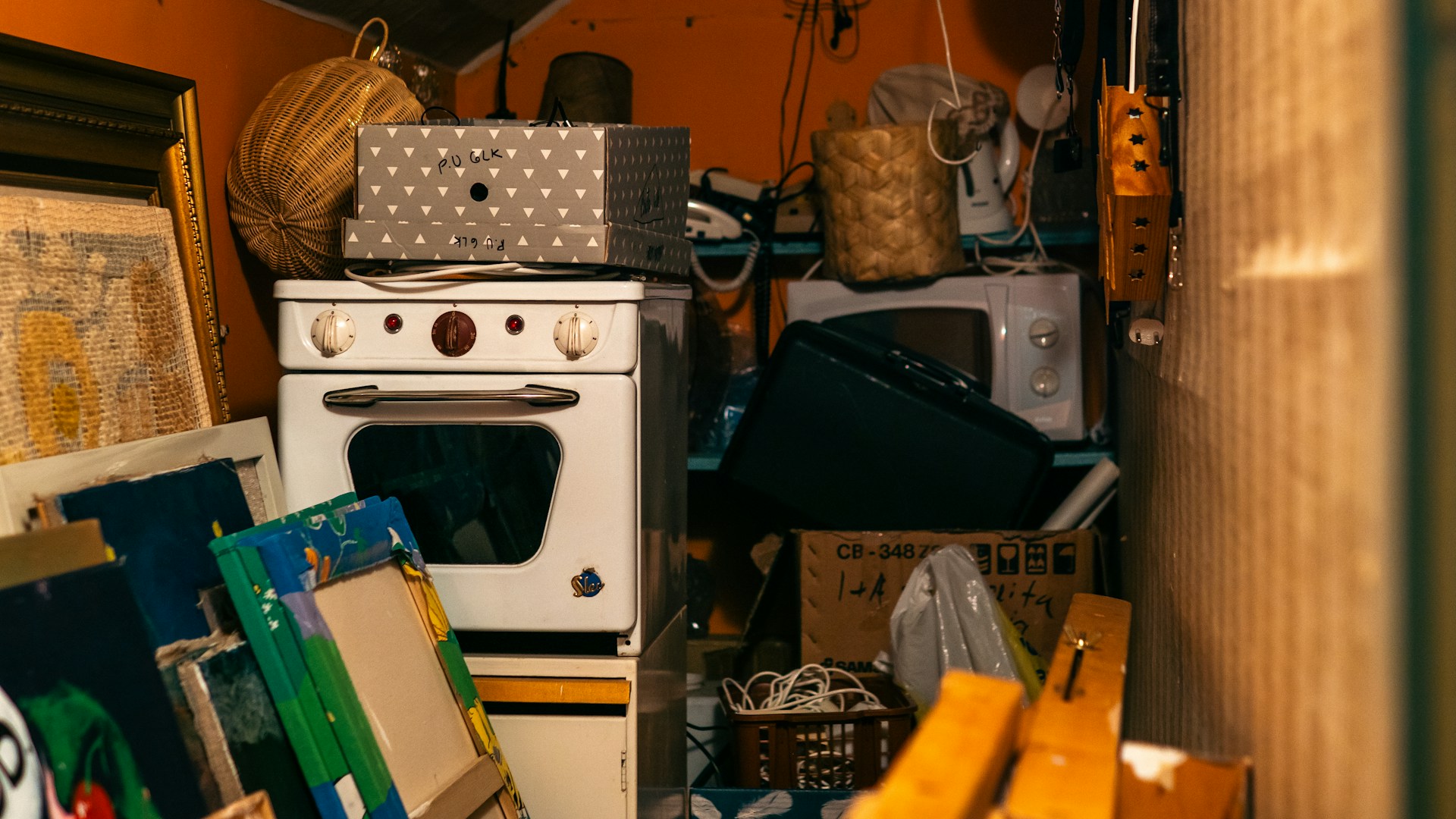
That is the sneaky part. Nothing dramatic happens. There is no flood, no fire, no crash. The loss just creeps in a little each season, and by the time it shows, there is no fixing it.
The Attic Problem
Attics swing between very hot and very cold. Heat can warp vinyl records, soften glue, dry out leather and make plastics brittle or sticky. Temperature swings make materials expand and contract again and again, which can crack finishes, loosen joints and cause paint or glaze to flake. Paper and cardboard can turn yellow and fragile in the heat. Attics are also popular homes for insects and rodents, which love nesting in boxes of old fabric and paper.
The Basement Problem
Basements tend to be damp, even when they look dry. Moisture invites mold and mildew, and it leaves a musty smell that clings to books, linens, clothing and cardboard. Metal can rust. Wood can swell. Paper can stick together, spot and curl. Cardboard boxes themselves soak up moisture and can break down, letting the contents sag, and a box sitting directly on a concrete floor can wick up water. A small leak or a humid summer is all it takes.
The Sunny Window Problem
Sunlight is one of the biggest silent enemies of collectibles. Light fades colors, yellows paper and plastic, and makes fabric brittle. Posters, photographs, book spines, trading cards, toy packaging, textiles and printed labels are all at risk. Collectors often say a piece that has sat in the sun looks noticeably different from one that has been kept in the dark, and buyers pay less for the faded one. A glass case or a picture frame does not always stop the problem, since ordinary glass does not block all of the light that causes fading.
What Tends To Suffer
- Records and sleeves: heat can warp the disc, and damp can stain and loosen the cover.
- Books, comics and paper: yellowing, mold spots, curling and brittle pages.
- Fabric, quilts and clothing: mustiness, stains, fading and insect damage.
- Photographs and prints: fading and sticking together in damp air.
- Toys and plastics: brittleness, discoloration and sticky surfaces.
- Metal collectibles: rust and spotting in humid rooms.
- Wood and furniture: warping, cracking and loosened joints from swings in heat and moisture.
A Better Way To Store Your Treasures
- Choose the main living space. The parts of your house where you are comfortable are usually the best for your collectibles too. An interior closet on a main floor is often a far better choice than an attic or a basement.
- Keep it steady. You are aiming for a stable temperature and moderate humidity, not extremes. A dehumidifier can help a damp room, and a simple humidity gauge costs very little.
- Swap cardboard for sturdy containers. Lidded plastic bins keep out dust, moisture and pests. For paper, fabric and photographs, look for storage products labeled acid-free or archival.
- Get things off the floor. Use shelves or pallets so that a surprise puddle does not ruin everything.
- Store records upright. Stand them on their edges rather than stacking them flat, and keep them cool and dry.
- Wrap textiles with care. Use clean, acid-free tissue or a clean cotton cloth rather than plastic bags, which can trap moisture.
- Give displays some shade. If you like showing things off, keep them out of direct sun, or rotate pieces so none sits in bright light day after day.
- Check in twice a year. Open the boxes, look for damp, smells, pests and spots, and catch trouble while it is small.
Why It Pays To Care
Condition is one of the biggest factors in what a collectible is worth. Two identical items can sell for very different prices if one has been stored well and the other has not. Even if you never plan to sell, good storage means that your family can pass things down in the shape you remember.
The fix does not need to be fancy or expensive. A little thought about where things live, a few bins, and a quick look every few months are usually enough. The things you save deserve a better home than the hottest, dampest, brightest corners of the house. Move them before the damage shows, because once it does, you cannot take it back.
More Stories You May Like
- She Kept Seeing The Name Dolores On Handmade Pieces All Over A Thrift Store And Pictured The Older Couple Behind Them
- She Paid $5 For A Thrift Store Painting, Turned It Over, And The Label Led Her To A 1964 Art Contest Open Only To Utility Company Employees
- Thrifter Calls It the Most Insane Haul of Her Entire Life After Pulling a Designer Emilio Pucci Coat Off the Thrift Store Rack That Fits Her Like a Glove

Leave a Reply