

Every family seems to have one: the relative who kept things. A drawer of buttons, a box of letters, a trunk in the corner. Now picture an attic in Worcestershire, England, where more than 200 pieces of jewelry sat quietly for decades. The collection is now headed to auction, and there is no minimum price to meet.
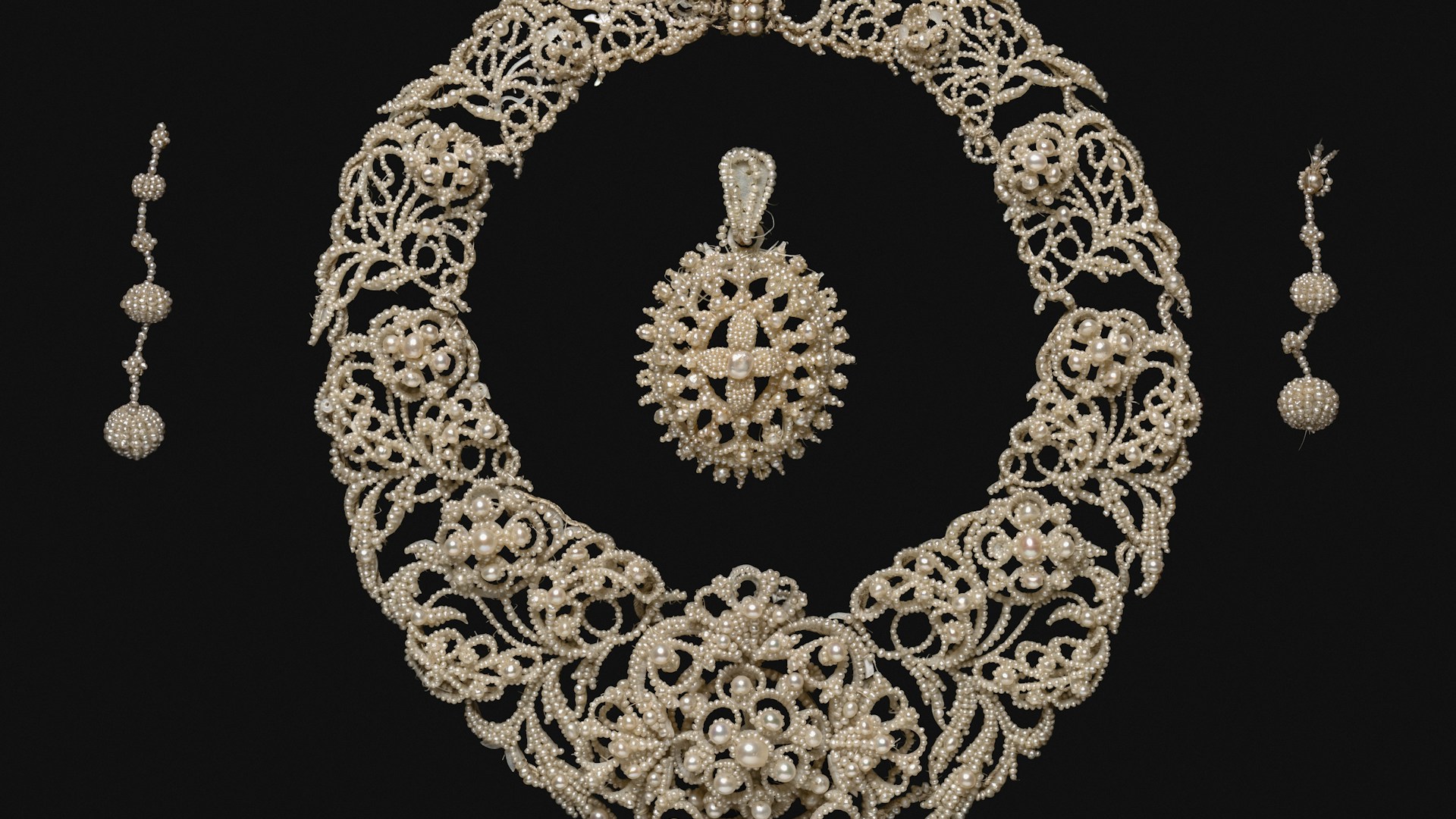
According to a Forbes report by Anthony DeMarco, published October 18, 2026, the collection of more than 200 antique and vintage jewels was kept in a Worcestershire attic for decades. It is being sold at Elmwood’s Auctioneers, with the sale starting October 21, 2026.
What Is In The Sale
The sale has 210 lots, and Forbes reports a presale estimate of 150,000 British pounds, or about $200,000. Spread across 210 lots, that works out to roughly 700 pounds a lot, or around $950, which gives a sense of how many modest pieces sit alongside the showstoppers. The whole collection is being offered with no reserve.
The standout of the group is a 1905 Cartier diamond bow brooch, estimated at 1,000 to 1,500 pounds. Cartier was founded in Paris in 1847 and became one of the most famous names in fine jewelry, so a piece with that signature and a date more than a century old draws attention from collectors on name alone. Much of the rest of the collection dates to the early 20th century, including pieces from the Art Deco era.
Many of the pieces were collected by the owner’s grandmother. That detail is what makes the story so charming. These are not just stones and metal. They are the result of one woman’s taste, gathered over a lifetime, and then left to sit in the attic for decades before heading to the auction room.
Why Attic Finds Capture Our Imagination
There is a reason stories like this travel so far. Most of us have wondered what is in the trunk at the back of the closet or the box on the top shelf. A collection of more than 200 pieces that was kept in an attic for decades is the kind of thing that makes people look up and wonder about their own house.
It is also a reminder that jewelry is more than money. A brooch dated 1905 has been around for well over a century. It has outlasted fashions, moves and generations, and now it is going to someone new. The sale opens on October 21, and the final prices will be known only once the hammer comes down on each lot.
What “No Reserve” And “Estimate” Really Mean
If you do not follow auctions, two phrases in this story are worth understanding. A reserve is a secret minimum price. When a lot is offered with no reserve, it sells to the highest bidder, whatever that bid turns out to be. That can be exciting for bidders, since a bargain is possible, and it means the owner is trusting the market to set the price.
An estimate, on the other hand, is the auction house’s expert guess at where a lot might sell. It is not a guarantee. A piece can sell above or below its estimate, depending on who shows up and how badly they want it. So when you read that this collection has a presale estimate of about $200,000, remember that it is a forecast, not a promise.
No-reserve sales also tend to pull in more bidders. Buyers know that every lot will sell, so they are more willing to show up and compete. Auction houses often use that pull to build excitement around a large single-owner collection like this one, where a whole attic of treasures is released at once.
Do You Have Jewelry Tucked Away?
Stories like this send a lot of us straight to our own jewelry boxes. If you have inherited pieces, or found some in a drawer, here are some sensible steps before you do anything else.
- Do not rush to clean. Harsh polish or rough scrubbing can damage delicate pieces and old finishes. When in doubt, leave it alone until someone knowledgeable has looked.
- Look for marks. Many pieces carry small stamps or maker’s marks. A magnifying glass helps, and photos of any marks will help an expert too.
- Keep the story. If you know who owned a piece, where it came from or when it was bought, write it down. A family history adds interest, and it helps with identification.
- Store pieces separately. Soft pouches or a lined box keep necklaces from tangling and stones from scratching each other.
- Get an independent appraisal. Ask a qualified appraiser who is not trying to buy your jewelry. It is wise to get that opinion before you sell, insure or divide anything among family.
- Check your insurance. Some policies limit coverage for jewelry, so ask your insurer how your pieces would be handled.
The Style Worth Knowing: Art Deco
This sale includes Art Deco jewelry, a style popular in the 1920s and 1930s. It is known for bold geometric lines, clean shapes and a sense of glamour. If you have a piece with sharp angles and symmetrical designs, it may be from that period, though only an expert can tell you for sure. It never hurts to ask someone to take a look.
Deco pieces often pair diamonds or colored stones with strong, graphic settings, and the style followed the more flowing, romantic jewelry of the years before it. That is part of why a single collection that stretches across the early 20th century can feel like a short history lesson in how fashion changed from one decade to the next.
A Family Treasure Chest
There is something lovely about the idea of a grandmother’s collection finding its way into the world after so many years. Whether the pieces sell for a little or a lot, each one carries a bit of someone’s life. If you have a family collection of your own, take a moment to find out what you have, protect it and share the stories, because the stories are the part that truly never goes out of style.
More Stories You May Like
- Her Favorite Thrift Store Went 50 Percent Off, So She Waited On Fenton Cranberry Glass She Passed Days Earlier, And It Paid Off
- Estate Sale Buyer Keeps Finding Bundles of Cash Hidden Throughout the Haul and Asks Everyone to Guess How Much Money Turned Up Altogether
- 14 Reasons Growing Up In The 70s Was The Best Including Saturday Morning Cartoons Penny Candy And Drive In Double Features Under Real Stars

Leave a Reply