

Picture a thrift store so big that people drive across the state to dig through it. Now picture an antiques expert walking its aisles with strong opinions about every price tag. That is what @DrLoriV did in Seattle, Washington, at what she calls the largest Goodwill store in the world. Her promise: she would show viewers what to buy and what to walk by. Her warning: a lot of people would miss the best stuff.
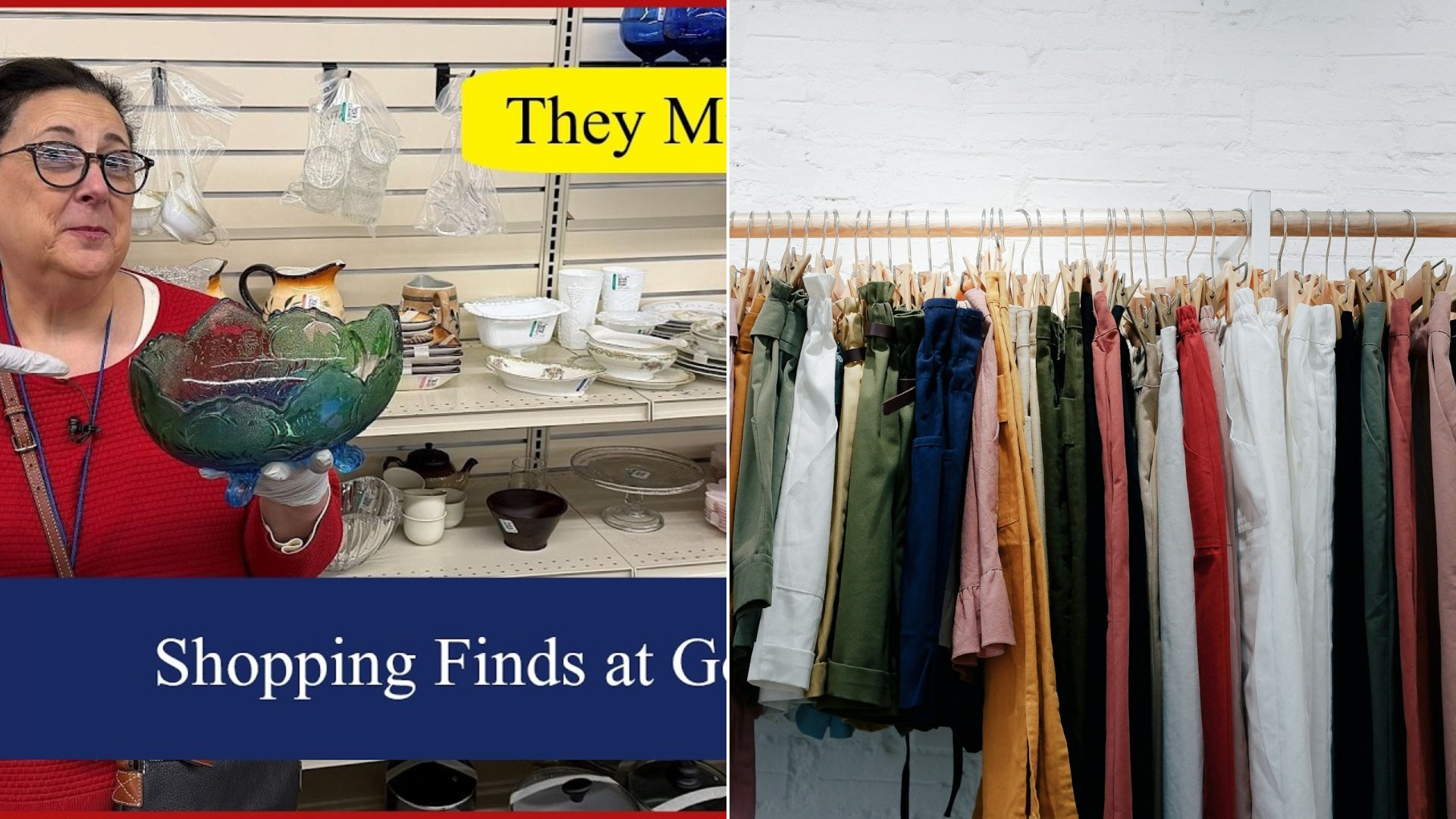
The idea behind her system is simple. For every item, she compares the thrift store price with what she says “willing buyers” will actually pay on the resale market. When the gap is big, she buys. When the price is too high or the item is damaged, she walks. Here is how it played out.
Her first stop was a piece of speckled, flecked glass with little bits of black and gold in it. The store wanted $14.99. She said willing buyers pay $50, so it was an easy yes. A glass basket marked as crystal was a different story. She explained that a percentage mark of 24 percent or more means lead crystal, but the store was asking nearly $20 for a piece she valued at $15, so she passed.
The Bargains She Grabbed
Several finds stood out for the size of the markup in the buyer’s favor:
- A Japanese gilt music box. It looked like a Hummel figurine, but she said the eyes are the telltale sign that it is a lookalike made in Japan, dating to the 1950s, with a Swiss music movement inside. Priced at $9.99, worth about $15 to buyers.
- A Williams-Sonoma ceramic cake plate. Made in the United States in the 1990s, it was priced at $12.99, and she said buyers pay $40.
- A glazed pot for calligraphy pens. Many shoppers would miss what it was. Unmarked and made in Japan, it was $9.99 and, in her words, worth $45 at retail.
- A 1970s marble and brass lamp. Priced at $12.99. She even read the age from the plug, which dates the lamp to the 1970s and shows it had been rewired once. Worth $60.
- A satin glass piece from the 1980s. $7.99, valued at $40.
- A saddle seat chair. Solid hardwood, sold as a single for $9.99 because it was a single. She said it is worth $50, and joked that singles are worth a lot of money.
- Three Noritake plates. Hand-painted bamboo, 22 carat gold banding, $12.99 for the set, about $10 a plate on the resale market.
- A moriage ginger jar. Made in Japan with a textured slip decoration, it was $5.99 and worth around $45.
- A 1960s glass cake plate. The sinuous line decoration is typical of that decade. $3.99, valued at $40.
- A vintage table with wheels. Its long, skinny top and wheels pointed to the 1960s. $12.99, worth $75, perfect for holding a flat screen TV.
The Ones She Left Behind
She was just as clear about what not to buy. Damage was the biggest reason. A piece of depression glass priced at $7.99 had damage that cut its value to about $10, compared with $35 in good condition. A pretty ruby glass piece was worth only $5 in its current state, though $20 in good condition. A set of china with transfer decoration and gilt wear was worth about $1 a plate when it should be $5 a plate, and she also pointed out the tape residue on everything. Rip the tape off, she warned, and the decoration comes off with it.
She also passed on a pressed glass finger bowl that she said is worth about 50 cents, a milk glass piece at $9.99 that was only worth $10, and a vase that looked impressive but was thin, blown glass she said to avoid. A cloudy yellow haze on a piece, she added, can mean it lived in a smoker’s house.
Seven Rules You Can Use Right Away
You do not need to be in Seattle to use her lessons. Here are the takeaways that apply at any thrift store:
- Flip it over. Marks on the bottom can tell you the maker, the country and sometimes the era. A mark that says Germany or Japan can mean a lot, and “Made in China” on older pieces points to after 1925, according to her.
- Know the lead crystal mark. A percentage of 24 percent or more indicates lead crystal.
- Beware of depression glass reproductions. When she sees a very green next to a very blue, she says that is a later reproduction made after the 1950s.
- Feel for chips. She advised that a hand will find a chip that the eye misses, and chips destroy value.
- Do not be fooled by American-made. A lot of shoppers think pieces made in America are worth less, which she called a mistake. Gold banding and quality still matter.
- Look at the label on clothing. She compared two Talbots labels and said the older red door label from roughly 2000 to 2010 indicates better quality.
- Do the math before you buy. Resale prices are not guaranteed. Factor in cleaning, shipping and time, and be honest about whether the gap is worth it.
Why This Works
The big lesson is that nobody has to be a full-time expert to shop smart. Every item on that list has something visible you can learn to spot: a mark, a shape, a color, a weight. Add a smartphone and a little patience, and you can check sold listings on resale sites to see what similar pieces actually bring in, rather than what sellers hope for.
And remember, Dr. Lori says she left the treasures behind for you. Next time you wander through a thrift store, look twice at the dusty shelf in the back. Somebody walked right past that $45 pot.
More Stories You May Like
- Chunky Plastic Bracelets In A Thrift Store Bin Could Be Bakelite Worth Thousands And A Warm Water Smell Test Can Help You Tell
- Thrifter Who Almost Skipped A Small Town Thrift Store While Driving Through Finds The Vintage Coach Purse She Had Been Waiting For
- Yard Sale Seller Priced Everything At 50 Cents Including A 1990s Little Caesars Jacket From His Days Working There, And One Shopper Says Finds Like It Are Out There

Leave a Reply