

Almost everyone who has shared a startling picture or story online has felt the sting of learning it was not what it seemed. In a short post, the creator behind @H1T1 admits that it just happened to him, and he is refreshingly honest about how it feels. “I feel like a Facebook mom. I feel old,” he says. He adds that he was fooled by AI for the first time, and that he is usually the one calling it out.
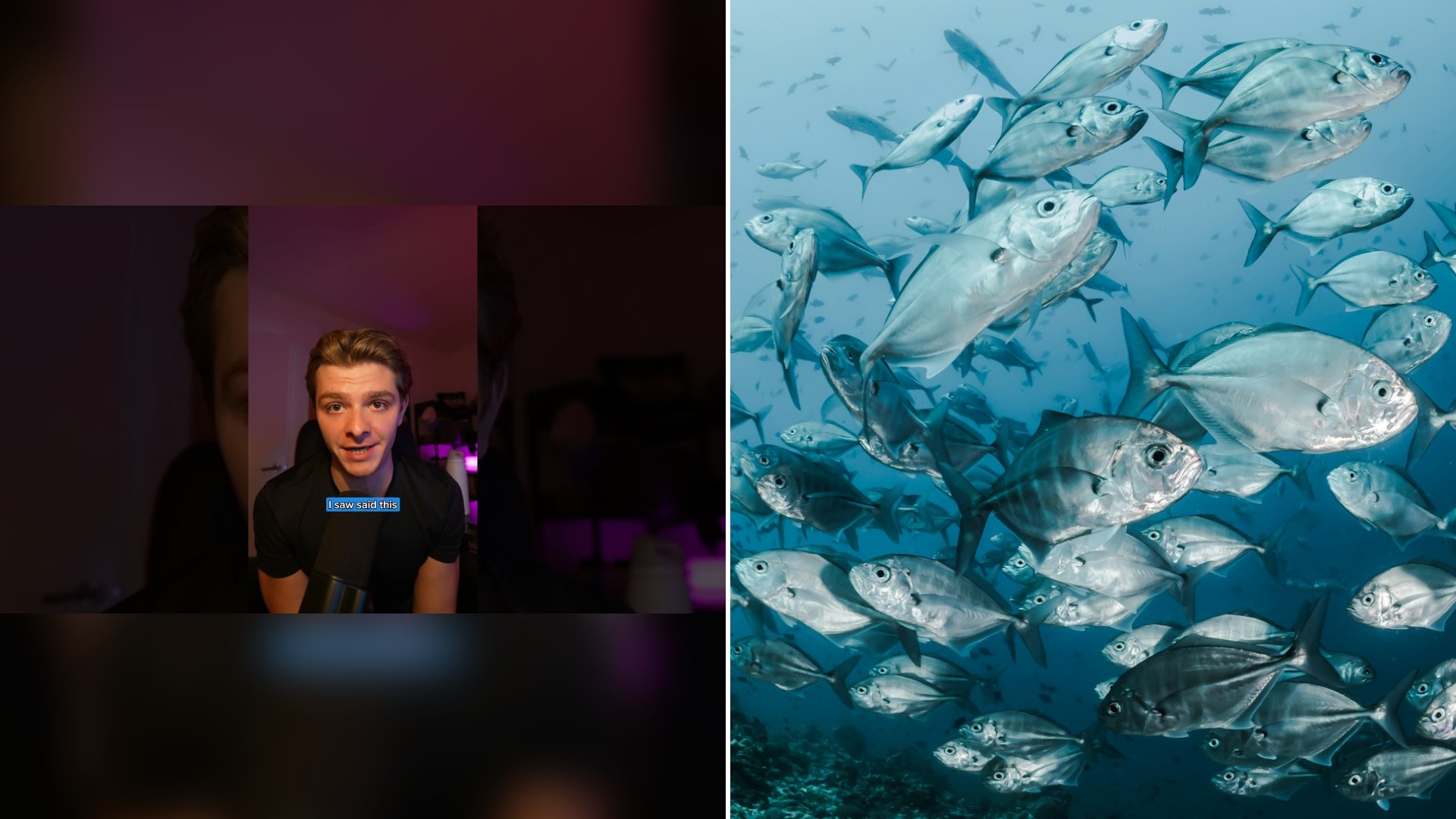
What He Says Happened
According to his own telling, he had recently shared a post about a fish he could not believe was real. In that earlier post, he says, he told his audience that the scene he was showing was not AI. The fish itself, he now explains, is a real animal. The scene he showed, however, was “totally fake,” an exaggeration of what the creature actually looks like.
So how did someone who spends so much time spotting fakes get caught? He says the answer is simple and a little embarrassing. The news anchor in the report he saw said, in his words, “That is a fish walking, not AI.” He took that at face value. “So, I didn’t double check,” he says. “And for that, guys, I apologize.”
That sentence is the heart of the story. He owned the mistake, stated plainly what he skipped, and set out to correct the record for the people who had trusted him.
The Real Fish Is Still Strange
To make things right, he shows what he describes as the real thing, a red lipped batfish. He says it is still really weird, but not nearly as bizarre as the fake version looked. His final line, at least as it was captured, is that he is “kind of upset it’s not” the fake one, which sounds like a creator who found the invented version more exciting than reality.
It is worth knowing a little about the actual animal, because it explains why a fake could slip through. The red lipped batfish is a real species of fish known from the waters around the Galapagos Islands. It is a poor swimmer. Instead of gliding through open water, it uses its modified fins to push itself along the sea floor in a way that looks like walking. Its most famous feature is a pair of bright red lips that look painted on. Scientists who study these fish describe a small lure on the head that helps attract prey. When the genuine animal already looks like a cartoon, it takes very little exaggeration to produce something that feels believable.
Why Smart People Get Fooled
It is tempting to think that only people who are new to technology fall for convincing fakes. His story suggests otherwise. He is someone who, by his own account, calls out AI regularly, and he still got caught. A few things tend to work against all of us in moments like this.
First, trust shifts when a familiar source vouches for something. A news anchor is a recognizable authority, and when that person says a scene is real, most people relax. The scrutiny that would normally kick in simply never starts.
Second, nature is strange enough that a surprising animal does not set off alarms. A fish that walks sounds like it could be a fake, but it also happens to be true. That makes the fake version feel safe, because the basic claim checks out.
Third, we like wonder. A remarkable scene is satisfying to share, and the urge to pass it along often arrives before the urge to verify it.
Why Animal Fakes Work So Well
Generated imagery of animals has a built in advantage. Most of us have never seen a deep sea fish or a rare reptile in person, so we have no personal reference for what is normal. Anyone who knows exactly how a dog or a horse moves will spot a mistake quickly. Almost nobody has that kind of instinct for a batfish, a blobfish or an axolotl, which means a creator of fakes can bend the proportions and few people will notice.
Real animals also supply plenty of cover. Evolution has produced creatures with glowing lures, transparent heads, walking fins and faces that look hand drawn. When reality is already this odd, an exaggerated version fits comfortably inside what people are prepared to believe. That is why the most convincing fakes tend to start from something true and simply push it one step further.
A Few Quick Checks Before You Share
None of the following is foolproof, since fakes keep improving, but these habits catch a surprising number of problems.
Look for the original source. If a scene is attributed to a news report, try to find that report on the outlet’s own page or channel rather than trusting a reposted copy. A reposted copy may have been edited, and the caption may not match what was actually said.
Search for the subject by name. In this case, searching for the red lipped batfish quickly turns up photographs and descriptions from museums, aquariums and research groups. If the animal in the scene looks noticeably different from those photos, that is a warning sign.
Pause on the details. Fins that blur into the background, a body that changes shape from one moment to the next, or textures that look unnaturally smooth are common signs of generated imagery. Odd, garbled lettering in the background is another.
Check who posted it first. If an account posts a steady stream of dramatic animal scenes with no sources, no location and no named scientist, treat each one with caution.
Ask whether something this dramatic would only appear in one place. A genuine discovery or oddity usually gets covered by several reliable outlets or by a university or wildlife organization.
Finally, if you are unsure, simply do not share it. Sending a doubtful story along makes it more likely that others will believe it too.
You Are Not Alone
There is something reassuring in how he tells this story. The joke about feeling like a “Facebook mom” lands because so many people have had the same experience of hitting share on something that turned out to be false, then feeling a little foolish. Being fooled is not a matter of age or intelligence. It is a matter of how convincing the fake is and how much we trust the person or program that handed it to us.
What stands out is what he did next. He said he was wrong, explained why, apologized, and showed what the real animal looks like. If you ever find yourself in the same spot, that is a good template to follow. Admit it, correct it, and then enjoy the fact that the real world still contains a fish that walks on the ocean floor with bright red lips.

Leave a Reply