

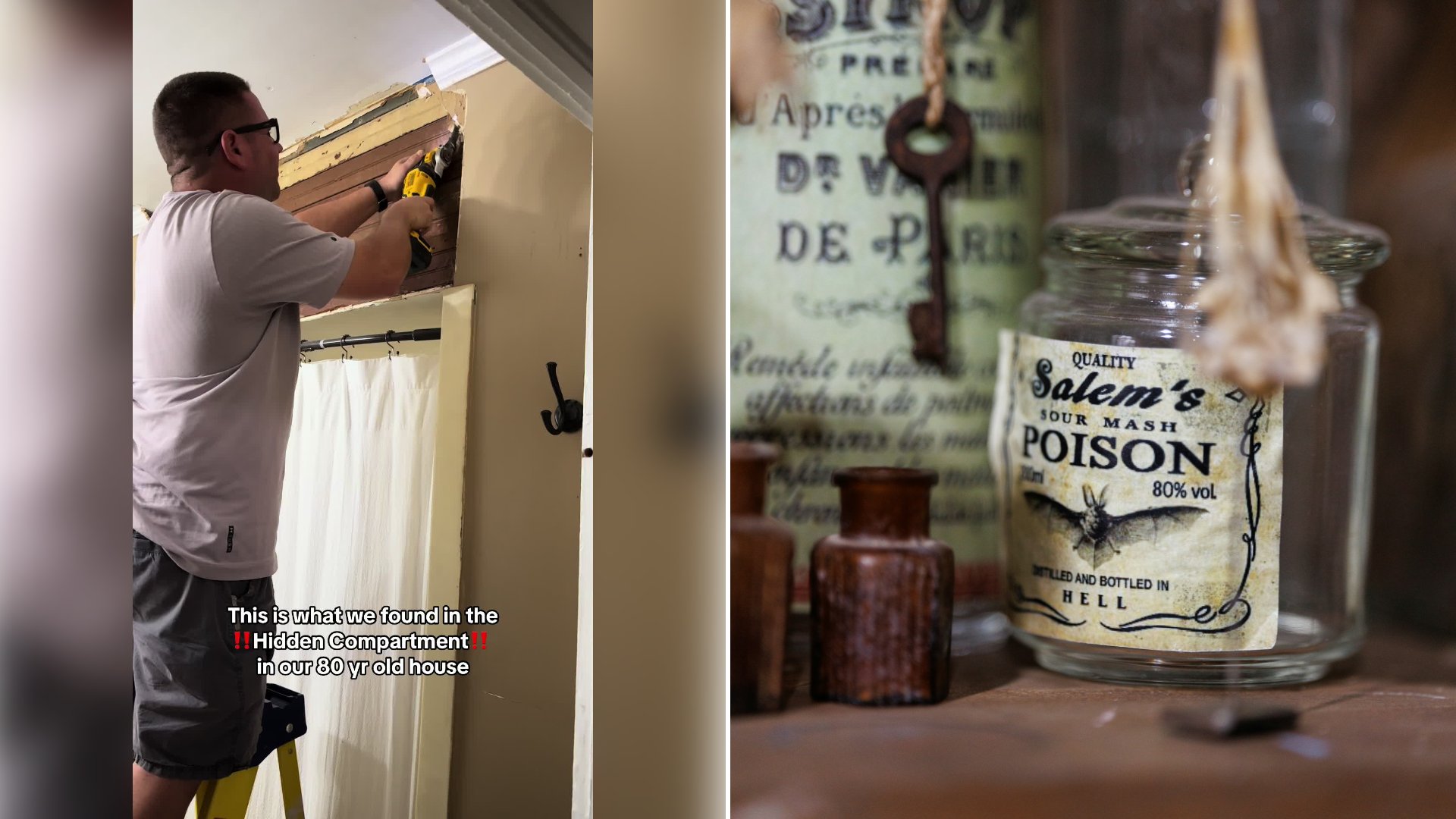
Home renovations are full of small surprises, but few are as dramatic as opening a wall and finding a secret. The couple behind @marriedtoalunatic were working on their older home when they cut into the space above their shower, expecting to find a route to the attic. What they found instead was a sealed cabinet, tucked away and packed with objects that had been waiting for decades.
@marriedtoalunatic
A Hole in the Wall and a Surprise
They say they cut a hole in the wall the day before, thinking it opened up to the attic. It did not. It turned out to be a sealed off cabinet above the shower, a space nobody seems to have known was there. Their caption calls it a hidden compartment above their eighty year old bathtub, and they say the crazy stuff comes out of it.
The home was built in 1948, which matters for the rest of the story. To get a closer look at what was stashed in the cabinet, they had to completely rip down the wall. That was something they were planning to do anyway, they say.
More Than Twenty One Items
When they finally had a clear view, the shelf was full. In total they counted over twenty one items stashed in the cabinet, stretching from one side all the way across to the other. They love antique shopping, so they describe this as right up their alley, and the excitement of an unplanned treasure hunt is easy to hear in the way they tell it.
The oldest dated items were from 1941 and 1940, even though the house was not built until 1948.
The Paper Trail
Some of the finds were paper. They pulled out pieces of wallpaper and a bank deposit slip from a Calcasieu Marine bank, along with older paper deposit slips from some kind of loan. Papers like these are the kind of small, ordinary things that can tell a surprising amount about the people who once lived in a house, from the bank they used to the way they handled money.
Calcasieu is a name tied to southwestern Louisiana. Deposit slips, wallpaper and loan papers are exactly the kind of finds that make a discovery like this fun to research.
Tablets and Bottles
Other items were not paper at all. They found a box of poison tablets. They say they read the box as antiseptic at first, a small reminder that old labels can be tricky to read. Then they found two bottles marked as poison, which turned out to be mercury.
They also share what they did next. They say they should have put on gloves, so they washed their hands immediately and put the tablets in a zip bag. They were open about their reaction, and they treat the moment as a lesson learned rather than a how to guide. Readers should not handle old hazardous materials such as these, and should contact their local hazardous waste program for guidance on safe handling and disposal.
Why Old Houses Hide Things
It may surprise you how often homeowners find something tucked inside a wall. In houses built in the first half of the twentieth century, hidden cabinets, medicine closets and gaps behind plumbing were not unusual. Walls were built with air spaces for pipes and framing, and sometimes a space was boxed in during a remodel and simply forgotten. A shower or tub wall is a common place for this, because plumbing often changes over time.
Throughout American history, people have also left small items inside walls on purpose. Builders and tradespeople sometimes signed their names on studs or tucked in newspapers, and some homeowners placed a bottle or a note as a keepsake for whoever came next. Not every hidden object is a treasure, but almost every one is a clue.
A Brief Look at Old Medicine Cabinets
Items like poison tablets and bottles of mercury may sound shocking today, but they fit the era. Before modern drug safety rules, home medicine chests commonly held products that we now consider hazardous. Some antiseptic tablets of the early twentieth century were made from mercury compounds, and many carried a poison warning on the label. Mercury itself also turned up in thermometers, in household remedies and in a range of industrial and craft uses.
Historians who study household medicine often find that the labels on old bottles are some of the best records of changing attitudes. Warnings grew bigger and clearer over time, and the shapes of bottles even changed, with some made ribbed or in unusual colors so that people could recognize poison by touch or by sight.
How to Learn More About a Found Object
If you ever discover an old object, paper or bottle in your own home, there are some safe ways to learn more. Take clear photographs of everything exactly where it was found. Write down the location and date. Look for printed names, patent numbers, addresses and dates, which can narrow down when a product was made.
For paper items, a local library, historical society or archive may have old directories, maps and bank records that help place a name or an address. For wallpaper, patterns can often be matched to a decade by comparing them with collections kept by museums and preservation groups. For bottles and containers, collector guides and online forums for antique bottle collectors can help identify the maker and the era.
What Makes These Finds So Special
What draws people to stories like this is the feeling of opening a small time capsule. Someone, long ago, put those things in that cabinet and sealed it, and decades later two people with a love of antiques were the first to see it. The dated papers, the bank slips and the wallpaper give the cabinet its character.
Their discovery is a reminder that a house is more than its rooms. Every wall can hold a story, and sometimes, when you cut a hole expecting the attic, the past is waiting right behind it.

Leave a Reply